



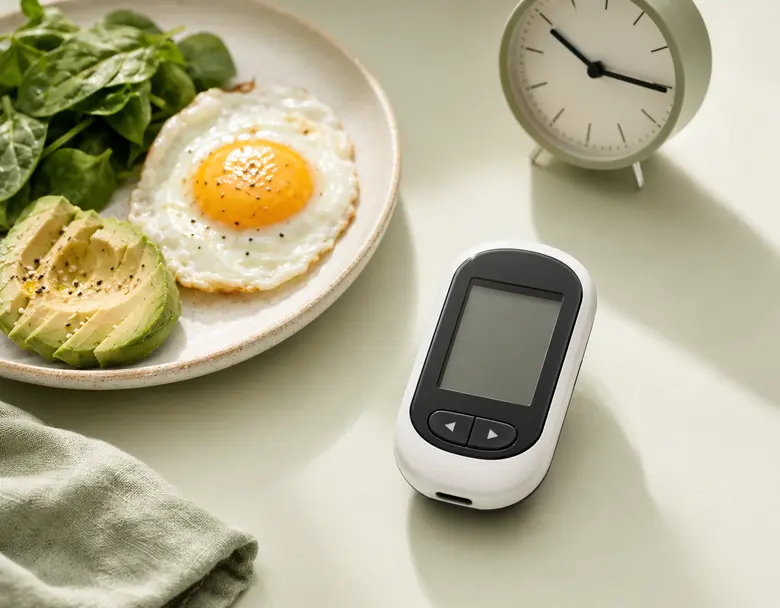
If you have diabetes, do not start 16/8 intermittent fasting as a self-guided experiment. A 16-hour fast can change meal timing, medication timing, activity patterns, and blood sugar risk. For diabetes, fasting needs a clinician-guided plan for meals, medicines, glucose monitoring, and what to do if readings go out of range.[1][2]
Key takeaways
- 16/8 fasting is a medical-context decision for people with diabetes, not just a schedule choice.
- Missing or delaying meals can contribute to low blood sugar, especially with insulin or some diabetes medicines.[1][2]
- Current evidence is not strong enough to present intermittent fasting as a standard or universally appropriate dietary pattern for diabetes.[3]
- Do not adjust diabetes medication, insulin, carbohydrates, or monitoring based on a blog article.
- Stop fasting and follow your diabetes care plan if symptoms or glucose readings suggest low or high blood sugar.
Table of Contents
Why 16/8 can be risky with diabetes
A 16/8 schedule often means delaying breakfast or compressing food into two meals. For someone with diabetes, that delay may interact with insulin, sulfonylureas, other medicines, activity, alcohol, illness, or carbohydrate intake.
The CDC notes that low blood sugar can be caused by missing a meal, taking too much insulin or other diabetes medicines, being more physically active than usual, or drinking alcohol.[1] NIDDK also notes that insulin or sulfonylureas can make blood glucose drop too low during exercise or if a meal is skipped or delayed.[2]
That is why a generic 16/8 plan is not enough for diabetes.
16/8 diabetes risk checkpoints
| 16/8 change | Why it matters | Safer next step |
|---|---|---|
| Delayed first meal | May raise low-blood-sugar risk with insulin or some medicines | Ask your care team before moving meals |
| Fewer eating opportunities | May change carbohydrate timing and medication needs | Use a clinician-guided meal plan |
| Exercise during the fast | Activity may lower glucose for some people | Ask when to check glucose and when to eat |
| Alcohol in the eating window | Can affect low-blood-sugar risk and judgment | Discuss timing and limits with your care team |
| High ketones or illness | Can become dangerous in diabetes contexts | Follow your diabetes plan and seek urgent help when directed |
Blood sugar targets vary by person and should be discussed with a health care team.[1]
Questions to ask before trying 16/8
If your health care team says fasting may be considered, ask before changing your schedule:
- Is 16/8 appropriate for my diabetes type, medications, and health history?
- Do any of my medicines need food or timing changes?
- When should I check blood glucose more often?
- What reading means I should eat immediately?
- Should I check ketones in any situation?
- How should exercise, alcohol, illness, sleep loss, or travel change the plan?
- Is a shorter overnight fast safer than 16/8 for me?
- What should my eating window include to support glucose, blood pressure, cholesterol, and overall health?
Diabetes meal planning includes what, how much, and when a person eats or drinks, and the right method should be chosen with a health care team.[2]
Symptoms or readings that should change the plan
Do not keep fasting to complete the 16-hour window if symptoms or glucose readings suggest a problem.
| Possible issue | Possible signs | What to do |
|---|---|---|
| Low blood sugar | Shakiness, sweating, fast heartbeat, dizziness, confusion, weakness, hunger | Follow your diabetes low-glucose plan and stop fasting |
| High blood sugar | Increased thirst, frequent urination, fatigue, blurred vision, nausea | Follow your care plan and contact your care team as advised |
| Ketone concern | High ketone reading, vomiting, abdominal pain, fruity breath, rapid breathing, severe weakness | Seek urgent medical help according to your diabetes plan |
| Repeated out-of-range readings | Patterns worsen after changing meal timing | Stop the fasting experiment and call your care team |
High ketones can be a medical emergency in diabetes contexts.[1]
If your goal is weight loss
Weight loss is a common reason people ask about 16/8 and type 2 diabetes. Still, diabetes changes the decision. A fasting window should not replace a diabetes meal plan, medication guidance, glucose monitoring, or a sustainable eating pattern.
Current evidence is preliminary and should not be used to recommend one universal dietary pattern for diabetes.[3] A safer conversation with your care team may include whether regular meal timing, a modest overnight eating break, or changes in meal composition would better fit your treatment plan.
What GoFasting should and should not do here
GoFasting can help you log fasting windows, weight, steps, calorie intake, and water intake if your clinician says a fasting routine is appropriate.
Tracking does not manage blood sugar, medication timing, ketones, hypoglycemia, or diabetes safety. Use medical devices, your diabetes care plan, and your health care team for those decisions.
FAQ
Is 16/8 intermittent fasting good for type 2 diabetes?
It should not be presented as universally good or safe. Some people may be able to use fasting only with clinician guidance, but medications, glucose patterns, activity, and health history matter.[1][2]
Can people with diabetes do 16/8 intermittent fasting?
Some may be able to follow a clinician-guided plan. Do not start 16/8 without a plan for meals, medication timing, glucose monitoring, and what to do if readings are low or high.
Can 16/8 fasting cause low blood sugar?
It can contribute to low-blood-sugar risk for some people, especially when meals are missed or delayed while using insulin or certain diabetes medicines.[1][2]
Can I change my diabetes medication for 16/8?
No. Do not adjust diabetes medication or insulin on your own. Ask your health care team before changing meal timing.
Bottom line
For diabetes, 16/8 intermittent fasting is not just a meal-timing plan. It can affect blood sugar risk through skipped meals, medications, insulin, activity, alcohol, carbohydrates, and illness. Do not start without clinician-guided planning.
Medical disclaimer
This article is for general education only and does not provide medical advice, diagnosis, or treatment. If you have diabetes, blood-sugar concerns, medication questions, ketone concerns, pregnancy, an eating disorder history, or any medical condition, work with a qualified health care professional before changing meal timing. Seek urgent medical help for severe symptoms or as directed by your diabetes care plan.
References
- CDC. Manage Blood Sugar https://www.cdc.gov/diabetes/treatment/index.html
- NIDDK. Healthy Living with Diabetes https://www.niddk.nih.gov/health-information/diabetes/overview/healthy-living-with-diabetes
- American Heart Association. 2021 Dietary Guidance to Improve Cardiovascular Health: A Scientific Statement From the American Heart Association https://www.ahajournals.org/doi/10.1161/CIR.0000000000001031