



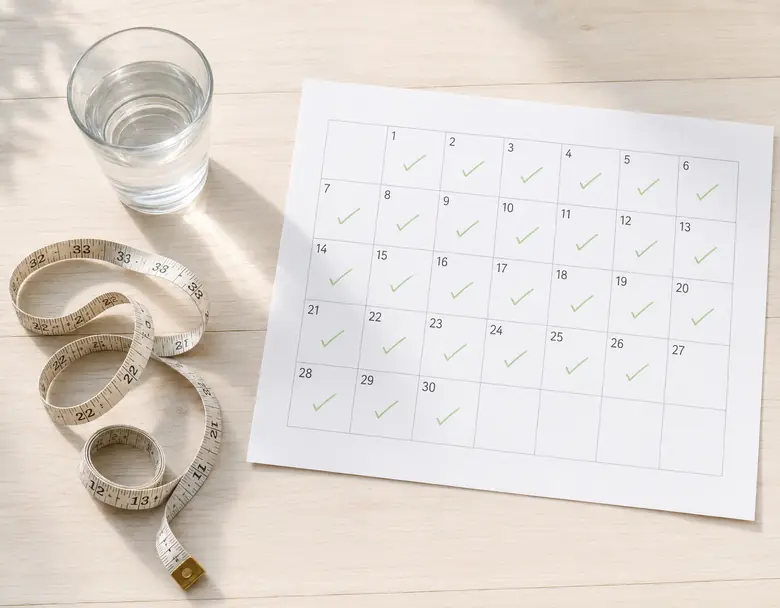
After 30 days of intermittent fasting, realistic results may include better meal structure, less late-night snacking, early weight change, improved awareness of calories, or no major scale change yet. The outcome depends on your eating window, food choices, activity, sleep, stress, starting point, and whether the schedule is sustainable.
Intermittent fasting is not a 30-day guarantee. Research does not show it is clearly superior to traditional dietary advice for weight loss [1]. It works best when the fasting window helps you build a repeatable weekly pattern.
Table of Contents
What results are realistic in 30 days?
| Result | Realistic? | What it usually means |
|---|---|---|
| Less evening snacking | Yes | The schedule is reducing eating opportunities. |
| A few pounds down | Possible | May reflect lower intake, water shifts, or both. |
| No scale change | Also possible | Eating-window intake may match previous intake. |
| Better routine awareness | Very realistic | You can see patterns more clearly. |
| Dramatic fat loss | Not a safe expectation | Fast results are not guaranteed or always sustainable. |
Gradual, steady weight loss of about 1 to 2 pounds per week is generally more likely to be maintained than fast loss [2]. Not everyone will lose at that pace, and a blog article cannot set a personal target for you.
If you want to compare 30 days with later milestones, see the intermittent fasting results timeline.
A 30-day timeline
Days 1-3: adjustment
Hunger may show up at your old meal times. You may also feel excited because the rules are clear. Start with 12:12 or 14:10 if you are new.
Days 4-7: the first pattern appears
You may notice whether the schedule reduces snacks or causes rebound eating. If you are overeating at the first meal, the fast is probably too long.
Week 2: meals matter more
The eating window becomes the main difference between progress and frustration. Large portions, sugary drinks, alcohol, and frequent snacks can cancel out the fasting window.
Weeks 3-4: consistency decides the trend
By the end of 30 days, you should have enough information to ask better questions:
- Is this schedule repeatable?
- Did I reduce eating opportunities or just move them?
- Did my energy and mood stay stable?
- Did my steps or activity drop?
- Did weekends look different from weekdays?
Some people need 2 to 4 weeks to adapt to intermittent fasting [3], so the first month is both a trial and a learning period.
Why 30-day results vary so much
| Factor | Why it changes results |
|---|---|
| Starting weight and habits | Someone cutting late-night snacks may see faster early change than someone already eating structured meals. |
| Eating-window calories | Fasting does not prevent overeating later. |
| Protein and fiber | More filling meals can reduce rebound hunger. |
| Sugary drinks and alcohol | Calories can add up quickly inside the eating window. |
| Activity | Lower movement can offset lower intake. |
| Sleep and stress | Both can affect appetite and consistency. |
| Schedule fit | A plan that disrupts family meals or work may fail even if it looks good on paper. |
What to do if you lost weight
If the first 30 days went well, do not immediately make the plan stricter. First, protect what worked.
Keep:
- the fasting window you can repeat
- balanced meals during the eating window
- hydration
- daily steps or activity
- a weekly review habit
If weight loss slows, that does not mean you failed. As weight changes, your routine may need small adjustments.
What to do if nothing changed
Do not assume your metabolism is broken. Review the pattern.
| What to check | Adjustment to test for 1 week |
|---|---|
| Large first meal | Add protein and fiber; slow down. |
| Snacks during eating window | Plan meals more clearly. |
| Sweet drinks | Replace with water or unsweetened drinks. |
| Weekend overeating | Track the full week, not only weekdays. |
| Low steps | Add walking before extending the fast. |
| Too much hunger | Shorten the fast instead of pushing harder. |
GoFasting can help you log fasting windows, weight, steps, calorie intake, and water intake, then review patterns. Tracking is useful because 30-day results often depend on habits you do not notice day to day.
What not to do after 30 days
Avoid these common mistakes:
- jumping from 16:8 to 20:4 just because progress slowed
- skipping balanced meals to force faster loss
- ignoring dizziness, weakness, or obsessive food thoughts
- treating one high-calorie day as failure
- comparing your 30 days to someone else's before-and-after photos
Longer fasts are not automatically better, and some longer fasts may be dangerous for some people [3].
When to stop or get guidance
Stop or shorten the fast if you have fainting, confusion, severe dizziness, persistent weakness, chest pain, or symptoms that feel unsafe. Talk with a clinician before fasting if you take medications requiring food, have diabetes, are pregnant or breastfeeding, are underweight, are recovering from illness or surgery, or have a current or past eating disorder [4].
FAQ
What results can I expect after 30 days of intermittent fasting?
You may see better routine structure, fewer snacks, early weight change, or no major scale change. Results depend on the full eating and lifestyle pattern.
How much weight can you lose in 30 days with intermittent fasting?
There is no guaranteed number. Gradual weight loss is generally more sustainable than fast results, and individual outcomes vary.
Why did I not lose weight after 30 days?
Common reasons include eating-window overcompensation, sugary drinks, low activity, inconsistent weekends, poor sleep, stress, or a fasting window that causes rebound eating.
Should I continue intermittent fasting after 30 days?
Continue only if it feels sustainable, supports balanced meals, and does not create unsafe symptoms or a harmful relationship with food.
Should I switch to a longer fast after 30 days?
Not automatically. First review meals, drinks, activity, and consistency. A stricter schedule is not always a better schedule.
Medical disclaimer
This article is for general education only and is not personal medical advice. If you have a medical condition, take medication, are pregnant or breastfeeding, are underweight, have a history of eating disorders, or feel unwell while fasting, ask a qualified health professional before changing your eating schedule.
References
- Cochrane. Intermittent fasting for adults with overweight or obesity https://www.cochrane.org/evidence/CD015610_intermittent-fasting-traditional-dietary-advice-or-no-treatment-which-works-better-help-adults
- CDC. Steps for Losing Weight https://www.cdc.gov/healthy-weight-growth/losing-weight/index.html
- Johns Hopkins Medicine. Intermittent Fasting: What Is It, And How Does It Work? https://www.hopkinsmedicine.org/health/expert-qa/intermittent-fasting-what-is-it-and-how-does-it-work
- Mayo Clinic. Intermittent fasting: What are the benefits? https://www.mayoclinic.org/healthy-lifestyle/nutrition-and-healthy-eating/expert-answers/intermittent-fasting/faq-20441303