



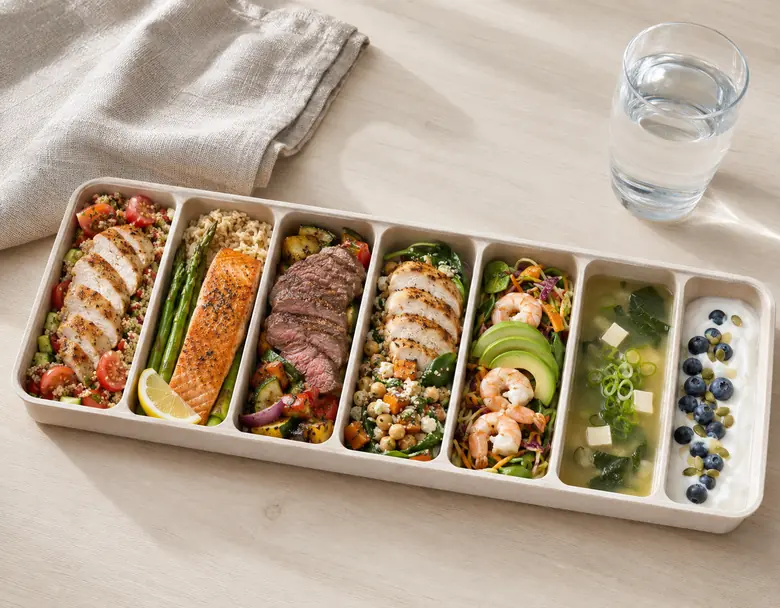
The 5:2 intermittent fasting diet usually means eating normally on five days of the week and using two lower-calorie days. The most useful plan is not just "eat less twice a week." It is a weekly structure that protects nutrition, hydration, and consistency while avoiding the trap of overeating on the other five days.[1][2][3][4]
Key takeaways
- A 5:2 diet plan has five regular eating days and two lower-calorie days.
- Lower-calorie days should still include protein foods, fiber-rich plants, fluids, and enough structure to avoid feeling chaotic.
- The five regular days are not "anything goes" days; eating-window quality still affects the result.
- 5:2 can be too restrictive for some people and is not appropriate during pregnancy, breastfeeding, eating-disorder recovery, or self-guided diabetes medication management.
- If symptoms feel severe, persistent, or unsafe, stop the low-calorie day and get medical guidance.
Table of Contents
A simple weekly 5:2 structure
Many people place the lower-calorie days apart rather than back to back. That gives your week more recovery space and makes meals easier to plan.
| Day | Plan | Practical focus |
|---|---|---|
| Monday | Regular eating day | Balanced meals, normal routine |
| Tuesday | Lower-calorie day | Protein, vegetables, soup, water |
| Wednesday | Regular eating day | Return to steady meals |
| Thursday | Regular eating day | Avoid making up for Tuesday |
| Friday | Lower-calorie day | Simple meals, early planning |
| Saturday | Regular eating day | Social flexibility without overeating |
| Sunday | Regular eating day | Prep food for the next week |
Some versions of 5:2 use about 500 to 600 calories on lower-calorie days, but calorie needs vary. If you have a medical condition, take medications, or have a history of disordered eating, do not use a generic calorie target without professional guidance.
What to eat on lower-calorie days
Lower-calorie days work better when meals are simple, filling, and nutrient-dense. Prioritize foods that give more volume and protein for fewer calories.
| Choose more often | Limit or avoid on lower-calorie days | Why it matters |
|---|---|---|
| Eggs, Greek yogurt, tofu, fish, chicken, beans | Pastries, candy, fried snacks | Protein supports fullness and meal structure |
| Leafy greens, broccoli, peppers, mushrooms, zucchini | Large portions of low-fiber refined grains | Vegetables add volume and fiber |
| Broth-based soups, salads with lean protein | Creamy soups, heavy sauces | Liquids and vegetables can help meals feel larger |
| Berries, apples, citrus | Juice and sweetened drinks | Whole fruit is usually more filling than drinks |
| Water, unsweetened tea, black coffee | Alcohol, soda, sweet coffee drinks | Sugary or alcoholic drinks can use up calories quickly |
A lower-calorie day should not feel like a punishment. If you feel dizzy, shaky, unusually weak, or unable to function, that is a reason to stop and reassess rather than push through.
Sample lower-calorie day ideas
These examples are meal structures, not personalized prescriptions. Adjust portions, ingredients, and timing to your needs.
Two-meal lower-calorie day
- Late morning: Greek yogurt with berries, or tofu scramble with vegetables.
- Evening: Broth-based vegetable soup with chicken, fish, beans, or lentils.
- Drinks: Water, unsweetened tea, or black coffee.
Three-small-meal lower-calorie day
- Breakfast: Egg or tofu with vegetables.
- Lunch: Big salad with lean protein and a light dressing.
- Dinner: Fish, chicken, beans, or lentils with steamed vegetables.
No-cook lower-calorie day
- Cottage cheese or unsweetened yogurt with fruit.
- Tuna, bean, or tofu salad over greens.
- Pre-cut vegetables, broth, and a simple protein option.
How to eat on the other five days
The five regular days make or break the plan. Intermittent fasting changes timing and structure, but it does not make food quality irrelevant.
On regular days, build meals around:
- vegetables and fruit;
- whole grains or other satisfying high-fiber carbohydrates;
- protein foods such as fish, poultry, eggs, beans, lentils, tofu, or yogurt;
- healthy fats in reasonable portions;
- water, coffee, or tea with little or no sugar.
Try not to treat regular days as compensation for lower-calorie days. If 5:2 leads to a restrict-and-overeat cycle, a gentler daily schedule such as 12:12 or 14:10 may be a better fit.
GoFasting can help you log fasting windows, weight, calorie intake, water intake, and steps, then review patterns across regular and lower-calorie days. Use tracking as feedback, not judgment.
When 5:2 may not be the right plan
Avoid self-guided 5:2 fasting if you are pregnant, breastfeeding, underweight, recovering from an eating disorder, recovering from surgery or illness, or managing diabetes, kidney disease, or medications that require food. A low-calorie day can change medication timing, blood sugar risk, hydration, and nutrient adequacy.
Also reconsider 5:2 if it causes frequent headaches, dizziness, constipation, sleep disruption, irritability, binge-like eating, or anxiety around food. A plan that looks good on paper is not a good plan if it makes eating feel less stable.
FAQ
What can I eat on the 5:2 intermittent fasting diet?
Choose simple, nutrient-dense foods: lean protein, eggs, tofu, beans, lentils, vegetables, whole fruit, broth-based soups, yogurt, and water or unsweetened drinks.
Are the two fasting days supposed to be consecutive?
They do not have to be. Many people find nonconsecutive days easier because the week feels less restrictive.
Can I exercise on 5:2 fasting days?
Light movement may be fine for some people, but intense workouts can feel harder on lower-calorie days. If you feel dizzy, weak, or unwell, stop and adjust.
Is 5:2 better than 16/8?
Not necessarily. 5:2 concentrates restriction into two days, while 16/8 uses a daily eating window. The better option depends on your health context, preferences, and ability to eat well consistently.
Bottom line
A practical 5:2 intermittent fasting diet plan should make lower-calorie days simple and make regular days steady, not excessive. If the plan feels medically risky, mentally stressful, or hard to recover from, choose a gentler structure and get qualified guidance.
Medical disclaimer
This article is for general education only and is not medical advice. Talk with a qualified health professional before trying 5:2 fasting if you have a medical condition, take medication, are pregnant or breastfeeding, are underweight, or have a history of disordered eating.
References
- Cleveland Clinic. Intermittent Fasting: What It Is, Benefits and Schedules https://health.clevelandclinic.org/intermittent-fasting-4-different-types-explained
- CDC. Tips for Healthy Eating for a Healthy Weight https://www.cdc.gov/healthy-weight-growth/healthy-eating/index.html
- Harvard T.H. Chan School of Public Health. Healthy Eating Plate https://nutritionsource.hsph.harvard.edu/healthy-eating-plate/
- Johns Hopkins Medicine. Intermittent Fasting: What Is It, and How Does It Work? https://www.hopkinsmedicine.org/health/expert-qa/intermittent-fasting-what-is-it-and-how-does-it-work