



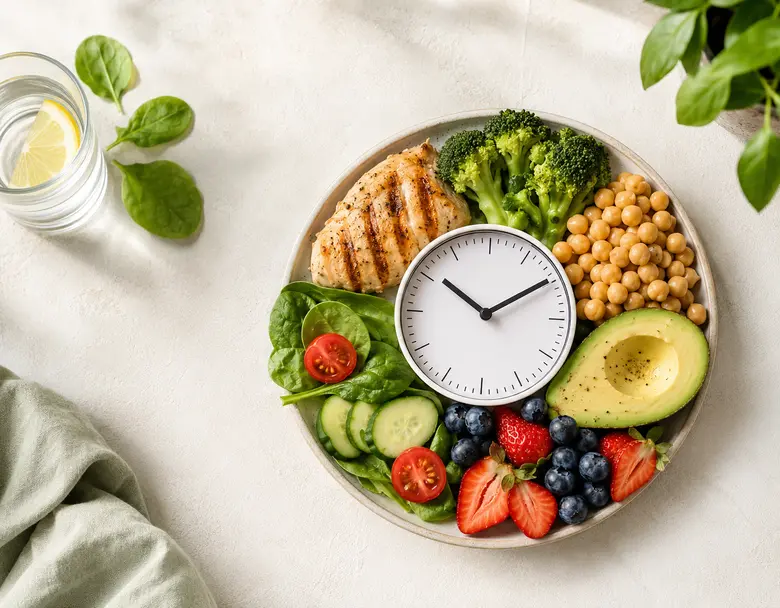
An intermittent fasting diet plan should answer a simple question: when your eating window opens, what helps you feel satisfied and stay consistent? A good default is not extreme. Build meals around protein foods, vegetables, fruit, whole grains or other fiber-rich carbohydrates, healthy fats, and mostly unsweetened drinks.[1][2]
Fasting changes when you eat. It does not make food quality, total intake, hydration, medications, or medical context irrelevant.[3]
Key takeaways
- Use the eating window for steady, nutrient-dense meals rather than trying to “make up” for the fast.
- Aim for protein, fiber-rich plants, satisfying carbohydrates, and healthy fats at most meals.
- Water, black coffee, and unsweetened tea are the simplest fasting-window drinks; calorie-containing drinks belong in the eating window.[4]
- Limit meals that are mostly sweetened drinks, desserts, refined snacks, or very large portions if your goal is steadier energy or weight management.[1][5]
- If fasting leads to dizziness, persistent digestive symptoms, binge-like eating, medication conflicts, or unsafe restriction, shorten the fast or get medical guidance.[6]
Table of Contents
A simple eating-window plate
A practical fasting food plan starts with the plate, not a complicated macro target.
| Part of the meal | Easy choices | Why it helps |
|---|---|---|
| Protein foods | Eggs, fish, poultry, tofu, beans, lentils, Greek yogurt | Helps make the meal more filling |
| Vegetables and fruit | Leafy greens, peppers, carrots, berries, apples, citrus | Adds fiber, volume, and micronutrients |
| Whole grains or starchy plants | Oats, brown rice, quinoa, potatoes, whole-grain bread | Adds satisfying carbohydrates and fiber |
| Healthy fats | Olive oil, avocado, nuts, seeds | Adds flavor and helps meals feel complete |
| Drinks | Water, sparkling water, unsweetened tea, black coffee | Keeps the routine simple without adding sugar |
A balanced plate does not need to be perfect. The goal is to avoid turning the eating window into a rushed stretch of snacks and oversized meals.
What to eat when the fast ends
Your first meal after fasting should be easy to digest and balanced enough to carry you into the rest of the eating window.
Good first-meal ideas include:
- Greek yogurt with berries, nuts, and oats
- Eggs with vegetables and whole-grain toast
- Tofu, rice, vegetables, and olive-oil dressing
- Chicken or bean salad with avocado and fruit
- Oatmeal with milk or yogurt, fruit, and seeds
If you tend to overeat when the window opens, start smaller: protein plus fruit, soup plus a sandwich, or yogurt plus oats. Then eat a full meal later instead of forcing a large meal all at once.
For a deeper food-by-food list, read What can I eat while intermittent fasting?.
Example intermittent fasting food plan
This example works for a common time-restricted eating day. Adjust portions, timing, and food choices to your needs.
| Time | Meal | Example |
|---|---|---|
| Fasting window | Drinks only | Water, black coffee, or unsweetened tea |
| Window opens | First meal | Omelet with vegetables, fruit, and whole-grain toast |
| Mid-window | Optional snack | Cottage cheese, nuts, or hummus with vegetables |
| Final meal | Main meal | Salmon or beans, roasted vegetables, quinoa, olive-oil dressing |
| Before fasting resumes | Drink check | Water or unsweetened tea |
If you follow a shorter eating window, you may only have two meals. If you follow a longer eating window, you may prefer three meals. The structure matters less than whether the plan is repeatable and nourishing.
Foods and drinks to limit during the eating window
Intermittent fasting does not require a total ban list, but some choices make the routine harder to sustain.
| Limit more often | Better default |
|---|---|
| Sugary coffee drinks | Black coffee, unsweetened tea, or coffee with add-ins during the eating window |
| Soda, sweet tea, sports drinks, energy drinks | Water, sparkling water, or unsweetened tea |
| Dessert as the main snack | Fruit with yogurt, nuts, or a balanced snack |
| Large fast-food meals after a long fast | A regular meal with protein, vegetables, and fiber-rich carbs |
| Frequent packaged snack grazing | Planned meals and one intentional snack if needed |
Added sugars can make it harder to meet nutrient needs while staying within calorie limits.[5] Check the Nutrition Facts label for sweetened drinks, flavored yogurts, sauces, and packaged snacks.
For more detail, see Foods to avoid for successful fasting.
How to plan supplements without overcomplicating the diet
Most people should build the eating-window plan around food first. Supplements are not a shortcut for poor meals, and fasting does not automatically mean you need a supplement stack.
Consider these boundaries:
- Keep prescribed medications separate from general supplement advice.
- Take supplements with food if the label or your clinician recommends it.
- Be cautious with products that promise rapid fat loss, detox, appetite elimination, or “fasting acceleration.”
- If you have a medical condition, take medications, are pregnant or breastfeeding, or have a history of disordered eating, get qualified guidance before changing eating windows or supplements.[6]
How GoFasting can support the routine
A fasting diet plan becomes easier to adjust when you can see the pattern clearly. GoFasting can help you log fasting windows, weight, steps, calorie intake, and water intake, then review patterns as you adjust your routine.
Use tracking as feedback, not judgment. If the pattern shows repeated overeating, low water intake, or a fasting window that feels too hard to repeat, the next step may be a shorter fast or a more balanced eating window.
FAQ
Is there one diet plan for intermittent fasting?
No single plan fits everyone. A strong default is a balanced eating window with protein foods, vegetables, fruit, whole grains or other fiber-rich carbohydrates, healthy fats, and mostly unsweetened drinks.
Can I eat carbs during intermittent fasting?
Yes. Intermittent fasting does not require cutting carbohydrates. Whole grains, beans, lentils, potatoes, fruit, and other fiber-rich carbohydrate foods can fit inside the eating window.
What should I drink while fasting?
Water is the simplest choice because it has no calories.[4] Black coffee and unsweetened tea are also common fasting-window options.[3] Drinks with sugar, cream, milk, juice, alcohol, or meaningful calories are better treated as eating-window choices. For more detail, read What other drinks can you drink?.
Should I count calories with intermittent fasting?
Some people find calorie tracking useful; others prefer meal structure and portion awareness. If weight loss is a goal, the eating window still needs to support an appropriate overall calorie pattern, but fasting does not require every person to count calories.[7]
What if I feel too hungry after fasting?
Shorten the fast, add more protein and fiber to meals, or use a less restrictive schedule. If hunger leads to binge-like eating, dizziness, or feeling out of control around food, fasting may not be the right approach without professional support.
Bottom line
A useful intermittent fasting nutrition plan is not a punishment plan. Keep fasting-window drinks simple, use the eating window for balanced meals, limit sugary drinks and low-fiber snack grazing, and adjust the schedule if the plan becomes hard to repeat.
Medical disclaimer
This article is for general educational purposes only and is not medical advice. Talk with a qualified health care professional before starting intermittent fasting if you have a medical condition, take medications, are pregnant or breastfeeding, are underweight, have a history of an eating disorder, or feel unwell while fasting.
References
- CDC. Tips for Healthy Eating for a Healthy Weight https://www.cdc.gov/healthy-weight-growth/healthy-eating/index.html
- Harvard T.H. Chan School of Public Health. Healthy Eating Plate https://nutritionsource.hsph.harvard.edu/healthy-eating-plate/
- Johns Hopkins Medicine. Intermittent Fasting: What Is It, And How Does It Work? https://www.hopkinsmedicine.org/health/expert-qa/intermittent-fasting-what-is-it-and-how-does-it-work
- CDC. About Water and Healthier Drinks https://www.cdc.gov/healthy-weight-growth/water-healthy-drinks/index.html
- FDA. Added Sugars on the Nutrition Facts Label https://www.fda.gov/food/nutrition-facts-label/added-sugars-nutrition-facts-label
- Cleveland Clinic. 6 Tips for Fasting Safely https://health.clevelandclinic.org/tips-for-fasting-the-healthy-way
- NIDDK. Choosing a Safe & Successful Weight-loss Program https://www.niddk.nih.gov/health-information/weight-management/choosing-a-safe-successful-weight-loss-program