



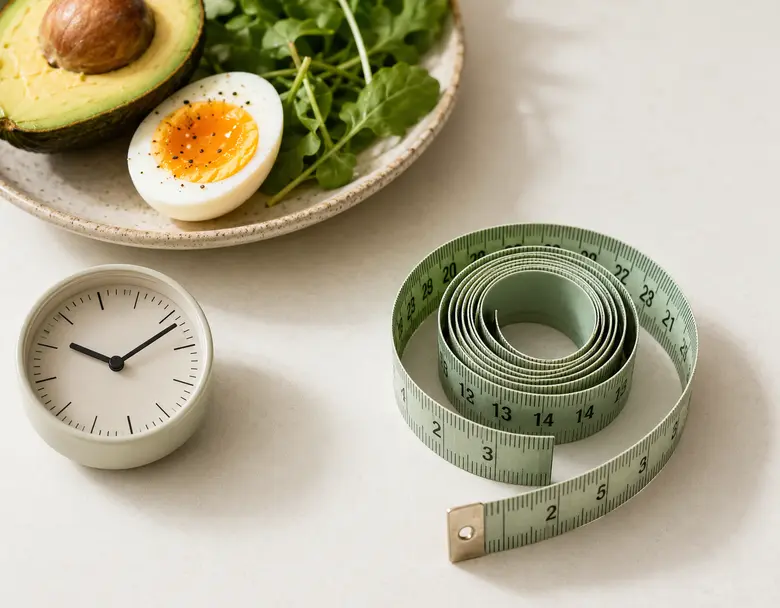
Intermittent fasting may support fat loss when it helps you reduce overall eating opportunities and maintain a realistic calorie pattern. It does not directly guarantee fat loss, and it is not clearly superior to traditional dietary advice for weight loss. The eating window, food quality, activity, sleep, stress, medications, and consistency still matter.[1][2]
Key takeaways
- Intermittent fasting can be a structure for fat loss, but it is not a fat-loss guarantee.
- Early scale changes may include water and food-volume shifts, not only body fat.
- The eating window still matters; large meals, snacks, and sugary drinks can work against the goal.[3]
- Longer fasts are not automatically better and may be dangerous for some people.[4]
- GoFasting can help you log fasting windows, weight, steps, calorie intake, and water intake, then review patterns as you adjust your routine.
Table of Contents
Does intermittent fasting burn fat?
Your body uses stored energy between meals, but that does not mean every fasting routine leads to measurable fat loss. Fat loss still depends on whether your overall pattern creates a sustainable energy deficit over time.
Intermittent fasting can help some people because it creates a clear stop time, reduces grazing, limits late-night snacks, or makes meal planning simpler. It works less well when the eating window becomes a compressed period of overeating.
Research does not support presenting intermittent fasting as clearly superior to traditional dietary advice for adults with overweight or obesity.[2] A more accurate view is that fasting may be useful if it makes the right habits easier to repeat.
Fat-loss timeline: what is realistic?
| Time frame | What may happen | Better interpretation |
|---|---|---|
| First week | Scale may change quickly or not at all | Early changes are not always body fat |
| Weeks 2-4 | Hunger and routine may become more predictable | Judge consistency before changing the window |
| Month 1-3 | Trends become more meaningful | Use weekly averages, not single weigh-ins |
| 3-6 months | Sustainable progress depends on routine quality | Keep adjusting meals, activity, sleep, and adherence |
Gradual, steady weight loss is generally more maintainable than rapid loss.[5] If the first week is dramatic, do not assume the same pace will continue. If the first week is slow, do not assume the plan is failing.
Why fat loss may stall on intermittent fasting
A stall usually means the current version of the routine is not creating the pattern your goal requires.
Common causes include:
- Eating-window overcompensation: larger portions, more snacks, or reward meals.
- Liquid calories: sweet coffee drinks, juice, smoothies, alcohol, or sugary drinks.
- Low protein or fiber: meals that do not keep you full.
- Reduced movement: feeling too tired to walk or train.
- Weekend drift: weekdays are structured, weekends erase the deficit.
- Poor sleep or high stress: both can make appetite and consistency harder.
- Medical or medication factors: some situations need clinician-guided weight management.
Before extending the fast, review the eating window. Shortening the window alone may not be enough if the food pattern inside that window does not support the goal.[6]
How to do intermittent fasting for fat loss
Start with a schedule you can repeat for at least two weeks.
- Choose 12:12 or 14:10 if you are new to fasting.
- Keep fasting-window drinks simple: water, black coffee, or unsweetened tea.[4]
- Build meals around protein foods, fiber-rich plants, satisfying carbohydrates, and healthy fats.
- Limit routine sugary drinks, alcohol, and snack grazing.
- Keep daily movement steady.
- Review weekly weight trends and routine consistency before changing the window.
If fat loss is not moving, change one variable at a time: meal portions, snack frequency, drink calories, eating-window length, or activity. Changing everything at once makes the pattern harder to understand.
When to shorten, pause, or get guidance
Shorten or pause fasting if it causes dizziness, fainting, persistent weakness, poor sleep, rebound eating, or growing anxiety around food. Longer fasts are not a safer shortcut.
People who are pregnant or breastfeeding, under 18, have diabetes or blood-sugar concerns, take medications that require food, have a history of eating disorders, are underweight, or have a medical condition should get qualified guidance before fasting.[4][7]
FAQ
Does intermittent fasting work for fat loss?
It can help some people if it reduces overall intake and supports consistency. It does not guarantee fat loss and is not clearly superior to traditional dietary advice.[2]
Is intermittent fasting good for fat loss?
It may be useful if it helps you eat more consistently without rebound eating, poor sleep, or unsafe restriction.
How do I use intermittent fasting to lose fat?
Choose a manageable window, eat balanced meals, reduce calorie-containing drinks and snacks, track trends, and adjust based on patterns.
How long does fat loss take with intermittent fasting?
Meaningful body-fat trends usually need weeks to months, not a few days. Early scale changes can be misleading.
Should I fast longer for faster fat loss?
Not by default. Longer fasts are not automatically better and may be dangerous for some people.[4]
Bottom line
Intermittent fasting can support fat loss when it helps you build a repeatable eating pattern. The goal is not the longest fast; it is a routine that reduces overcompensation, supports balanced meals, and can be adjusted safely over time.
Medical disclaimer
This article is for general wellness education and should not replace medical advice. Speak with a qualified health care professional before fasting if you are pregnant or breastfeeding, under 18, have diabetes or blood-sugar concerns, take medications that require food, have a history of eating disorders, are underweight, have a medical condition, or feel unwell while fasting.
References
- NIDDK. “Choosing a Safe & Successful Weight-loss Program.” https://www.niddk.nih.gov/health-information/weight-management/choosing-a-safe-successful-weight-loss-program
- Cochrane. “Intermittent fasting for adults with overweight or obesity.” https://www.cochrane.org/evidence/CD015610_intermittent-fasting-traditional-dietary-advice-or-no-treatment-which-works-better-help-adults
- Harvard Health Publishing. “Should you try intermittent fasting for weight loss?” https://www.health.harvard.edu/blog/should-you-try-intermittent-fasting-for-weight-loss-202207282790
- Johns Hopkins Medicine. “Intermittent Fasting: What Is It, And How Does It Work?” https://www.hopkinsmedicine.org/health/expert-qa/intermittent-fasting-what-is-it-and-how-does-it-work
- CDC. “Steps for Losing Weight.” https://www.cdc.gov/healthy-weight-growth/losing-weight/index.html
- Lowe DA, Wu N, Rohdin-Bibby L, et al. “Effect of Time-Restricted Eating on Weight Loss in Adults With Overweight and Obesity.” JAMA Internal Medicine https://jamanetwork.com/journals/jamainternalmedicine/fullarticle/2771095
- Harvard T.H. Chan School of Public Health. “Diet Review: Intermittent Fasting for Weight Loss.” https://nutritionsource.hsph.harvard.edu/healthy-weight/diet-reviews/intermittent-fasting/