



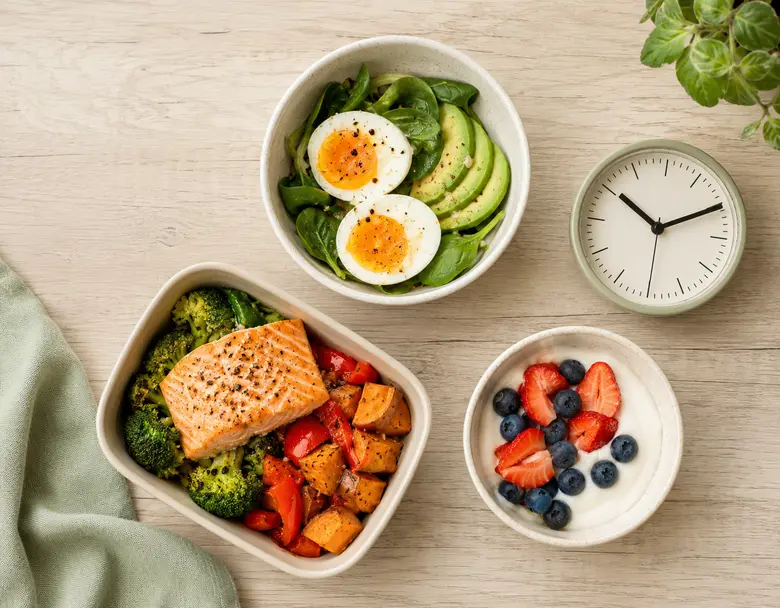
A beginner intermittent fasting meal plan should keep the eating window simple: balanced meals, enough fluid, and food choices you can repeat. Start with protein foods, vegetables, fruit, whole grains or other fiber-rich carbohydrates, healthy fats, and mostly unsweetened drinks.[1][2]
Fasting changes when you eat. It does not make food quality, total intake, hydration, or medical context irrelevant.[3]
Meal plans for intermittent fasting work best when they make the eating window easier to repeat, not when they turn fasting into a rigid food rulebook.
Key takeaways
- Start with two or three steady meals inside your eating window, not a rushed stretch of snacks.
- Build most meals around protein, fiber-rich plants, satisfying carbohydrates, and healthy fats.
- Water, black coffee, and unsweetened tea are the simplest fasting-window drinks.[3][4]
- Limit sugary drinks, frequent desserts, and low-fiber packaged snacks if they crowd out more filling meals.[1][5]
- If fasting causes dizziness, persistent digestive symptoms, binge-like eating, or medication conflicts, shorten or stop the fast and get medical guidance.[6]
Table of Contents
A simple beginner meal plan template
Use this as a flexible structure, not a strict prescription. Portions depend on your body, goals, activity level, medical needs, and appetite.
| Eating-window moment | What to include | Easy examples |
|---|---|---|
| First meal | Protein + fiber-rich carbs + fruit or vegetables | Eggs with toast and fruit; Greek yogurt with oats and berries; tofu with rice and vegetables |
| Optional snack | Protein or fiber | Hummus with vegetables; cottage cheese; nuts and fruit; yogurt |
| Final meal | Protein + vegetables + whole grain or starchy plant + healthy fat | Salmon with quinoa and greens; beans with rice and avocado; chicken with potatoes and salad |
| Drinks | Mostly unsweetened | Water, sparkling water, unsweetened tea, black coffee |
If a shorter eating window makes you rush or undereat, choose a longer window before making the plan stricter.
Three sample eating-window days
12:12 or 14:10 day
- Breakfast: oatmeal with yogurt, berries, and seeds
- Lunch: turkey, tofu, or bean bowl with vegetables and brown rice
- Snack: fruit with nuts or cottage cheese
- Dinner: fish, chicken, lentils, or tofu with vegetables and potatoes
16:8 day
- First meal: eggs, avocado, vegetables, and whole-grain toast
- Snack: Greek yogurt with fruit or hummus with vegetables
- Final meal: bean chili, salad, and rice, or chicken with vegetables and quinoa
Two-meal day
- Meal 1: tofu or chicken bowl with rice, vegetables, and olive-oil dressing
- Meal 2: salmon, lentils, or eggs with vegetables, fruit, and a whole-grain side
For a broader food list, read What can I eat while intermittent fasting?.
Foods to prioritize during the eating window
A practical meal plan does not need unusual ingredients. It needs repeatable food groups.
| Food group | Beginner-friendly choices |
|---|---|
| Protein foods | Eggs, fish, poultry, tofu, tempeh, beans, lentils, Greek yogurt |
| Vegetables | Leafy greens, carrots, peppers, broccoli, tomatoes, cucumbers |
| Fruit | Berries, apples, citrus, bananas, melon |
| Whole grains and starchy plants | Oats, brown rice, quinoa, potatoes, sweet potatoes, whole-grain bread |
| Healthy fats | Olive oil, avocado, nuts, seeds |
A balanced plate can include mostly vegetables and fruit, a portion of whole grains, a portion of healthy protein, and water, tea, or coffee with little or no sugar.[2]
Foods and drinks to limit
You do not need a total ban list. It is more useful to notice which choices make fasting harder to repeat.
| Limit more often | Better default |
|---|---|
| Sugary coffee drinks | Black coffee during the fast, or coffee with add-ins during the eating window |
| Soda, sweet tea, sports drinks, or energy drinks | Water, sparkling water, or unsweetened tea |
| Dessert as the main snack | Fruit with yogurt, nuts, or another filling snack |
| Large fast-food meals after a long fast | A regular meal with protein, vegetables, and fiber-rich carbs |
| Frequent packaged snack grazing | Planned meals and one intentional snack if needed |
Added sugars can make it harder to meet nutrient needs while staying within calorie limits.[5] For more detail, read Foods to avoid for successful fasting.
Drinks that fit the plan
During the fasting window, the simplest default is water. Black coffee and unsweetened tea are also common options.[3][4]
During the eating window, you have more flexibility, but sugary drinks can add calories without making meals more filling. If weight management is a goal, replacing sugary drinks with water can help reduce calorie intake.[4]
For more detail on drink boundaries, read What other drinks can you drink?.
How GoFasting can support meal planning
GoFasting can help you log fasting windows, weight, steps, calorie intake, and water intake, then review patterns as you adjust your routine.
Use tracking as feedback, not judgment. If your notes show that a narrow eating window leads to rushed meals or low water intake, the better next step may be a longer eating window or a simpler meal plan.
FAQ
How many meals should I eat while intermittent fasting?
Most beginners do well with two or three meals inside the eating window. The right number depends on the length of your window, your appetite, your schedule, and whether you can meet your nutrition needs without rushing.
What should I eat first after fasting?
Start with a balanced meal that includes protein, fiber-rich plants, and a satisfying carbohydrate or healthy fat. Yogurt with oats and fruit, eggs with vegetables and toast, or tofu with rice and vegetables are simple options.
Can I meal prep for intermittent fasting?
Yes. Prep protein foods, cooked grains or potatoes, washed vegetables, fruit, and simple sauces so your eating window does not depend on last-minute choices.
Do I need supplements for intermittent fasting?
Not automatically. Food quality comes first. If you take medications or supplements that need food, follow the label and your clinician's guidance rather than moving them casually into a fasting window.
Can I drink coffee during fasting?
Black coffee can fit many fasting routines. Coffee with sugar, milk, cream, collagen, MCT oil, or other calorie-containing add-ins belongs in the eating window.
Bottom line
A beginner intermittent fasting meal plan should be steady, not extreme. Choose a realistic eating window, build balanced meals, keep fasting-window drinks simple, and adjust if the plan causes symptoms or becomes hard to repeat.
Medical disclaimer
This article is for general educational purposes only and is not medical advice. Talk with a qualified health care professional before starting intermittent fasting if you have a medical condition, take medications, are pregnant or breastfeeding, are underweight, have a history of an eating disorder, or feel unwell while fasting.
References
- CDC. Tips for Healthy Eating for a Healthy Weight https://www.cdc.gov/healthy-weight-growth/healthy-eating/index.html
- Harvard T.H. Chan School of Public Health. Healthy Eating Plate https://nutritionsource.hsph.harvard.edu/healthy-eating-plate/
- Johns Hopkins Medicine. Intermittent Fasting: What Is It, And How Does It Work? https://www.hopkinsmedicine.org/health/expert-qa/intermittent-fasting-what-is-it-and-how-does-it-work
- CDC. About Water and Healthier Drinks https://www.cdc.gov/healthy-weight-growth/water-healthy-drinks/index.html
- FDA. Added Sugars on the Nutrition Facts Label https://www.fda.gov/food/nutrition-facts-label/added-sugars-nutrition-facts-label
- Cleveland Clinic. 6 Tips for Fasting Safely https://health.clevelandclinic.org/tips-for-fasting-the-healthy-way