



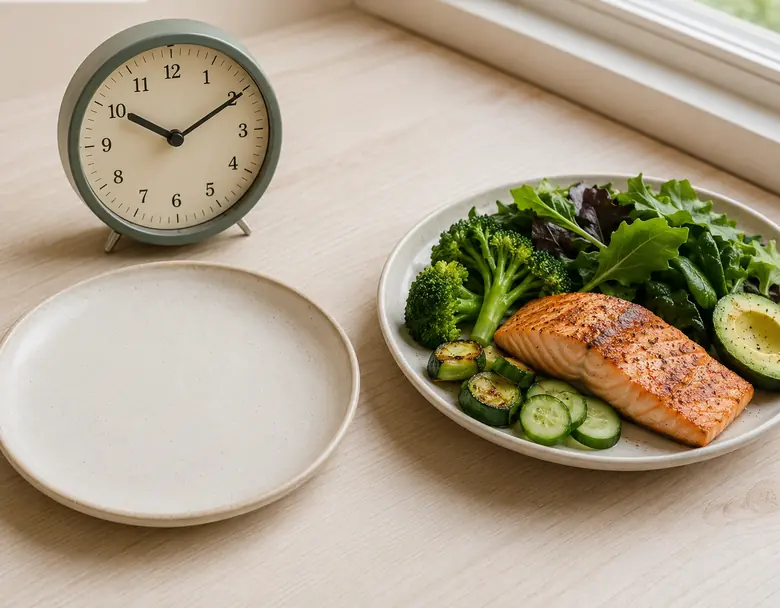
Intermittent fasting and low carb can both support weight loss for some people, but they work through different levers. Intermittent fasting changes when you eat. Low carb changes what you eat by reducing carbohydrate-rich foods. Neither approach is automatically better for everyone, and both can fail if the overall routine is too restrictive or hard to repeat.
If you are choosing between them, start with the question that matters most: which approach helps you eat in a steady, nourishing, realistic way without triggering rebound eating or unsafe symptoms?
Table of Contents
The core difference
| Question | Intermittent fasting | Low carb |
|---|---|---|
| Main rule | Set fasting and eating windows | Reduce carbohydrate intake |
| Biggest behavior change | Meal timing | Food choices |
| What it may reduce | Snacks, late-night eating, eating opportunities | Sugary foods, refined grains, starchy portions, some drinks |
| Main risk | Over-restriction, rebound eating, medication conflicts | Low fiber, constipation, fatigue, overly strict food rules |
| Best fit for | People who like time structure | People who prefer food-boundary structure |
Low carb is not the same as keto. Keto is a very low-carbohydrate, high-fat pattern designed to produce ketosis, while low-carb diets vary widely in how much carbohydrate they allow [1].
For a more specific discussion of keto plus fasting, see Keto and Intermittent Fasting.
How intermittent fasting may help weight loss
Intermittent fasting may help by reducing eating opportunities. For example, it may remove late-night snacks, second dinners, sugary morning drinks, or constant grazing.
But the fasting window does not guarantee a calorie deficit. Research does not show intermittent fasting is clearly superior to traditional dietary advice for adults with overweight or obesity [2]. The eating window still matters.
Intermittent fasting may be a better fit if:
- you prefer simple time boundaries
- late-night snacking is your main challenge
- breakfast is not important for your energy, medication, or schedule
- you can eat balanced meals without rebound overeating
- you want fewer rules about specific foods
It may be a poor fit if fasting makes you dizzy, overly hungry, anxious around food, or likely to binge during the eating window.
How low carb may help weight loss
Low carb may help some people reduce calorie intake by limiting foods that are easy to overeat, such as sweets, refined grains, sugary drinks, and large starchy portions. Mayo Clinic notes that most people lose weight by reducing calorie intake and increasing physical activity, and low-carb diets may lead to greater short-term weight loss than low-fat diets, while longer-term advantages may be small or hard to maintain [1].
Low carb may be a better fit if:
- you prefer changing food choices instead of meal timing
- sugary snacks or refined carbohydrates are your main challenge
- skipping meals leads to overeating
- family or work schedules make fasting difficult
- you can still eat enough fiber and balanced meals
It may be a poor fit if it becomes too restrictive, cuts out too many fiber-rich foods, or creates constipation, fatigue, headaches, or food anxiety.
Which is better for weight loss?
There is no universal winner. The better approach is the one that helps you create a realistic calorie pattern while still supporting nutrition, energy, and consistency.
| If this sounds like you | Consider starting with |
|---|---|
| You snack mostly at night | A moderate fasting window, such as 12:12 or 14:10 |
| You overeat after skipping meals | Low carb or balanced meal planning before fasting |
| Sweet drinks are the main issue | Drink swaps and lower-sugar habits first |
| You want fewer food rules | Intermittent fasting may feel simpler |
| You want fewer timing rules | Low carb may feel simpler |
| You have diabetes, take medications, are pregnant or breastfeeding, have kidney disease, or have an eating-disorder history | Clinician-guided advice, not a self-guided experiment |
A practical middle path can also work: keep a gentle overnight fasting window and reduce highly processed carbohydrates or sugary drinks without going very low carb.
Can you combine intermittent fasting and low carb?
You can, but do not stack restrictions too quickly. Combining fasting with low carb can reduce eating opportunities and carbohydrate intake at the same time, which may be harder on energy, digestion, mood, and adherence.
If you combine them, keep it conservative:
- start with 12:12 or 14:10, not an aggressive fast
- reduce sugary drinks and refined carbohydrates before cutting broad food groups
- keep vegetables, protein foods, healthy fats, and fiber in the eating window
- avoid treating ketosis as a sign of better results
- stop tightening the plan if rebound eating or food anxiety increases
Sudden or severe carbohydrate restriction can cause constipation, headache, muscle cramps, tiredness, weakness, and flu-like symptoms [1]. Keto diets can also be restrictive and may cause hunger, fatigue, low mood, irritability, constipation, headaches, and brain fog [3].
A simple decision checklist
Before choosing, ask:
- Which pattern can I repeat on workdays and weekends?
- Which one reduces my biggest calorie source without making me feel punished?
- Can I still eat enough protein, fiber, and balanced meals?
- Does this plan protect sleep, movement, and social life?
- Does it conflict with medications or a medical condition?
- Does it make my relationship with food better or worse?
GoFasting can help you log fasting windows, weight, steps, calorie intake, and water intake, then review patterns as you adjust your routine. It should not be used to decide whether low carb, keto, or fasting is medically appropriate.
FAQ
Is intermittent fasting better than low carb?
Not for everyone. Intermittent fasting changes timing, while low carb changes food choices. The better choice is the one that supports a realistic calorie pattern and balanced nutrition.
Is low carb better than intermittent fasting for weight loss?
Low carb may produce greater short-term weight loss than low-fat diets for some people, but long-term advantages may be small or hard to maintain [1]. It is not automatically better than fasting.
Can I do intermittent fasting without low carb?
Yes. Intermittent fasting does not require low carb. You can include carbohydrates during the eating window if the overall pattern supports your goal.
Is keto vs intermittent fasting different from low carb vs fasting?
Yes. Keto is a more restrictive very low-carb pattern, while low carb can be more flexible. Keto plus fasting should be treated as a higher-restriction combination [3].
Should I combine fasting and low carb to lose weight faster?
Not automatically. Combining restrictions can backfire. Start with one change, review how your body and habits respond, then adjust gradually.
Medical disclaimer
This article is for general education only and is not medical advice. Talk with a healthcare professional before starting or changing a fasting, low-carb, keto, or weight-loss plan if you have diabetes, take medications, are pregnant or breastfeeding, have kidney disease, liver disease, heart disease, are underweight, are recovering from illness or surgery, or have a current or past eating disorder.
References
- Mayo Clinic. Low-carb diet: Can it help you lose weight? https://www.mayoclinic.org/healthy-lifestyle/weight-loss/in-depth/low-carb-diet/art-20045831
- Cochrane. Intermittent fasting for adults with overweight or obesity https://www.cochrane.org/evidence/CD015610_intermittent-fasting-traditional-dietary-advice-or-no-treatment-which-works-better-help-adults
- Harvard T.H. Chan School of Public Health. Diet Review: Ketogenic Diet for Weight Loss https://nutritionsource.hsph.harvard.edu/healthy-weight/diet-reviews/ketogenic-diet/