



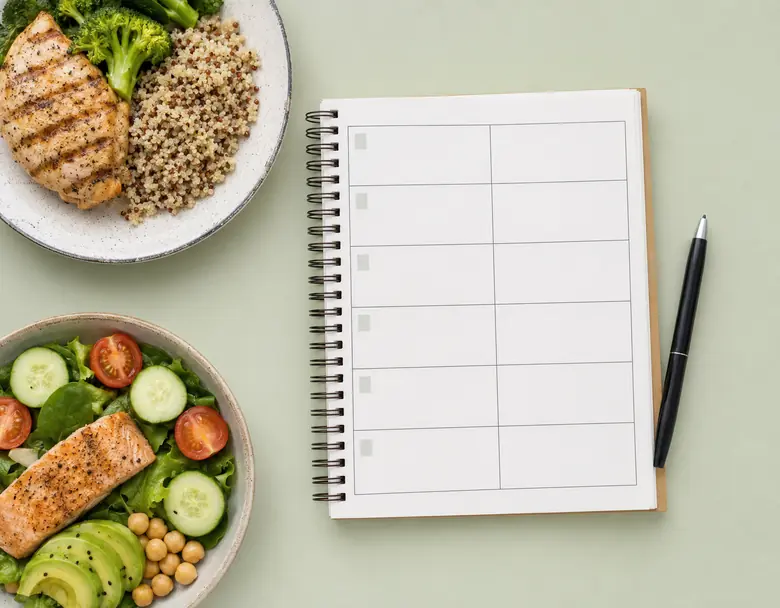
An intermittent fasting weight loss plan can help some people reduce eating opportunities and build a more consistent routine, but it does not guarantee weight loss. The eating window still matters, and research does not show intermittent fasting is clearly superior to traditional dietary advice for weight loss.[1][2] A realistic plan combines a manageable fasting schedule with balanced meals, enough protein and fiber, activity when appropriate, sleep, stress support, and a way to adjust when results or symptoms do not match expectations.
Key takeaways
- Intermittent fasting can be a structure for weight loss, not a guarantee.
- A realistic weight-loss plan should include food quality, total intake, activity, sleep, stress, and consistency.[3]
- Gradual, steady weight loss is generally more sustainable than fast results.[3]
- If your eating window leads to overeating, rushed meals, or food anxiety, adjust the plan.
- People with medical conditions, medications, pregnancy, breastfeeding, underweight status, or eating disorder risk should get professional guidance before fasting.[4]
Table of Contents
What results are realistic with intermittent fasting?
A fasting window may help weight loss if it helps you maintain a realistic calorie pattern over time. It does not bypass energy balance, nutrition quality, or individual medical context.
| Time frame | What may happen | What to avoid assuming |
|---|---|---|
| First week | You may notice less late-night snacking or a clearer routine. Scale changes may reflect water, meal timing, or normal fluctuation. | Do not judge the whole plan by a few days. |
| Weeks 2-4 | You may see whether the window helps reduce overeating or creates rebound hunger. | Do not make the window stricter just because progress is slower than you hoped. |
| 1-3 months | Consistency, meal quality, activity, and sleep patterns become more important. | Do not expect fasting alone to carry the plan. |
| 6 months | A realistic goal may involve gradual progress and habit maintenance, often with clinician input when medical issues are involved.[5] | Do not treat a fixed percentage as right for every person. |
The CDC notes that gradual, steady weight loss of about 1 to 2 pounds per week is more likely to be maintained.[3] That is a general public-health expectation, not a promise for any individual.
A simple intermittent fasting weight loss plan
Use this as a structure, not a rigid prescription.
Step 1: Choose a manageable fasting window
Start with 12:12 or 14:10 if you are new. Move toward 16:8 only if meals stay steady and you feel well. A gentler schedule is usually more reasonable than jumping into longer fasts.[6]
Step 2: Keep the eating window predictable
A common 16:8 example is eating from 12 p.m. to 8 p.m. Another option is 10 a.m. to 6 p.m. Choose the window that protects your most important meals and reduces your most common unplanned eating.
Step 3: Build meals that do the work
During the eating window, focus on nutrient-dense meals built around vegetables, fruit, protein foods, healthy fats, and whole grains.[7] If the window is full of sugary drinks, large portions, and low-fiber snacks, fasting is unlikely to solve the problem.
Step 4: Track patterns for two weeks
Track fasting windows, meals or calorie intake if useful, water intake, weight trends, and steps. Do not react to every daily scale change. Look for patterns.
GoFasting can help you log fasting windows, weight, steps, calorie intake, and water intake, then review patterns as you adjust your routine. Tracking supports consistency; it does not guarantee weight loss.
Step 5: Adjust one thing at a time
If progress stalls, do not immediately extend the fast. First check eating-window quality, portion sizes, drinks, weekend patterns, sleep, stress, and activity.
What to eat in the eating window
You do not need a complicated intermittent fasting weight loss diet, but you do need meals that make the window satisfying.
A practical plate can include:
- protein foods such as fish, poultry, eggs, yogurt, tofu, beans, or lentils;
- vegetables and fruit for volume, fiber, and micronutrients;
- whole grains or other satisfying carbohydrates when they fit your needs;
- healthy fats such as nuts, seeds, avocado, or olive oil;
- water, unsweetened tea, or coffee with little or no sugar.
Check added sugars on packaged drinks, flavored yogurts, sauces, desserts, and snacks. Added sugar is not the only nutrition factor, but it can make it harder to meet nutrient needs while staying within calorie needs.[8]
Why weight loss may not happen
If your weight is not changing, the fasting window may not be the problem. Common reasons include:
| Pattern | What to try |
|---|---|
| Eating much larger meals when the window opens | Add a planned first meal with protein and fiber instead of waiting until you feel out of control. |
| Drinking calories in the fasting or eating window | Check coffee add-ins, alcohol, smoothies, juices, and sweetened drinks. |
| Too little protein or fiber | Build meals that are more filling instead of relying on willpower. |
| Weekend routine is very different | Review weekly patterns, not only weekdays. |
| Poor sleep or high stress | Weight management is bigger than a fasting window.[3] |
| Window is too strict | Widen the window if restriction leads to rebound eating. |
Shortening the eating window alone may not be enough if the eating pattern inside that window does not support the goal.[9]
When to adjust, pause, or get help
Adjust the plan if fasting causes persistent dizziness, headaches, constipation, intense irritability, poor concentration, or sleep disruption. Stop and seek qualified support if fasting increases anxiety around food, binge-restrict cycles, or fixation on weight or food control.[10]
Talk with a health care professional before using fasting for weight loss if you have diabetes, take medications, are pregnant or breastfeeding, have chronic kidney disease, are underweight, are recovering from illness or surgery, or have a history of eating disorders.[4]
FAQ
Is 7 day intermittent fasting for weight loss enough to see results?
Seven days can show whether the routine feels possible, but it is too short to judge fat loss. Use the first week to learn your hunger patterns, meal quality, and schedule fit.
What is the best intermittent fasting schedule for weight loss?
There is no universal best schedule. The better starting point is the least restrictive window that helps you reduce unplanned eating while still supporting balanced meals.
Can I lose weight with 16:8?
Some people can, especially if 16:8 helps reduce overall intake. But 16:8 does not guarantee weight loss, and research does not support calling intermittent fasting clearly superior to traditional dietary advice.[1]
Should I count calories while intermittent fasting?
Some people find calorie tracking helpful; others do better with portions and meal structure. If tracking becomes stressful or obsessive, use a gentler method or seek professional support.
Bottom line
An intermittent fasting weight loss plan works best when it is realistic, flexible, and bigger than the fasting window. Start with a manageable schedule, build filling meals, track patterns calmly, and adjust based on results, symptoms, and your health context.
Medical disclaimer
This article is for general education only and is not medical advice. Weight-loss needs vary by person. Talk with a qualified health care professional before fasting if you have diabetes, take medications, are pregnant or breastfeeding, are underweight, have a medical condition, or have a history of eating disorders.
References
- Cochrane. Intermittent fasting for adults with overweight or obesity https://www.cochrane.org/evidence/CD015610_intermittent-fasting-traditional-dietary-advice-or-no-treatment-which-works-better-help-adults
- Harvard Health Publishing. Should you try intermittent fasting for weight loss? https://www.health.harvard.edu/blog/should-you-try-intermittent-fasting-for-weight-loss-202207282790
- CDC. Steps for Losing Weight https://www.cdc.gov/healthy-weight-growth/losing-weight/index.html
- Cleveland Clinic. 6 Tips for Fasting Safely https://health.clevelandclinic.org/tips-for-fasting-the-healthy-way
- NIDDK. Choosing a Safe & Successful Weight-loss Program https://www.niddk.nih.gov/health-information/weight-management/choosing-a-safe-successful-weight-loss-program
- Cleveland Clinic. Intermittent Fasting: What It Is, Benefits and Schedules https://health.clevelandclinic.org/intermittent-fasting-4-different-types-explained
- CDC. Tips for Healthy Eating for a Healthy Weight https://www.cdc.gov/healthy-weight-growth/healthy-eating/index.html
- FDA. Added Sugars on the Nutrition Facts Label https://www.fda.gov/food/nutrition-facts-label/added-sugars-nutrition-facts-label
- Lowe DA, Wu N, Rohdin-Bibby L, et al. JAMA Internal Medicine TREAT trial https://jamanetwork.com/journals/jamainternalmedicine/fullarticle/2771095
- National Institute of Mental Health. Eating Disorders https://www.nimh.nih.gov/health/topics/eating-disorders