



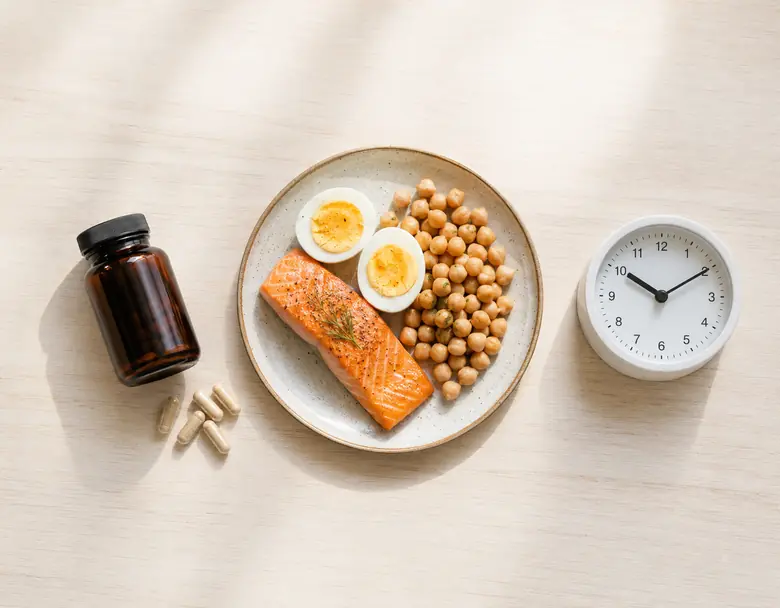
If a supplement contains calories, protein, fat, carbohydrates, sugar, or collagen, place it in your eating window for a clean fast. That means collagen powder and protein powder usually belong with meals, not in the fasting window. Creatine is different because many plain creatine monohydrate products contain no meaningful calories, but you still need to check the label and consider your health context.
Key takeaways
- Collagen is a protein, so the simplest clean-fasting answer is to take it in the eating window.[1]
- Protein powder is optional; it is not required for intermittent fasting.
- Creatine may fit a fasting window if it is plain and calorie-free, but flavored blends may contain sweeteners or calories.
- Supplement labels matter because serving size, calories, protein, carbohydrates, fat, and added sugars can change the answer.[2]
- Supplements are not approved like drugs and should not be treated as proven fasting boosters.[3]
Table of Contents
- Key takeaways
- When to take collagen when intermittent fasting
- Protein powder and intermittent fasting
- Creatine and intermittent fasting
- Supplements that usually belong in the eating window
- How to read a supplement label for fasting
- How GoFasting can help with supplement timing
- FAQ
- Bottom line
- Medical disclaimer
- References
When to take collagen when intermittent fasting
For a clean fast, take collagen during your eating window. Collagen powder provides protein and often calories, so it should not be grouped with water, black coffee, or unsweetened tea.[1][2]
Good times to take collagen include:
- with your first meal;
- in coffee during the eating window;
- blended into yogurt, oatmeal, or a smoothie during the eating window;
- at any time your clinician or dietitian has recommended for a specific reason.
Avoid framing collagen as a fasting shortcut. It should not be described as preserving muscle during fasting or improving fasting results unless a qualified professional has given you individualized advice.
Protein powder and intermittent fasting
Protein matters during the eating window, especially if you are trying to support satiety, fitness, or weight management. But the safest default is food first: protein foods such as fish, poultry, eggs, dairy, tofu, beans, lentils, nuts, seeds, and whole grains can all contribute to protein intake.[1]
Protein powder can be useful when it helps someone meet protein needs conveniently, but it is not required for fasting. It also does not belong in a clean fasting window if it adds calories or protein.
| Product | Clean fasting window? | Better timing |
|---|---|---|
| Whey protein | No | Eating window |
| Plant protein powder | No | Eating window |
| Collagen peptides | No | Eating window |
| Ready-to-drink protein shake | No | Eating window |
| Protein coffee with powder | No | Eating window |
If you have kidney disease, pregnancy, medical weight-loss treatment, older-adult nutrition concerns, or athletic performance goals, ask a qualified professional about protein needs rather than using a generic target.
Creatine and intermittent fasting
Creatine and intermittent fasting is a different question from protein powder. Plain creatine monohydrate is often calorie-free, so some people take it during the fasting window. However, many creatine products are flavored or combined with sweeteners, carbohydrates, electrolytes, caffeine, amino acids, or other ingredients.
A cautious rule:
- Plain creatine with no calories: may fit a fasting window for a flexible or calorie-based fast.
- Flavored creatine blend: check the label; if it has calories, sugar, carbs, or other nutrients, use the eating window.
- Medical context: ask a clinician first if you have kidney disease, take medications, are pregnant or breastfeeding, or have another medical condition.
Do not use creatine as proof that a fasting plan is safe or effective. Creatine timing is a supplement question, not a fasting-results guarantee.
Supplements that usually belong in the eating window
Some supplements are better taken with food because they contain calories, may affect digestion, or may be recommended that way on the label.
| Supplement or add-in | Why the eating window is safer |
|---|---|
| Collagen | Adds protein and calories. |
| Protein powder | Adds protein, calories, and often flavors or sweeteners. |
| MCT oil | Adds fat and calories. |
| Gummy vitamins | Often contain sugar or calories. |
| Fish oil | Adds fat and may be easier with food. |
| Fat-soluble vitamins | Often taken with meals, depending on product guidance. |
| Electrolyte drinks | May contain sugar, calories, sodium, or other ingredients. |
Dietary supplements are regulated differently from conventional foods and drugs, and companies are responsible for evaluating safety and labeling before marketing.[3] That means a supplement being sold does not prove it works for fasting.
How to read a supplement label for fasting
Before taking a supplement during a fast, check:
- serving size;
- calories per serving;
- protein;
- total carbohydrate and added sugars;
- fat;
- sweeteners;
- caffeine;
- sodium and electrolytes;
- directions about taking with food;
- warnings for pregnancy, breastfeeding, medications, kidney disease, diabetes, or other conditions.
If the label is unclear, use the eating window or ask a qualified professional.
How GoFasting can help with supplement timing
GoFasting can help you log fasting windows and review whether your routine is consistent. It can also help you track calorie intake and water intake as part of your broader routine. Keep supplement safety, medical questions, and individualized protein needs separate from app tracking.
FAQ
Does collagen break a fast?
For a clean fast, yes. Collagen is protein and often provides calories, so take it during the eating window.
Can I take creatine while intermittent fasting?
Plain, calorie-free creatine may fit some fasting routines, but check the label. Flavored blends with calories, sugars, or other nutrients belong in the eating window.
Should I take protein before or after a fast?
Take protein during the eating window. Your first meal after a fast can include protein foods, fiber-rich plants, and satisfying carbohydrates or healthy fats.
Are supplements necessary for intermittent fasting?
No. Supplements are not required for intermittent fasting. Use them only when they serve a clear nutrition need, fit your health context, and do not replace balanced meals.
Bottom line
For clean fasting, keep the fasting window simple and place collagen, protein powder, calorie-containing supplements, and most add-ins in the eating window. Plain creatine may be different, but labels and health context still matter.
Medical disclaimer
This article is for general education only and is not medical advice. Ask a qualified health care professional about supplements if you are pregnant or breastfeeding, have diabetes, kidney disease, liver disease, eating disorder risk, medication concerns, or another medical condition.
References
- Harvard T.H. Chan School of Public Health. Protein https://nutritionsource.hsph.harvard.edu/what-should-you-eat/protein/
- FDA. How to Understand and Use the Nutrition Facts Label https://www.fda.gov/food/nutrition-facts-label/how-understand-and-use-nutrition-facts-label
- FDA. Dietary Supplements https://www.fda.gov/food/dietary-supplements