



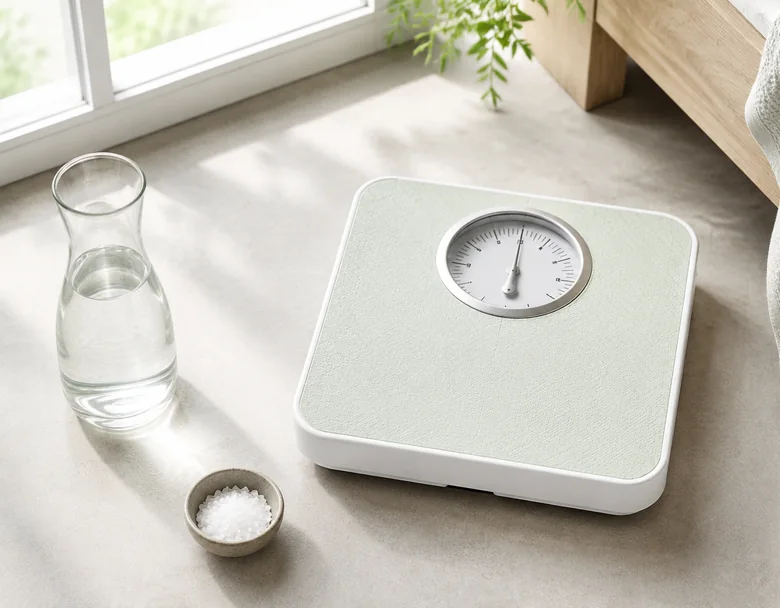
Daily weight changes during intermittent fasting are usually not the same as daily fat gain or fat loss. Water balance, sodium, carbohydrate intake, digestion, exercise, sleep, stress, menstrual-cycle timing, and weighing conditions can move the scale. Use weekly trends and consistent measurements before deciding that fasting is or is not working.[1][2]
Key takeaways
- A one-day increase after fasting is often water, food volume, or digestion.
- Fasting can make scale timing more noticeable when meal and fluid timing changes.
- Weigh under similar conditions and compare weekly averages.
- Tracking can show patterns but cannot diagnose swelling or unexplained fluid retention.
- Sudden unexplained changes with swelling, shortness of breath, chest pain, or severe symptoms need medical attention.[3]
Table of Contents
Why can weight change from day to day?
Scale weight is the combined effect of body tissue, stored carbohydrate, water, food and stool in the digestive tract, and measurement conditions. A change over 24 hours is therefore too short to identify a change in body fat with confidence.
| Possible factor | Why the scale may move |
|---|---|
| Sodium | Temporary water retention can increase weight |
| Carbohydrates | Stored glycogen is associated with water |
| Later or larger meal | More food and fluid may still be digesting |
| Hard workout | Soreness and short-term fluid shifts can occur |
| Poor sleep or stress | Appetite, activity, and fluid patterns may change |
| Menstrual-cycle or hormone changes | Water retention and appetite can vary |
| Constipation | Digestive contents remain longer |
| Different weighing time | Food, fluids, clothing, and bathroom timing differ |
Why might weight rise after fasting?
Weight can rise after a fast if the first meal is salty, carbohydrate-heavy, larger than usual, or later than usual. The increase may reflect water and food volume rather than failure of the routine. A fast can also create a rebound pattern in which someone eats more during the eating window than intended. In that case, review the full week rather than trying to compensate with an even longer fast.[1][2]
How to track weight more usefully
- Weigh at a consistent time, preferably after using the bathroom and before eating, if daily weighing is comfortable for you.
- Record the date, weight, fasting window, unusual meals, exercise, sleep, and menstrual-cycle context when relevant.
- Compare a seven-day average or multi-week trend, not isolated readings.
- Add waist fit, energy, strength, meal consistency, and symptoms as optional non-scale markers.
- If weighing increases anxiety or drives restrictive or binge-like behavior, reduce weighing and seek support.
For a broader progress review, see Intermittent Fasting Results: 2 Weeks, 1 Month, 2 Months.
How tracking can reveal a pattern
After collecting several days of comparable measurements, review the context around each change rather than treating the scale as a daily verdict. Look for repeatable patterns such as a rise after a salty or higher-carbohydrate meal, a drop after improved sleep, or a flat trend during a stressful week. A simple log can include weight, fasting and eating times, unusual meals, bowel movements, activity, sleep, and menstrual-cycle context when relevant. The purpose is to choose a measured adjustment—or no adjustment—not to compensate for every fluctuation.
When should you adjust the fasting routine?
Do not react to one higher reading. Review the plan when the weekly trend has been stable for several weeks and your meals, drinks, activity, sleep, and schedule have been reasonably consistent. Before extending the fast, check whether you are having large first meals, grazing, drinking calories, moving less, or sleeping poorly. For plateau troubleshooting, see Weight Loss Plateau During Intermittent Fasting.
If the fast is causing dizziness, persistent weakness, worsening sleep, binge-restrict cycles, or intense anxiety around weight, shorten or pause it instead of tightening the rules.
When does weight change need medical guidance?
Contact a health professional about sudden or unexplained weight change, especially when it occurs with swelling, shortness of breath, chest pain, fainting, severe weakness, or other concerning symptoms.[3] Also seek individualized advice if you have diabetes, kidney or heart disease, take medication that affects glucose or fluid balance, are pregnant or breastfeeding, or are recovering from illness or surgery.
FAQ
How much daily weight fluctuation is normal?
There is no single normal number for everyone. Day-to-day weight can move because of water, sodium, carbohydrates, digestion, exercise, sleep, stress, hormones, and weighing conditions. Your multi-week pattern is more informative than a universal cutoff.
Why does my weight fluctuate during intermittent fasting?
Fasting changes the timing of food and fluids, which can make water and digestion changes easier to notice. The eating-window composition and the timing of the weigh-in also matter.
Does a one-day gain mean intermittent fasting is not working?
No. Wait for a consistent trend across several weeks and review the full eating pattern. One reading cannot distinguish water or digestive contents from body-fat change.
Is water weight a bad result?
Not by itself. Short-term water changes are a normal part of scale weight and can move with sodium, carbohydrates, exercise, hormones, hydration, and digestion. The useful question is whether the multi-week trend and the routine are moving in a direction that fits your goal, not whether every daily reading is lower.
Should I weigh myself every day?
Only if daily data helps you stay calm and interpret trends. If it increases anxiety or restrictive behavior, weigh less often and use waist fit, clothing, strength, and routine consistency as additional markers.
Bottom line
Treat daily scale movement as noisy feedback, not a verdict. Measure consistently, use weekly trends, investigate the full routine before changing the fast, and seek medical guidance for sudden unexplained changes or severe symptoms.
Medical disclaimer
This article is general educational information, not medical advice. Consult a qualified health professional for unexplained weight changes, swelling, breathing symptoms, chest pain, fainting, diabetes, medication questions, pregnancy, breastfeeding, or other medical concerns.
References
- CDC. Steps for Losing Weight https://www.cdc.gov/healthy-weight-growth/losing-weight/index.html
- NIDDK. Choosing a Safe & Successful Weight-loss Program https://www.niddk.nih.gov/health-information/weight-management/choosing-a-safe-successful-weight-loss-program
- MedlinePlus. Edema https://medlineplus.gov/edema.html