

Low-Carb Kung Pao Chicken
- Total time
- 27 minutes
- Calories
- 325 kcal
- Protein
- 42 g
- Serves
- 4
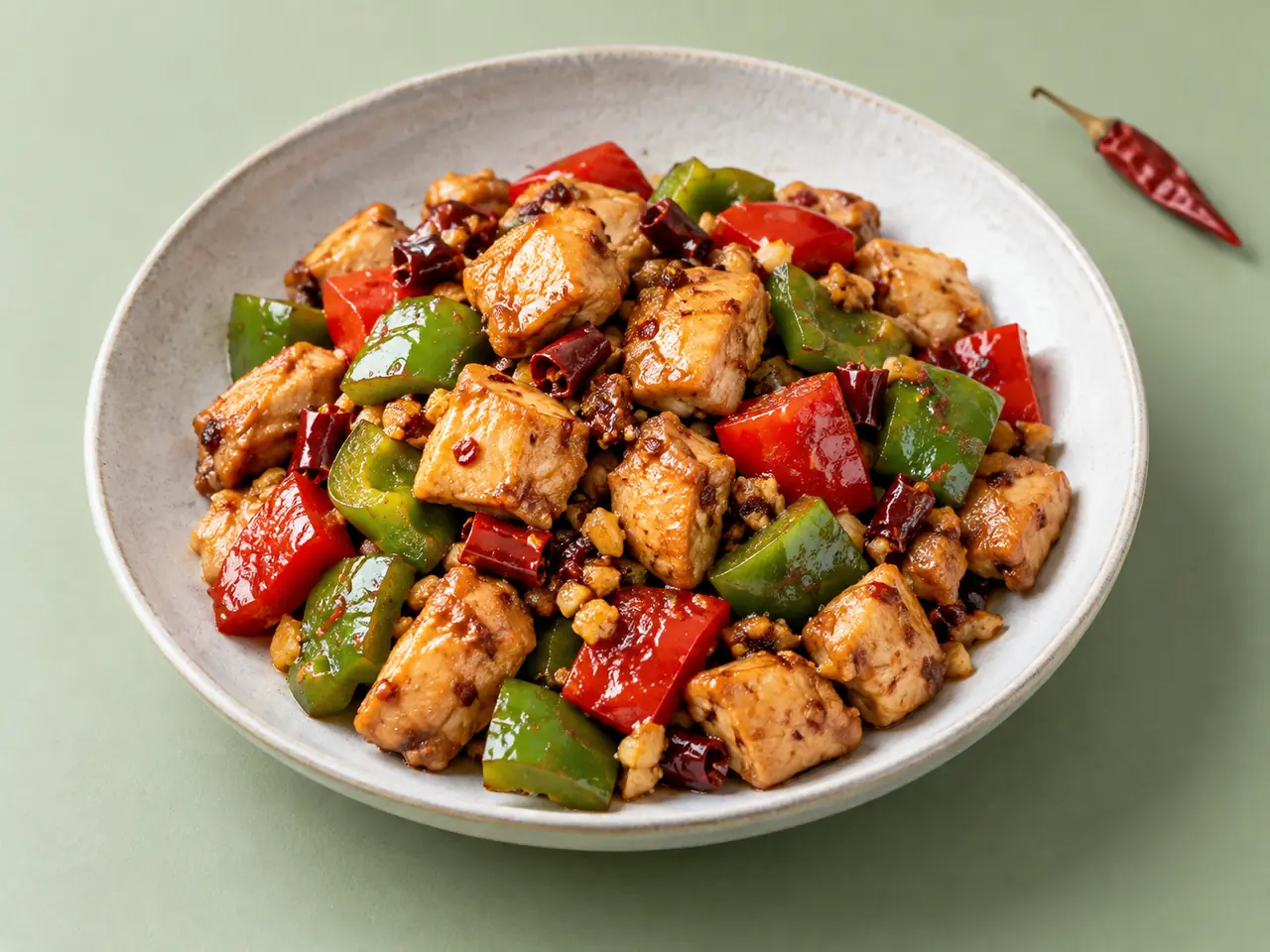
This low-carb Kung Pao chicken is a 27-minute one-pan dinner for four. Chicken, peppers, zucchini, and peanuts cook in a savory-spicy sauce thickened without cornstarch.
Nutrition per serving
- Calories
- 325 kcal
- Protein
- 42 g
- Carbs
- 9 g
- Fat
- 12 g
- Fiber
- 2 g
- Sodium
- 430 mg
Estimated from the listed ingredients.
- Prep
- 15 minutes
- Cook
- 12 minutes
Ingredients
For the chicken and vegetables
- 1½ lb (680 g) boneless, skinless chicken breasts, cut into 1-inch pieces
- 1 tbsp avocado oil or another neutral, high-heat oil
- 1 medium red bell pepper, cut into 1-inch pieces
- 1 medium green bell pepper, cut into 1-inch pieces
- 1 small zucchini, halved lengthwise and sliced
- 4 scallions, sliced; keep the white and green parts separate
- ¼ cup (28 g) roasted unsalted peanuts
- 4–6 dried red chiles, optional; use fewer for milder heat
For the sauce
- 2 tbsp reduced-sodium tamari
- 1 tbsp rice vinegar
- 1 tbsp chili-garlic sauce
- 2 tsp granulated monk fruit sweetener
- 1 tsp toasted sesame oil
- 2 cloves garlic, finely grated or minced
- 1 tsp finely grated fresh ginger
- ¼ tsp xanthan gum
- 2 tbsp water
Before you start
Allergen alert: This recipe contains peanuts and soy. If you need to avoid either, choose the replacement and verify packaged sauces before you begin.
- Tamari: Use a reduced-sodium tamari that suits your dietary needs. Standard soy sauce will change the sodium level. If you need a gluten-free version, verify the tamari, chili-garlic sauce, and every packaged ingredient before using them.
- Xanthan gum: This lightly thickens the sauce without cornstarch. You can leave it out, but expect a thinner sauce.
- Peanuts: Toasted cashews can replace peanuts for a different flavor, but they change the carbohydrate and allergen profile. For a peanut-free version, use toasted pumpkin seeds and update the nutrition calculation.
Instructions
-
Make the sauce. In a small bowl, whisk together the tamari, rice vinegar, chili-garlic sauce, monk fruit sweetener, sesame oil, garlic, ginger, and water. Set the xanthan gum aside for now.
-
Cook the chicken. Heat a 12-inch skillet or wok over medium-high heat. Add the avocado oil. Add the chicken in an even layer and season lightly with pepper. Cook for 5–6 minutes, turning once or twice, until browned and the thickest pieces reach 165°F (74°C). Transfer the chicken to a plate.
-
Cook the vegetables. Add the white parts of the scallions, bell peppers, zucchini, and dried chiles, if using, to the skillet. Stir-fry for 3–4 minutes, until the peppers are bright and the zucchini is crisp-tender.
-
Finish the sauce. Return the chicken and any juices to the skillet. Stir the sauce once more, then pour it in. Sprinkle the xanthan gum evenly over the pan while tossing continuously. Cook for 1–2 minutes, until the sauce lightly coats the chicken and vegetables.
-
Serve. Remove the skillet from the heat. Stir in the peanuts and green parts of the scallions. Divide among four bowls and serve hot.
Optional variation
- Chicken thighs: Boneless, skinless thighs can replace chicken breast. They will make the dish richer and change the nutrition values.
Meal prep, storage, and reheating
Cool leftovers promptly, then refrigerate them in a sealed container for up to 3 days. Reheat in a skillet over medium heat with 1–2 tablespoons of water until hot throughout. A microwave also works; cover loosely and heat in short intervals, stirring once, so the chicken does not dry out.
For the best texture, store cooked cauliflower rice or another side separately. The zucchini will soften after refrigeration, so keep it crisp-tender when first cooking the dish.
Recipe FAQ
How do I keep low-carb Kung Pao chicken from becoming watery?
Cook the chicken first, then stir-fry the vegetables briefly over medium-high heat. Add the sauce only after the vegetables are crisp-tender. Sprinkle in the xanthan gum while tossing continuously; adding it all in one spot can make the sauce clump.
Can I make the sauce without xanthan gum?
Yes. The flavor will remain the same, but the sauce will be thinner. After adding the sauce, let it simmer for an extra 1–2 minutes so it reduces slightly; keep tossing so the chicken and vegetables stay coated. Do not replace it with cornstarch if you want to keep this version lower in carbohydrates.
What can I serve with low-carb Kung Pao chicken?
Serve it on its own, with cauliflower rice, or with a simple cucumber salad. Choose a side that matches your own carbohydrate target and update the nutrition calculation if you serve it as part of a different meal.