



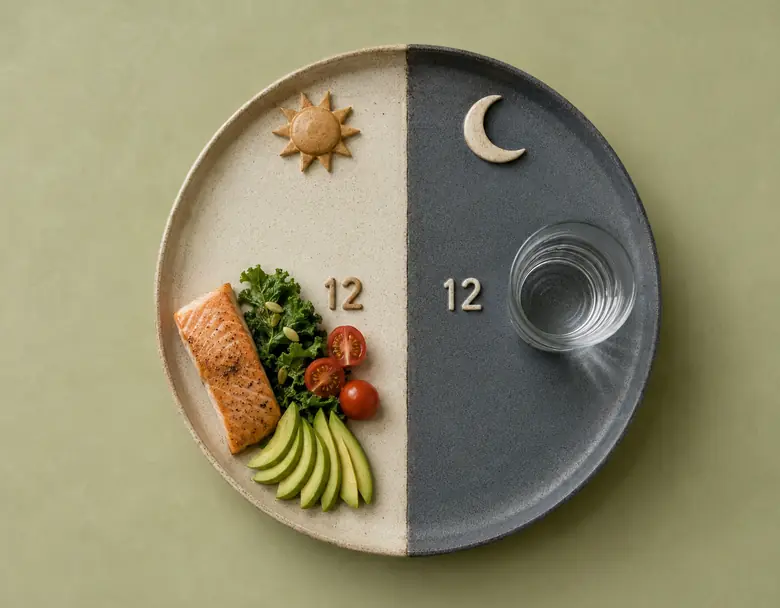
12/12 intermittent fasting means fasting for 12 hours and eating during the other 12 hours of the day. For many people, it is one of the gentlest ways to try intermittent fasting because most of the fasting window can happen overnight. It is not a shortcut or a medical treatment, but it can be a practical first step if you want a simple routine before considering a longer fasting schedule.[1][2][3]
Key takeaways
- 12/12 intermittent fasting usually means a 12-hour eating window and a 12-hour fasting window.
- It may fit beginners, people returning after a break, or anyone who wants a low-pressure overnight fast.
- It is usually less restrictive than 14:10, 16:8, 5:2, or 24-hour fasting.
- Food quality still matters; a 12-hour fast does not cancel out overeating or highly sugary meals.
- Pregnancy, breastfeeding, diabetes, eating-disorder history, underweight status, medications that require food, and medical conditions call for clinician guidance before fasting.
Table of Contents
What a 12/12 fasting day looks like
A 12/12 schedule is simple: choose a 12-hour window for meals and snacks, then stop calories for the next 12 hours.
| Example schedule | Eating window | Fasting window | Who may find it easier |
|---|---|---|---|
| Early routine | 7 a.m. to 7 p.m. | 7 p.m. to 7 a.m. | Early risers, family dinners |
| Standard routine | 8 a.m. to 8 p.m. | 8 p.m. to 8 a.m. | Most workdays, social dinners |
| Later routine | 10 a.m. to 10 p.m. | 10 p.m. to 10 a.m. | Later schedules, shift-style mornings |
During the fasting window, plain water is the simplest default. Black coffee or unsweetened tea may also fit a clean fasting window for many people, but adding sugar, cream, milk, collagen, or caloric ingredients turns the drink into part of the eating window rather than a clean fast.
Who 12-hour intermittent fasting may fit
A 12-hour intermittent fast may be a reasonable starting point if you mainly want structure, fewer late-night snacks, or a routine you can repeat without feeling overly restricted.
It may fit you if:
- you are new to intermittent fasting;
- you want to stop eating earlier at night without skipping major meals;
- you have struggled with more aggressive schedules;
- you want to test consistency before trying 14:10 or 16:8;
- your main goal is building a routine, not chasing fast results.
It may not be the right fit without medical guidance if fasting could affect medication timing, blood sugar, pregnancy or breastfeeding nutrition, recovery from illness or surgery, or eating-disorder risk.
How to start 12/12 intermittent fasting
Start by choosing a window that already matches your life. If dinner usually ends around 7:30 p.m., your first fasting window might be 8 p.m. to 8 a.m. The goal is not to create the hardest schedule; it is to create one you can repeat.
A simple first week can look like this:
- Pick your 12-hour eating window.
- Keep the same start and stop time for at least five days.
- Drink water during the fasting window.
- Build meals around protein foods, fiber-rich plants, whole grains or satisfying carbohydrates, and healthy fats.
- Notice whether late-night snacking, morning hunger, or meal timing becomes easier.
- If symptoms feel persistent, severe, or unsafe, shorten the fast and get medical guidance.
GoFasting can support consistency by helping you log fasting windows, weight, steps, calorie intake, and water intake, then review patterns as you adjust your routine. Tracking can make the experiment clearer, but it does not decide whether fasting is medically appropriate.
Should you move from 12/12 to a longer fasting schedule?
Do not move longer just because 12/12 feels easy for one or two days. Longer fasts are not automatically better, and some longer fasts may be difficult or risky for certain people.
Before changing to 14:10 or 16:8, ask:
- Can I complete 12/12 without feeling preoccupied with food?
- Am I eating enough balanced meals during the eating window?
- Are headaches, dizziness, constipation, mood changes, or fatigue becoming frequent?
- Would a longer fast conflict with medication, workouts, family meals, or sleep?
- Is my goal realistic without relying only on the fasting window?
If 12/12 reduces late-night grazing and feels sustainable, it may be enough. If it feels too easy but your meals are chaotic, improving the eating window may matter more than extending the fast.
FAQ
Is 12/12 intermittent fasting enough to count as fasting?
Yes. A 12-hour fast can count as intermittent fasting because it alternates a fasting window with an eating window. It is a gentle version, not a failure or a "less real" approach.
Can you lose weight with 12 hour intermittent fasting?
Some people may eat fewer calories when they stop late-night snacking, but 12/12 does not guarantee weight loss. Food quality, portion size, activity, sleep, stress, and overall calorie intake still matter.
What can I drink during a 12-hour fast?
Plain water is the safest default. Black coffee or unsweetened tea may fit a clean fast for many people. Drinks with sugar, milk, cream, alcohol, juice, or caloric add-ins belong in the eating window.
Is 12/12 better than 16/8?
Not for everyone. 12/12 is easier and less restrictive, while 16/8 creates a shorter eating window. The better choice is the one that is appropriate for your health context and repeatable without pushing you into under-eating or symptoms.
Bottom line
12/12 intermittent fasting is a beginner-friendly way to add structure without jumping into a strict schedule. Start with a realistic overnight window, keep meals balanced, and only consider a longer fast if your routine, nutrition, and health context support it.
Medical disclaimer
This article is for general education only and is not medical advice. If you are pregnant, breastfeeding, underweight, recovering from an eating disorder, managing diabetes or another medical condition, or taking medication that needs food, speak with a qualified health professional before trying intermittent fasting.
References
- Johns Hopkins Medicine. Intermittent Fasting: What Is It, and How Does It Work? https://www.hopkinsmedicine.org/health/expert-qa/intermittent-fasting-what-is-it-and-how-does-it-work
- Cleveland Clinic. Intermittent Fasting: What It Is, Benefits and Schedules https://health.clevelandclinic.org/intermittent-fasting-4-different-types-explained
- CDC. Tips for Healthy Eating for a Healthy Weight https://www.cdc.gov/healthy-weight-growth/healthy-eating/index.html