

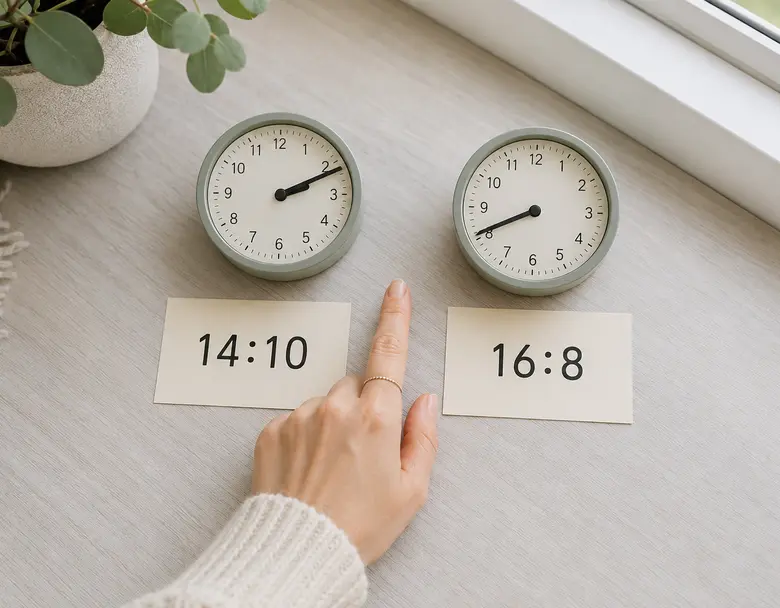
Fasting Plans: How to Choose, Compare, and Adjust an Intermittent Fasting Schedule
Choosing an intermittent fasting plan means choosing a repeatable eating schedule, not chasing the longest possible fast. A useful plan should fit you...
Find the eating window that fits your life, with safety tips.





A 72-hour fast means going three full days without food. It is not a routine starting point for intermittent fasting, and a longer fast is not automat...
A 36-hour fast usually means going one full day and two nights without calories—for example, finishing dinner on Monday and eating breakfast on Wednes...

Water fasting means consuming only water and no food for a continuous period. It is different from everyday intermittent fasting, where food is still...
A 48-hour fast means going two full days without calorie-containing food. It is an extended fast, not a beginner default or a shortcut to a particular...
15:9 intermittent fasting means fasting for 15 hours and eating within a 9-hour window each day. For example, you might finish dinner at 7 p.m., fast...

There is no single best intermittent fasting schedule for everyone. The most useful starting point is usually the shortest fasting window you can foll...

To change your fasting window without making it harder, first identify whether you are changing the fasting length, the clock time of your meals, or b...

Rotational fasting is an intermittent fasting approach where your fasting schedule changes across the week instead of staying the same every day. A pe...

Fat fasting usually refers to a short, very high-fat, low-calorie eating pattern, often discussed in keto communities. It is not the same as standard...

The best intermittent fasting schedule for weight loss is usually the one that helps you reduce unplanned eating and follow a balanced eating pattern...