



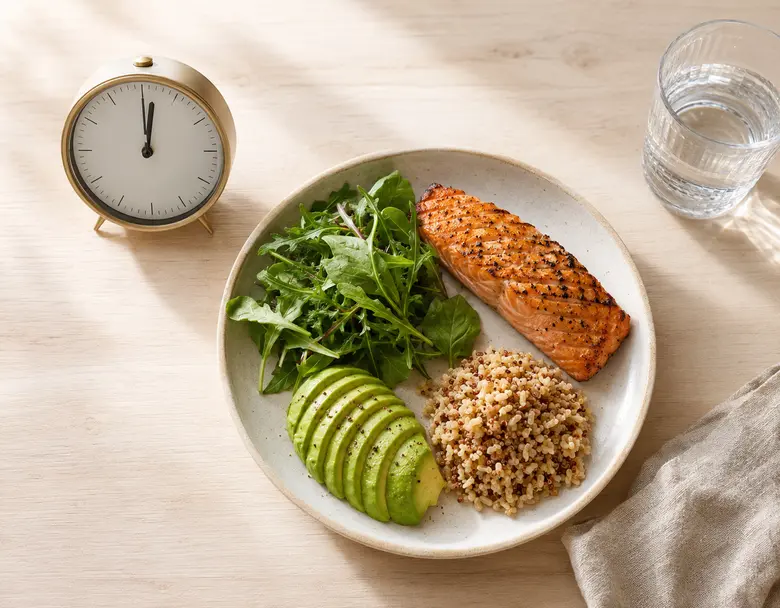
A 16/8 intermittent fasting diet plan means fasting for 16 hours and eating during an 8-hour window. For weight loss, the plan works only if the eating window supports a realistic calorie pattern, balanced meals, and consistency. The fasting window alone does not guarantee results.[1][2]
Key takeaways
- A common 16/8 pattern is noon to 8 p.m. or 10 a.m. to 6 p.m.
- Build meals around protein foods, vegetables, fruit, whole grains or other fiber-rich carbohydrates, and healthy fats.[3][4]
- Water, black coffee, and unsweetened tea are the simplest fasting-window drinks.[1]
- A shorter eating window can backfire if it leads to overeating, skipped nutrients, or binge-like eating.
- If 16/8 feels too restrictive, try 14:10 before returning to 16/8.
Table of Contents
Sample 16/8 schedule
| Time | What to do | Example |
|---|---|---|
| 8 p.m. to noon | Fasting window | Water, black coffee, unsweetened tea |
| Noon | First meal | Greek yogurt bowl; eggs and toast; tofu rice bowl |
| 3 to 4 p.m. | Optional snack | Fruit with nuts; hummus and vegetables; cottage cheese |
| 7 p.m. | Final meal | Salmon, beans, chicken, or tempeh with vegetables and a filling carb |
| 8 p.m. | Begin fasting | Switch back to plain drinks |
If noon feels too late, use 10 a.m. to 6 p.m. The best version is the one that lets you eat calmly and repeat the routine.
16/8 intermittent fasting food list
| Food group | Examples | Why it helps |
|---|---|---|
| Protein foods | Eggs, fish, poultry, tofu, tempeh, lentils, beans, Greek yogurt | Supports fullness and balanced meals |
| Vegetables | Leafy greens, broccoli, peppers, carrots, cucumbers, tomatoes | Adds fiber, volume, and micronutrients |
| Fruit | Berries, apples, oranges, bananas, melon | Adds fiber and naturally sweet options |
| Fiber-rich carbs | Oats, brown rice, quinoa, potatoes, whole-grain bread | Helps meals feel satisfying |
| Healthy fats | Olive oil, avocado, nuts, seeds | Adds flavor and staying power |
| Drinks | Water, sparkling water, black coffee, unsweetened tea | Keeps fasting and eating windows simpler |
Healthy eating plans can include a variety of nutrient-dense foods while staying within calorie needs.[3]
Three-day 16/8 meal plan
| Day | First meal | Snack if needed | Final meal |
|---|---|---|---|
| Day 1 | Turkey, tofu, or chickpea wrap with vegetables | Greek yogurt with berries | Salmon or tempeh, potatoes, greens, olive oil |
| Day 2 | Eggs with vegetables, fruit, and whole-grain toast | Apple with peanut butter | Chicken or lentil bowl with rice, vegetables, and avocado |
| Day 3 | Oats with milk or yogurt, nuts, and berries | Hummus with carrots | Bean chili with salad and whole-grain bread |
For a full week of meal structure, use the 16/8 Intermittent Fasting 7-Day Meal Plan.
Foods and drinks to limit more often
Limit choices that make the eating window less filling or easier to overdo:
- Sugary coffee drinks
- Soda, sweet tea, sports drinks, and energy drinks
- Frequent desserts as the main snack
- Large fried meals after a long fast
- Alcohol before eating a balanced meal
- Low-protein snack grazing
Added sugars can make it harder to meet nutrient needs while staying within calorie limits.[5]
How to use 16/8 for weight loss without overpromising results
Intermittent fasting may help some people reduce eating opportunities, but research does not show it is clearly superior to traditional dietary advice for weight loss.[2] Weight management is bigger than a fasting window; eating pattern, activity, sleep, and stress all matter.[6]
To keep the plan realistic:
- Keep portions steady instead of “making up” for the fast.
- Include protein at both meals.
- Keep sugary drinks out of the default routine.
- Choose a schedule that prevents late-night grazing without causing daytime under-eating.
- Track patterns for two to four weeks before deciding whether to adjust.
How GoFasting can support the plan
GoFasting can help you log fasting windows, weight, steps, calorie intake, and water intake, then review patterns as you adjust your routine.
If the 16/8 schedule repeatedly leads to rushed meals, low water intake, or overeating when the window opens, consider a gentler eating window.
FAQ
What is the best 16/8 intermittent fasting diet plan for weight loss?
A realistic plan uses two balanced meals and an optional snack inside the 8-hour window. It should support a calorie pattern you can maintain without extremes.
What can I eat on a 16/8 intermittent fasting plan?
Choose protein foods, vegetables, fruit, whole grains or other fiber-rich carbohydrates, healthy fats, and mostly unsweetened drinks.
Can I skip the snack on 16/8?
Yes, if you can still eat enough balanced food at meals. If skipping a snack leads to overeating later, include a planned snack.
Is 16/8 better than 14:10?
Not automatically. 16/8 may fit some people, while 14:10 may be easier to sustain and still provide structure.
Bottom line
A 16/8 intermittent fasting diet plan should make eating simpler, not harsher. Use balanced meals, plain fasting-window drinks, realistic portions, and a schedule you can repeat.
Medical disclaimer
This article is for general educational purposes only and is not medical advice. Talk with a qualified health care professional before fasting if you have a medical condition, take medications, are pregnant or breastfeeding, are underweight, have an eating disorder history, or feel unwell while fasting.
References
- Johns Hopkins Medicine. Intermittent Fasting: What Is It, And How Does It Work? https://www.hopkinsmedicine.org/health/expert-qa/intermittent-fasting-what-is-it-and-how-does-it-work
- Cochrane. Intermittent fasting for adults with overweight or obesity https://www.cochrane.org/evidence/CD015610_intermittent-fasting-traditional-dietary-advice-or-no-treatment-which-works-better-help-adults
- CDC. Tips for Healthy Eating for a Healthy Weight https://www.cdc.gov/healthy-weight-growth/healthy-eating/index.html
- Harvard T.H. Chan School of Public Health. Healthy Eating Plate https://nutritionsource.hsph.harvard.edu/healthy-eating-plate/
- FDA. Added Sugars on the Nutrition Facts Label https://www.fda.gov/food/nutrition-facts-label/added-sugars-nutrition-facts-label
- CDC. Steps for Losing Weight https://www.cdc.gov/healthy-weight-growth/losing-weight/index.html