



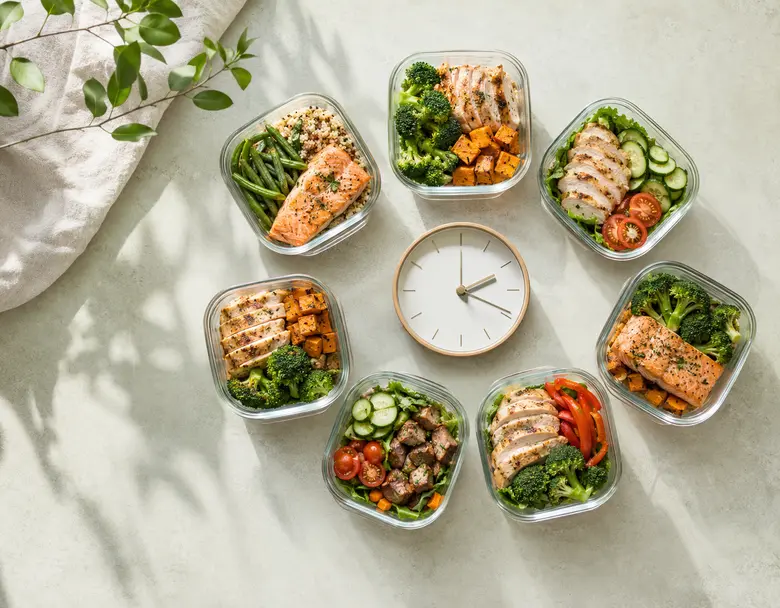
A 16/8 intermittent fasting meal plan uses a 16-hour fasting window and an 8-hour eating window. During the eating window, focus on balanced meals with protein foods, vegetables, fruits, fiber-rich carbohydrates, healthy fats, and mostly unsweetened drinks. The plan below is a practical template, not a medical diet or a promise of weight loss.[1][2]
Key takeaways
- A common 16/8 schedule is 12 p.m. to 8 p.m. for eating, then 8 p.m. to 12 p.m. fasting.
- During the fast, keep drinks simple: water, black coffee, or unsweetened tea.[1]
- Each eating window should include enough protein, fiber, fluids, and satisfying meals.
- If 16/8 causes rebound eating, poor sleep, dizziness, or food anxiety, choose a gentler schedule.
- GoFasting can help you log fasting windows, calorie intake, water intake, steps, and weight as you review patterns.
Table of Contents
How this 16/8 meal plan works
This sample uses a 12 p.m. to 8 p.m. eating window. Adjust the hours if your meals, work, family, or sleep schedule needs a different window.
| Time | What to do |
|---|---|
| 8 p.m.-12 p.m. | Fast; choose water, black coffee, or unsweetened tea |
| 12 p.m. | First meal |
| 3-4 p.m. | Optional snack if needed |
| 6:30-7:30 p.m. | Dinner |
| After 8 p.m. | Return to fasting-window drinks |
A shorter eating window makes meal quality more important. Do not save the whole day for one very large meal.
16/8 intermittent fasting 7-day meal plan
| Day | First meal | Optional snack | Dinner |
|---|---|---|---|
| Day 1 | Greek yogurt bowl with berries, oats, and walnuts | Apple with peanut butter | Salmon, roasted vegetables, and potatoes |
| Day 2 | Eggs with spinach, tomatoes, and whole-grain toast | Carrots with hummus | Chicken or tofu rice bowl with vegetables and avocado |
| Day 3 | Lentil soup with side salad and fruit | Cottage cheese or soy yogurt | Turkey, bean, or tempeh tacos with cabbage slaw |
| Day 4 | Tuna, chickpea, or white-bean salad with whole-grain crackers | Nuts and berries | Stir-fry with shrimp, tofu, or chicken, vegetables, and brown rice |
| Day 5 | Oatmeal with Greek yogurt, berries, and seeds | Hard-boiled egg or edamame | Lean beef, tofu, or lentil pasta with vegetables |
| Day 6 | Chicken, tofu, or bean wrap with salad | Pear with nuts | Chili with beans, vegetables, and a side salad |
| Day 7 | Omelet or tofu scramble with vegetables and fruit | Plain yogurt with cinnamon | Baked fish, tempeh, or chicken with quinoa and vegetables |
Swap proteins, grains, and vegetables based on preference and dietary needs. The goal is a balanced structure, not a rigid menu.
Foods to use often during 16/8 intermittent fasting
| Category | Examples |
|---|---|
| Protein foods | Eggs, fish, poultry, tofu, tempeh, beans, lentils, Greek yogurt, lean meats |
| Vegetables | Leafy greens, broccoli, peppers, carrots, tomatoes, zucchini, mushrooms |
| Fruits | Berries, apples, oranges, bananas, pears, melon |
| Fiber-rich carbohydrates | Oats, potatoes, brown rice, quinoa, beans, lentils, whole-grain bread |
| Healthy fats | Olive oil, avocado, nuts, seeds |
| Drinks | Water, sparkling water, black coffee, unsweetened tea |
A healthy eating plan can include a variety of nutrient-dense foods and should stay within daily calorie needs.[3]
Foods and drinks to limit
You do not need to avoid every treat. But the foods below can make a short eating window less filling and easier to overeat.
| Limit more often | Why |
|---|---|
| Sugary drinks | Add calories quickly without much fullness |
| Sweet coffee drinks | Can turn coffee into a dessert-sized drink |
| Highly processed snacks | Easy to graze on during the eating window |
| Large desserts as a routine | Can crowd out more nourishing meals |
| Alcohol | Adds calories and can affect sleep and health risks |
| Oversized “reward” meals | Can erase the structure fasting was meant to create |
Added sugars can make it harder to meet nutrient needs while staying within calorie limits.[4]
How to adjust the meal plan
Use the meal plan as a starting template and adjust based on how the routine feels.
| What happens | What to change |
|---|---|
| You are too hungry at night | Add more protein, fiber, or a later balanced dinner |
| You overeat at noon | Start with a planned meal instead of grazing |
| Energy drops | Check total food intake, carbohydrates, hydration, and sleep |
| Constipation appears | Increase fiber gradually and pair it with enough fluids[5] |
| Weight trend is flat | Review portions, snacks, drinks, and weekend meals |
| The window feels too strict | Try 14/10 before returning to 16/8 |
GoFasting can support consistency by helping you log fasting windows and review patterns. If you track calorie intake, water intake, steps, or weight, use the data to adjust calmly rather than to chase perfection.
If food or drink choices are the harder part of the routine, these connected questions can help: What can I eat while intermittent fasting?, Foods to avoid for successful fasting, and What other drinks can you drink?.
FAQ
What should I eat on a 16/8 intermittent fasting meal plan?
Eat balanced meals with protein foods, vegetables or fruit, fiber-rich carbohydrates, healthy fats, and unsweetened drinks.
Can I skip the snack?
Yes. The snack is optional. Use it if it helps you avoid overeating at dinner or supports your energy.
Can I drink coffee during the 16-hour fast?
Plain black coffee is commonly treated as a fasting-window drink, along with water and unsweetened tea.[1]
Is this 16/8 meal plan for weight loss?
It can support a weight-loss routine if it helps create a sustainable calorie pattern, but it does not guarantee weight loss.
What if 16/8 makes me feel unwell?
Shorten the fast, eat, and consider 12:12 or 14:10. Get medical guidance if symptoms are severe, persistent, or concerning.
Bottom line
A 16/8 intermittent fasting 7-day meal plan should make the eating window more nourishing, not more restrictive. Keep meals balanced, keep fasting-window drinks simple, and adjust the schedule if the plan leads to rebound eating, poor sleep, or symptoms.
Medical disclaimer
This article is for general wellness education and should not replace medical advice. Speak with a qualified health care professional before trying 16/8 fasting if you are pregnant or breastfeeding, under 18, have diabetes or blood-sugar concerns, take medications that require food, have a history of eating disorders, have a medical condition, or feel unwell while fasting.
References
- Johns Hopkins Medicine. “Intermittent Fasting: What Is It, And How Does It Work?” https://www.hopkinsmedicine.org/health/expert-qa/intermittent-fasting-what-is-it-and-how-does-it-work
- Cleveland Clinic. “Intermittent Fasting: What It Is, Benefits and Schedules.” https://health.clevelandclinic.org/intermittent-fasting-4-different-types-explained
- CDC. “Tips for Healthy Eating for a Healthy Weight.” https://www.cdc.gov/healthy-weight-growth/healthy-eating/index.html
- FDA. “Added Sugars on the Nutrition Facts Label.” https://www.fda.gov/food/nutrition-facts-label/added-sugars-nutrition-facts-label
- NIDDK. “Eating, Diet, & Nutrition for Constipation.” https://www.niddk.nih.gov/health-information/digestive-diseases/constipation/eating-diet-nutrition