



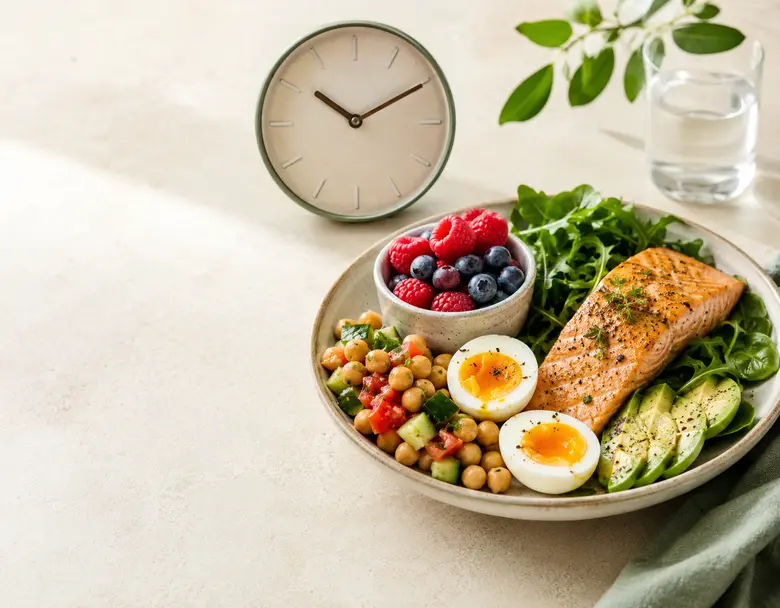
Intermittent fasting is mainly about meal timing, but what you eat during the eating window still affects fullness, energy, recovery, and how manageable the next fast feels. Build meals around protein, fiber-rich plants, satisfying carbohydrates, healthy fats, and enough total food. A balanced first meal is usually more useful than trying to “earn” or repair the fast with extreme restriction.
Key takeaways
- There is no universal food list for intermittent fasting.
- A practical meal includes a protein food, vegetables or fruit, a fiber-rich carbohydrate or other satisfying food, and a suitable fat.
- Water is the simplest fasting-window default; black coffee or unsweetened tea may fit some clean-fast definitions. [1]
- Sugary drinks, frequent desserts, low-protein meals, and large late-night meals can make the routine harder to repeat.
- Carbohydrates are not automatically incompatible with fasting; food quality, portions, total intake, and personal health context matter.
- If fasting causes dizziness, binge-like eating, anxiety, or unsafe restriction, shorten or stop the fast and seek guidance.
Table of Contents
- Key takeaways
- What can you eat during the eating window?
- What to eat for your first meal after fasting
- A simple eating-window formula
- What to eat on different fasting schedules
- Foods and drinks to limit more often
- Common eating-window mistakes
- How to review whether your food choices are working
- FAQ
- Bottom line
- Medical disclaimer
- References
What can you eat during the eating window?
Choose foods that help you meet nutrition needs rather than foods selected only because they fit a trend. Useful categories include:
- eggs, fish, poultry, lean meat, Greek yogurt, cottage cheese, tofu, tempeh, beans, lentils, and other protein foods;
- vegetables and fruit;
- oats, potatoes, rice, quinoa, whole-grain bread, beans, and other fiber-rich carbohydrates;
- avocado, olive oil, nuts, seeds, and nut butter;
- water and mostly unsweetened drinks.
The best choices depend on appetite, culture, budget, allergies, digestion, activity, health goals, and medical needs. For a broader eating framework, see Intermittent Fasting Diet: What It Means and How to Eat.
What to eat for your first meal after fasting
Use a simple four-part formula:
- One protein food.
- One or two fiber-rich plant foods.
- One satisfying carbohydrate or healthy-fat source.
- Water or another suitable unsweetened drink.
Examples include:
- Greek yogurt with berries, oats, and nuts;
- eggs with vegetables and whole-grain toast;
- a tofu bowl with rice, vegetables, and avocado;
- a chicken or bean salad with olive-oil dressing and fruit;
- lentil soup with vegetables and whole-grain bread;
- salmon with potatoes and vegetables.
If the meal leaves you hungry, review whether the window is too short or the meal is too small. Do not assume that hunger means you need more willpower.
A simple eating-window formula
Mix and match a protein, plants, a carbohydrate, and a flavor or fat:
- salmon + roasted vegetables + potatoes + water;
- beans + greens + brown rice + sparkling water;
- turkey or tofu + salad + avocado + unsweetened tea;
- eggs + fruit + oats + black coffee;
- yogurt + berries + nuts + water.
These are combinations, not prescribed portions or calorie targets. For practical preparation, see Intermittent Fasting Meal Prep.
What to eat on different fasting schedules
| Schedule | Meal-planning focus |
|---|---|
| 12:12 | Use a normal overnight gap and focus on regular balanced meals. |
| 14:10 | Plan two meals and an optional snack if needed. |
| 16:8 | Have a ready first meal and enough time for a complete second meal. |
| Variable days | Prepare components that can adapt to work, training, travel, or social meals. |
If a shorter window forces you to rush meals, skip protein, or eat one uncomfortable meal, use a longer window. A schedule is not successful if it prevents adequate nutrition.
Foods and drinks to limit more often
You do not need to treat foods as morally good or bad, but frequent reliance on sweetened coffee drinks, soda, sweet tea, lemonade, energy drinks, candy, cookies, pastries, low-fiber packaged snacks, large fried meals after fasting, or alcohol may make energy, appetite, hydration, or sleep harder to manage. Added sugars are listed separately on the Nutrition Facts label, which can help when comparing packaged foods.[2][3][4]
During a clean fast, calorie-containing drinks such as milk, sugar, juice, smoothies, and regular soda are not the same as water, black coffee, or unsweetened tea. Water is the simplest hydration default, but individual fluid needs vary.[5] The exact rule depends on the type of fast, so do not apply a clean-fast rule to medical, surgical, or religious instructions without checking the relevant guidance.
Common eating-window mistakes
Treating fasting as permission to eat anything
Meal timing does not make food quality irrelevant. If most meals are low in protein and fiber or high in sweetened drinks and refined snacks, the eating window may be harder to sustain.
Not drinking enough water
Plan fluids across the day rather than waiting until you feel unwell. Heavy sweating, vomiting, diarrhea, kidney disease, heart disease, or medication use may require individualized advice.
Cutting too many foods at once
Removing fasting, carbohydrates, dairy, desserts, and snacks simultaneously makes it difficult to identify what is causing hunger or digestive problems. Change one main variable at a time.
Ignoring medical context
Diabetes, medication timing, pregnancy, breastfeeding, underweight, adolescence, chronic disease, and current or past eating disorders require professional guidance before deliberate restriction.
How to review whether your food choices are working
After several typical days, ask:
- Did each main meal include a protein food?
- Did I include vegetables, fruit, beans, or whole grains?
- Did I drink enough for my conditions and activity?
- Did I leave the eating window satisfied rather than stuffed or still hungry?
- Did the next fast feel manageable?
- Did sleep, energy, digestion, training, or mood worsen?
Use the answers to adjust meal composition or widen the window before cutting more food. If weight loss is the goal, look at the weekly pattern rather than one meal or one scale reading.
FAQ
What should I eat during intermittent fasting?
During the eating window, choose balanced meals with protein, vegetables or fruit, fiber-rich carbohydrates, healthy fats, and enough total food. During the fasting window, water is the simplest default; black coffee or unsweetened tea may fit some definitions.
What should you eat while intermittent fasting for weight loss?
Choose satisfying meals that make an overall moderate intake easier to sustain: protein foods, plants, fiber-rich carbohydrates, and suitable fats. Avoid assuming that a smaller eating window makes unlimited highly processed food harmless.
Are carbohydrates allowed during intermittent fasting?
Yes. Oats, potatoes, rice, fruit, beans, quinoa, and whole grains can fit a balanced fasting routine. The amount and type should fit personal needs and health conditions.
What is the best first meal after fasting?
There is no single best meal. A balanced option with protein, plants, a satisfying carbohydrate or fat, and fluid is a useful starting point.
Can I drink diet soda while fasting?
It may fit some flexible approaches, but it is not the same as water and may not suit everyone’s goals, appetite, or digestion. Check the label and observe whether it makes the routine harder to repeat.
Bottom line
The best foods for intermittent fasting are the foods that let you meet nutrition needs, feel satisfied, and repeat the routine without rebound eating or excessive restriction. Build balanced meals, prepare the first meal in advance when helpful, keep fasting-window drinks simple, and adjust the window if your food plan becomes difficult to sustain.
Medical disclaimer
This article is general educational information, not medical advice. Consult a qualified healthcare professional before fasting if you have diabetes, take medication, are pregnant or breastfeeding, are under 18, have an eating-disorder history, are underweight, or have another relevant health condition.
References
- Johns Hopkins Medicine. Intermittent Fasting: What Is It, And How Does It Work? https://www.hopkinsmedicine.org/health/expert-qa/intermittent-fasting-what-is-it-and-how-does-it-work
- Harvard Health Publishing. Should you try intermittent fasting for weight loss? https://www.health.harvard.edu/blog/should-you-try-intermittent-fasting-for-weight-loss-202207282790
- CDC. Tips for Healthy Eating for a Healthy Weight https://www.cdc.gov/healthy-weight-growth/healthy-eating/index.html
- FDA. Added Sugars on the Nutrition Facts Label https://www.fda.gov/food/nutrition-facts-label/added-sugars-nutrition-facts-label
- CDC. About Water and Healthier Drinks https://www.cdc.gov/healthy-weight-growth/water-healthy-drinks/index.html