



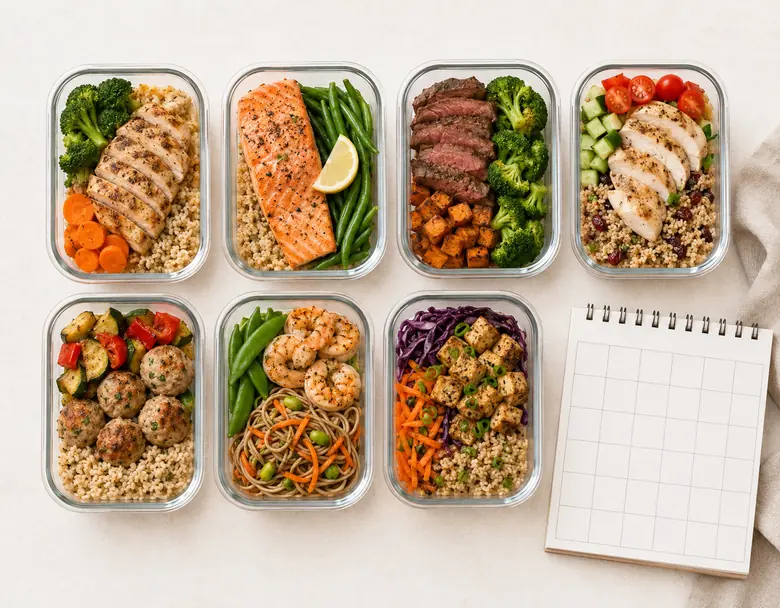
A 7-day meal plan for intermittent fasting should help you build balanced eating-window meals, not make the fasting window more extreme. During the eating window, focus on nutrient-dense meals with vegetables or fruit, protein foods, whole grains or other fiber-rich carbohydrates, healthy fats, and mostly unsweetened drinks.[1][2] These safety and evidence boundaries are supported by the sources listed below.[2]
This plan is a flexible template. Adjust portions, foods, and timing to your needs, schedule, culture, budget, and medical situation.
Key takeaways
- Intermittent fasting changes when you eat; the eating window still needs balanced meals.[3]
- Each day should include protein foods, fiber-rich plants, satisfying carbohydrates, and healthy fats.[1][2]
- Water, black coffee, and unsweetened tea are simple fasting-window drinks.[4]
- This is not a calorie prescription or medical meal plan.
- If medications, diabetes, pregnancy, breastfeeding, kidney disease, underweight status, or eating-disorder risk are involved, get qualified guidance before fasting.[5]
Table of Contents
How to use this 7-day plan
Use the plan inside your eating window. It does not require a specific fasting schedule. If you already follow 14:10, 16:8, or another schedule, place the meals where they fit.
A simple day can include:
- First meal: protein + fiber-rich plants + satisfying carbohydrates or healthy fats
- Optional snack: planned, not constant grazing
- Second meal: balanced plate with protein, vegetables, and whole-food carbohydrates
- Drinks: water, unsweetened tea, or coffee with little or no sugar during the eating window
If you already follow 16/8, the 16/8 Intermittent Fasting 7-Day Meal Plan is a more schedule-specific version.
7-day intermittent fasting meal plan template
| Day | First meal | Optional snack | Second meal |
|---|---|---|---|
| 1 | Greek yogurt, berries, nuts, and oats | Apple with peanut butter | Salmon or tofu, vegetables, brown rice, olive-oil dressing |
| 2 | Eggs with vegetables and whole-grain toast | Hummus with carrots | Chicken, beans, or lentils with salad and sweet potato |
| 3 | Cottage cheese or tofu bowl with fruit and seeds | Nuts and fruit | Turkey, tempeh, or fish tacos with vegetables and beans |
| 4 | Oatmeal with Greek yogurt, berries, and chia | Hard-boiled egg or edamame | Stir-fry with tofu or chicken, vegetables, and quinoa |
| 5 | Avocado toast with eggs or beans | Yogurt or fruit | Lentil soup, salad, and whole-grain bread |
| 6 | Smoothie bowl with protein-rich yogurt or tofu, fruit, and nuts | Vegetables with hummus | Shrimp, tofu, or beans with roasted vegetables and potatoes |
| 7 | Scramble with eggs or tofu, greens, and whole-grain toast | Cottage cheese or nuts | Fish, chicken, tempeh, or beans with vegetables and brown rice |
The first meal after a normal fast does not need to be special or extreme. A balanced meal with protein foods, fiber-rich plants, and satisfying carbohydrates or healthy fats is a steadier default than a large, highly sugary meal.[1]
Foods to keep available
| Category | Examples |
|---|---|
| Protein foods | Eggs, fish, poultry, tofu, beans, lentils, Greek yogurt, cottage cheese |
| Fiber-rich plants | Leafy greens, broccoli, peppers, berries, apples, beans, lentils |
| Whole grains and starchy plants | Oats, quinoa, brown rice, potatoes, sweet potatoes, whole-grain bread |
| Healthy fats | Olive oil, avocado, nuts, seeds, nut butter |
| Drinks | Water, sparkling water, unsweetened tea, coffee with little or no sugar |
For simpler first-week food guidance, start with the Beginner Intermittent Fasting Meal Plan.
What to limit during the eating window
You do not need a total ban list, but some choices can crowd out balanced meals.
Limit frequent reliance on:
- Sweetened coffee drinks
- Soda, sweet tea, lemonade, and energy drinks
- Desserts as daily staples
- Large portions of chips, fried snacks, or packaged snack foods
- Sauces, flavored yogurts, and cereals with high added sugar
Added sugars are listed on the Nutrition Facts label, and 20% Daily Value or more is considered a high source.[6]
When this meal plan needs adjustment
This meal plan is not individualized medical nutrition therapy. If you have diabetes, kidney disease, pregnancy, breastfeeding, underweight status, eating-disorder risk, medications that require food, or recovery from illness or surgery, get qualified guidance before fasting.[5]
FAQ
What is a good 7-day meal plan for intermittent fasting?
A good plan repeats balanced eating-window meals: protein foods, vegetables or fruit, whole grains or starchy plants, healthy fats, and mostly unsweetened drinks.[1][2]
Do I need a different meal plan for 16/8?
Not always. The same meal structure can fit 16/8, but you may need to place meals closer together. If the 8-hour window makes it hard to eat balanced meals, widen the window.
Can I snack during intermittent fasting?
Snacks belong in the eating window. A planned snack can help some people avoid grazing, but constant snacking can work against weight or consistency goals.
What should I drink during fasting?
Water, black coffee, and unsweetened tea are simple fasting-window options.[4]
Is this a weight-loss meal plan?
It can support a structured eating pattern, but it does not promise weight loss. Weight changes depend on total intake, consistency, activity, sleep, stress, and medical context.
Bottom line
A 7-day intermittent fasting meal plan should make the eating window easier to use well. Build meals around protein, fiber-rich plants, satisfying carbohydrates, healthy fats, and mostly unsweetened drinks. Keep the fasting window simple and adjust the schedule if balanced eating becomes difficult.
Medical disclaimer
This article is for general educational purposes only and is not medical advice or individualized nutrition counseling. Speak with a qualified health professional or registered dietitian before starting or changing a fasting or meal plan if you have a medical condition, take medications, are pregnant or breastfeeding, are underweight, have eating-disorder history or risk, or develop symptoms that concern you.
References
- CDC. Tips for Healthy Eating for a Healthy Weight
- Harvard T.H. Chan School of Public Health, The Nutrition Source. Healthy Eating Plate
- Johns Hopkins Medicine. Intermittent Fasting: What Is It, And How Does It Work?
- Johns Hopkins Medicine. Intermittent Fasting: What Is It, And How Does It Work?
- Cleveland Clinic. 6 Tips for Fasting Safely
- U.S. Food & Drug Administration. Added Sugars on the Nutrition Facts Label