



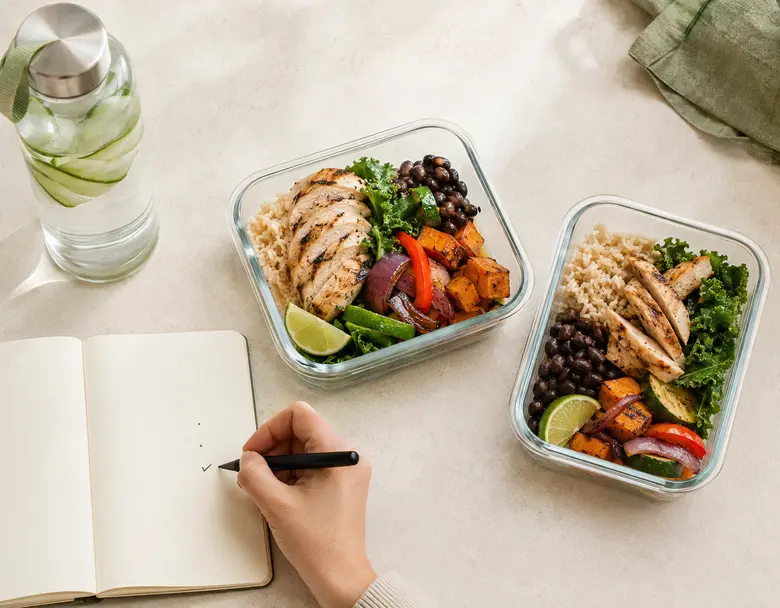
Intermittent fasting gives your day a clearer eating structure, but it does not decide what should go on your plate. The eating window still needs enough food, protein, fiber, fluids, and variety to support energy, fullness, digestion, and consistency.
This guide is for people who already understand the basic fasting window and now want to know how to eat during intermittent fasting: what to drink, how to plan meals, what foods to prioritize, how to prepare for busy days, how to log patterns, and how to break a fast gently.
The goal is not to make food rules stricter. The goal is to make the eating window easier to use well.
Table of Contents
What Should You Eat During the Eating Window?
During the eating window, focus on meals that help you feel satisfied and functional. A balanced meal usually includes a protein source, fiber-rich carbohydrates, vegetables or fruit, and fats that help with flavor and fullness. This kind of structure is more sustainable than treating the eating window as either a reward period or a restriction period.
A useful place to start is What to Eat During Intermittent Fasting. For a broader food-quality overview, use Intermittent Fasting Diet: What It Means and How to Eat, Choose healthy food, and Does it matter what you eat?.
Build the plate before narrowing the window
If your eating window is short, the quality of each meal matters more. Before moving to a stricter fasting schedule, make sure you can eat enough during the window without rushing or overeating.
Ask yourself:
- Do I have a reliable protein source at most meals?
- Am I eating enough vegetables, fruit, beans, whole grains, or other fiber-rich foods?
- Do I feel satisfied after meals, or do I keep grazing?
- Do I feel low-energy because the window is too short?
If meals feel chaotic, the next step is not always a longer fast. It may be better meal planning.
Protein, fiber, fats, and carbohydrates
Protein can help meals feel more complete, especially when your eating window is shorter. For more detail, see How much protein do I need during the eating phase? and How much protein do you need to eat for fasting?. If you follow a plant-based diet, Vegetarian protein? and What is seafood protein? can help you compare options.
Carbohydrates do not need to disappear during intermittent fasting. The better question is how to choose and time them. How to eat carbs to your advantage? can support that decision. Fats also matter, but the type and amount matter; see A good source of fat? and What is unhealthy fats?.
Special diets and food choices
Some people combine intermittent fasting with keto, low carb, vegetarian eating, or other dietary patterns. These can work differently from person to person, and they require enough attention to nutrient intake.
Use Special Diets and Intermittent Fasting as a general starting point. If you are comparing keto-related approaches, see Keto and Intermittent Fasting, Keto and Intermittent Fasting Results, Vegetarian ketogenic diet?, and More about vegetarian ketogenic diets. If you are deciding whether a lower-carb pattern fits your goals, compare Intermittent Fasting vs Low Carb.
Foods to limit or approach thoughtfully
Intermittent fasting does not make all foods equal. Highly processed foods, excessive alcohol, very salty meals, and meals that leave you hungry again quickly can make fasting harder the next day.
For more on food quality, see Ultra-processed food, Foods to avoid for successful fasting, Classification of food, and What Happens If You Eat Too Much Salt?. If you are eating out, Tips of eating out in restaurants can help you keep the routine flexible without turning social meals into a problem.
What Can You Drink During Intermittent Fasting?
Drinks are one of the most common sources of confusion during fasting. The simplest rule is this: during the fasting window, choose drinks that do not meaningfully add calories or trigger the kind of eating response you are trying to avoid. The exact answer can depend on your goal, your fasting style, and your tolerance.
Start with What Can You Drink During Intermittent Fasting? and Can You Drink Water While Intermittent Fasting?. Hydration is a basic part of making fasting feel manageable, so Why staying hydrated important during Intermittent fasting? is also worth reading.
Water, coffee, and tea
Water is the default fasting drink. Plain sparkling water may also work for many people. Black coffee and unsweetened tea are common choices, but people respond differently to caffeine.
For common drink questions, see Does Black Coffee Break Intermittent Fasting?, Can You Drink Coffee While Intermittent Fasting?, Can You Drink Tea While Intermittent Fasting?, and Green Tea and Intermittent Fasting.
Electrolytes, supplements, and flavored drinks
Some people consider electrolytes or supplements during fasting, especially if they feel headaches, fatigue, or lightheadedness. This is an area where ingredients matter. Some products are essentially calorie-free; others include sugar, protein, milk powder, oils, or sweeteners.
Useful follow-up articles include Best Electrolytes for Intermittent Fasting, Intermittent Fasting Supplements, Protein, Supplements, and Intermittent Fasting, and Can I Take Fiber Supplements During Fasting?.
For flavored drinks, see Zero-Calorie Drinks and Intermittent Fasting, Can I add lemon or turmeric powder to water while fasting?, What other drinks can you drink?, Can I drink Zero Carb Coke?, Drink unsweetened soy milk while fasting?, and Drink bulletproof coffee while fasting?.
Alcohol and water fasting
Alcohol deserves separate caution. It can affect sleep, appetite, judgment, hydration, and food choices, and it may be riskier after a long fast. See Can I Drink Alcohol While Intermittent Fasting? before treating alcohol as just another drink question.
If you are considering a more restrictive fast, What is "Water Fasting"? can help clarify how water fasting differs from everyday intermittent fasting.
How to Plan Meals During Intermittent Fasting
Meal planning makes the eating window less stressful. It also helps prevent the common pattern of fasting successfully, then arriving at the eating window too hungry to make a thoughtful meal.
Start with Intermittent Fasting Meal Plan for Beginners, Beginner Intermittent Fasting Meal Plan, and 7-Day Intermittent Fasting Meal Plan. If you follow a 16:8 routine, 16/8 Intermittent Fasting 7-Day Meal Plan gives a more specific structure. For higher-protein planning, use High-Protein Intermittent Fasting Meal Plan.
Match meals to the window
A longer eating window may allow three meals. A shorter eating window may require two substantial meals and, if needed, a snack. The right setup depends on your appetite, schedule, activity level, and nutrition needs.
If you often feel depleted before the eating window opens, review What to eat before fasting starts. If you are unsure what a complete meal looks like after the window opens, What is better to eat when mealtime is open? is a good practical reference.
Keep recipes simple enough to repeat
The best meal ideas are not always the most complicated ones. Look for meals you can repeat on workdays: protein plus vegetables, beans or whole grains, soups, bowls, eggs, yogurt, tofu, fish, lean meats, or other staples that fit your preferences.
Use Intermittent Fasting Meal Ideas and Recipes when you need variety, and Intermittent Fasting Meal Prep when you need the week to feel easier.
Calories, Nutrients, and Food Logging
Fasting can reduce eating opportunities, but it does not guarantee that your intake matches your goals. Some people under-eat during the eating window and feel tired. Others overcompensate after fasting and feel frustrated by lack of progress.
Food logging can help you observe patterns without turning every meal into a judgment. Start with Intermittent Fasting Food Tracker: What to Log and Why It Helps and Food Logging During Intermittent Fasting. If you wonder whether a small amount of food or drink affects your fast, see How Many Calories Break Intermittent Fasting?.
When tracking is useful or unhelpful
Tracking may be useful if you are troubleshooting low energy, hunger, low protein, low fiber, overeating, or inconsistent meal timing. It may be unhelpful if it makes you anxious, overly rigid, or more preoccupied with food.
For weight-focused users, calorie awareness can be helpful, but it should not replace nutrition quality, sleep, activity, and long-term consistency.
How to Break a Fast
Breaking a fast gently can help you avoid discomfort, especially after a longer fasting window. You do not need a complicated ritual, but you may feel better if you start with a balanced, moderate meal rather than a very large, greasy, or fast-eaten meal.
Use Breaking a Fast Gently: What to Eat First, The first meal after fasting, and Suggestions for resuming eating for more detailed guidance.
Start slowly and listen to digestion
If your stomach feels sensitive after fasting, try smaller portions, softer foods, or a meal that includes protein and easy-to-tolerate carbohydrates. Eat slowly and give your body time to respond.
If you often feel bloated, constipated, or uncomfortable after meals, the issue may not be the fast alone. It may involve meal size, fiber changes, hydration, salt, speed of eating, or food tolerance.
Frequently Asked Questions
Can I eat anything during the eating window?
Technically, the eating window is when you eat, but food quality still matters. If you regularly eat meals that are low in protein, fiber, and nutrients, fasting may feel harder and less sustainable.
Does coffee break a fast?
Plain black coffee is commonly used during fasting, but additions such as milk, sugar, cream, protein, or oils can change the answer. See Does Black Coffee Break Intermittent Fasting? and Can You Drink Coffee While Intermittent Fasting?.
Do I need a meal plan?
You do not need a strict meal plan, but you do need enough structure to avoid arriving at the eating window unprepared. Meal plans are most useful when they reduce daily decisions.
Should I combine keto and intermittent fasting?
Some people do, but it is not required. Combining multiple restrictive patterns can make nutrition and sustainability harder, so start with your goal and health context first.
Final Takeaway
Eating and nutrition are what make intermittent fasting practical. The fasting window creates structure, but the eating window supports energy, fullness, recovery, digestion, and consistency.
Build balanced meals, drink thoughtfully, plan enough food, track patterns only when helpful, and break fasts gently. The best eating strategy is not the strictest one. It is the one that helps you fast safely, eat well, and repeat the routine without turning food into a source of stress.
Medical disclaimer
If you are pregnant or breastfeeding, have diabetes, take medication that may be affected by food timing, have a history of an eating disorder, or have a medical condition that affects nutrition, talk with a qualified healthcare professional before changing your eating pattern.
References
- U.S. Department of Agriculture and U.S. Department of Health and Human Services. “Dietary Guidelines for Americans.” https://www.dietaryguidelines.gov/
- Harvard T.H. Chan School of Public Health. “Diet Review: Intermittent Fasting for Weight Loss.” https://nutritionsource.hsph.harvard.edu/healthy-weight/diet-reviews/intermittent-fasting/