



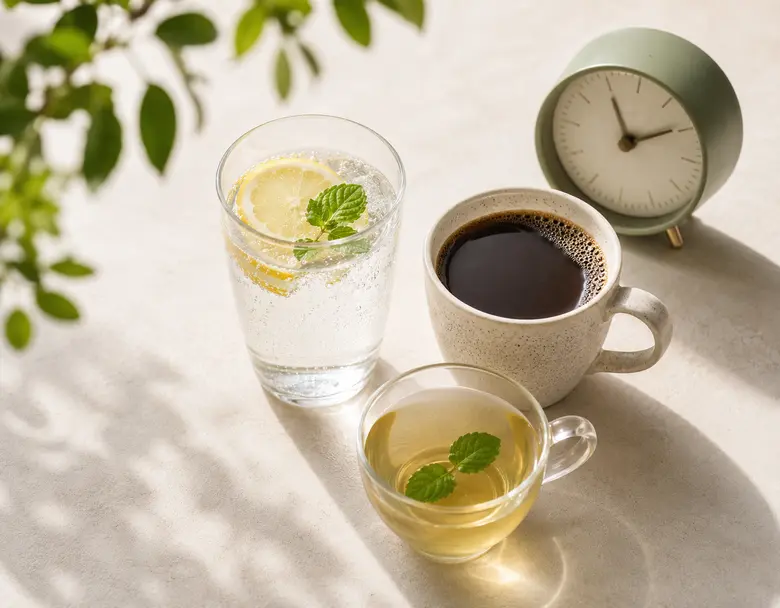
During a clean intermittent-fasting window, the clearest drink choices are plain water, unsweetened sparkling water, black coffee, and unsweetened tea. Drinks with sugar, milk, cream, juice, protein, alcohol, or meaningful calories belong in the eating window. Diet drinks, sweeteners, lemon water, and electrolyte products need a more careful answer because ingredients, fasting goals, tolerance, and health conditions differ.
This page focuses on beverages. For the broader question of food, supplements, and other items during a fasting window, see what you can have during intermittent fasting.
Key takeaways
- Plain water is the strongest default during a fasting window.
- Black coffee and unsweetened tea fit many everyday fasting routines if you tolerate caffeine.
- Sparkling water or seltzer can fit when it is unsweetened and has no meaningful calories.
- Juice, smoothies, soda, sweet tea, alcohol, milk, cream, protein drinks, and calorie-containing coffee add-ins belong in the eating window for a clean fast.
- A zero-calorie label does not automatically make a drink the best choice for appetite, digestion, hydration, or every fasting goal.
- Do not use a fasting drink rule to override medication instructions or medical advice.
Table of Contents
- Key takeaways
- Can you drink water while intermittent fasting?
- What can you drink during a clean fast?
- Coffee and tea during intermittent fasting
- What about diet drinks and sweeteners?
- Electrolyte drinks while fasting
- Drinks that belong in the eating window
- Does lemon water break a fast?
- When fasting and drink rules need medical guidance
- FAQ
- Bottom line
- Medical disclaimer
- References
Can you drink water while intermittent fasting?
Yes. Plain water has no calories and is the simplest drink during an intermittent-fasting window. Intermittent fasting is not the same as dry fasting; avoiding water is not required for an ordinary time-restricted eating routine.
There is no universal amount of water that every person should drink. Fluid needs vary with body size, activity, climate, sweating, illness, medications, and medical conditions.[1] Drink regularly across the day and do not force excessive amounts just because you are fasting.
Be more careful if you have kidney disease, heart failure, a fluid restriction, take diuretics, or have another condition that affects hydration. Ask your clinician what is appropriate instead of copying a fixed online target.
Common hydration mistakes while fasting
- waiting until you feel very thirsty, weak, or unwell before drinking;
- replacing meals with water when the problem is inadequate food or nutrition;
- assuming every flavored or “electrolyte” drink is calorie-free without checking the label;
- forcing excessive water to compensate for a restrictive routine;
- ignoring vomiting, diarrhea, heavy sweating, faintness, confusion, or other symptoms that need more than a drink.
Sip fluids regularly across the day and match the approach to your activity, climate, health conditions, and clinician’s advice. Hydration is not a reason to continue a fast that is making you unwell.
What can you drink during a clean fast?
| Drink | Clean-fast fit | Practical note |
|---|---|---|
| Plain water | Yes | Strongest default and no calories |
| Plain sparkling water or seltzer | Usually yes | Choose versions without sugar or meaningful calories |
| Black coffee | Usually yes | No milk, cream, sugar, syrup, butter, or oil |
| Unsweetened tea | Usually yes | Black, green, herbal, hot, or iced without calorie-containing add-ins |
| Flavored water | Depends | Check calories, sugar, sweeteners, and ingredients |
| Diet soda | Depends | Few or no calories, but may not suit appetite or digestion |
| Sugar-free electrolytes | Depends | Check the label and your medical context |
| Lemon water | Depends | Plain water is the clearest strict-fast choice |
“Usually” does not mean every person will respond the same way. If a drink causes reflux, jitters, cravings, stomach upset, or other symptoms, move it to the eating window or stop using it.
Coffee and tea during intermittent fasting
Plain black coffee and unsweetened tea can fit many fasting routines. The calories usually come from what is added:
- milk, cream, and sweetened plant milk;
- sugar, honey, syrups, and flavored powders;
- butter, MCT oil, collagen, and protein powder;
- whipped cream or other dessert-style toppings.
These additions belong in the eating window for a clean fast. For the specific coffee question, see can you drink coffee while intermittent fasting.
Caffeine still matters even when the drink has no calories. The CDC notes that moderate caffeine intake of up to 400 mg per day can be part of a healthy diet for most adults, but sensitivity varies [1]. Pregnancy, breastfeeding, anxiety, reflux, heart conditions, medication, and poor sleep may call for a more cautious approach.[3]
What about diet drinks and sweeteners?
Many diet drinks contain few or no calories, so they may fit a calorie-based fasting rule. That does not make them the strongest everyday default for everyone. Some people find sweet taste increases cravings, encourages snacking, or causes stomach discomfort. Others find a diet drink makes a routine easier to follow.
A practical hierarchy is:
- Plain water;
- Unsweetened tea or black coffee if tolerated;
- Unsweetened sparkling water;
- Diet drinks only when the label fits your goal and they do not make the routine harder.
Check the nutrition label rather than assuming “diet,” “light,” or “sugar-free” means the same thing across products. The FDA provides information on non-sugar sweeteners and their use in foods and beverages [2]. Healthy drink guidance also supports prioritizing water and limiting sugar-sweetened drinks.[4]
Electrolyte drinks while fasting
Electrolyte products vary widely. Some are sugar-free and low-calorie; others contain sugar, carbohydrates, or other ingredients. Read the label for calories, sugar, sodium, potassium, magnesium, caffeine, and serving size.
For a short daily fast, many people do not need a special electrolyte drink. Heavy sweating, heat, vomiting, diarrhea, endurance exercise, and certain health conditions are different situations. Kidney disease, heart disease, blood-pressure concerns, and medication can affect whether extra electrolytes are appropriate.
Do not use electrolytes to push through fainting, severe dizziness, confusion, repeated vomiting, or other concerning symptoms. Stop the fast and get appropriate help.[5]
Drinks that belong in the eating window
For a clean fast, keep these drinks in the eating window:
- juice and smoothies;
- soda, lemonade, and sweet tea;
- sports drinks and energy drinks with sugar or calories;
- milk, cream, and sweetened plant milks;
- protein shakes, collagen drinks, and amino-acid beverages;
- alcohol;
- coffee with sugar, cream, milk, syrup, butter, MCT oil, or protein powder;
- bone broth if your fasting definition excludes calories.
Some of these can fit a balanced eating pattern. They simply are not calorie-free fasting-window drinks.
Does lemon water break a fast?
A small squeeze of lemon in water is not the same as lemonade. It adds some juice and calories, however small, so strict clean-fasting rules may avoid it. If your priority is the clearest fasting boundary, use plain water.
If lemon water helps you drink more and your fasting approach is flexible, the practical decision may be different. Do not describe a calorie-containing drink as calorie-free, and do not let a gray-area drink distract from hydration and overall nutrition. See can you drink lemon or turmeric water while fasting for the focused question.
When fasting and drink rules need medical guidance
Talk with a qualified healthcare professional before starting or changing fasting if you:
- have diabetes or use insulin or glucose-lowering medication;
- take medication affected by food, fluids, or meal timing;
- have kidney disease, heart disease, a fluid restriction, or another chronic condition;
- are pregnant or breastfeeding;
- are under 18, underweight, or recovering from illness or surgery;
- have a current or past eating disorder;
- develop persistent dizziness, fainting, weakness, vomiting, confusion, or dehydration symptoms.
The medication and intermittent fasting guide explains why medication instructions come before fasting rules. For warning signs, see fasting warning signs and when to stop.
FAQ
What can I drink while intermittent fasting?
Plain water, unsweetened sparkling water, black coffee, and unsweetened tea are the clearest options for a clean fast. Drinks with sugar, milk, cream, juice, protein, alcohol, or meaningful calories belong in the eating window.
Does water break intermittent fasting?
No. Plain water has no calories and is allowed during an ordinary intermittent fast. Dry fasting is a different and riskier practice; intermittent fasting does not require avoiding water.
Is sparkling water okay during intermittent fasting?
Plain sparkling water or seltzer can fit many fasting routines. Choose versions without sugar or meaningful calories and stop using them if carbonation worsens reflux or stomach discomfort.
Can I drink black coffee during a fast?
Plain black coffee can fit a clean fast for many people. Keep milk, cream, sugar, syrup, butter, MCT oil, collagen, and protein powder in the eating window.
Can I drink tea while intermittent fasting?
Plain unsweetened tea can fit. Tea with sugar, honey, milk, cream, or other calorie-containing add-ins belongs in the eating window.
Can I drink diet soda while fasting?
It may fit a calorie-based rule if it has no meaningful calories, but it is not the strongest default for everyone. Check ingredients and notice whether it increases cravings, snacking, or stomach discomfort.
Can I drink electrolytes while fasting?
It depends on the product and your health context. Check for sugar, calories, sodium, potassium, and other ingredients. Ask a clinician if you have kidney or heart disease, take medication, sweat heavily, or have symptoms.
How much water should I drink while fasting?
There is no single target for everyone. Drink regularly and adjust for activity, heat, sweating, illness, and your clinician’s advice. Do not force excessive water or use water to ignore symptoms.
Bottom line
The clearest drinks during intermittent fasting are plain water, unsweetened sparkling water, black coffee, and unsweetened tea. Keep calorie-containing, sweetened, creamy, alcoholic, protein-containing, and meal-like drinks in the eating window. If a medical condition or medication affects food or fluid timing, clinical guidance matters more than maintaining a fasting timer.
Medical disclaimer
This article is for general education only and is not medical advice. Speak with a qualified healthcare professional before fasting if you have a medical condition, take medication, are pregnant or breastfeeding, are underweight, have eating-disorder risk, or feel unwell.
References
- CDC. About Water and Healthier Drinks https://www.cdc.gov/healthy-weight-growth/water-healthy-drinks/index.html
- U.S. Food & Drug Administration. Aspartame and Other Sweeteners in Food https://www.fda.gov/food/food-additives-petitions/aspartame-and-other-sweeteners-food
- Johns Hopkins Medicine. Intermittent Fasting: What Is It, And How Does It Work? https://www.hopkinsmedicine.org/health/expert-qa/intermittent-fasting-what-is-it-and-how-does-it-work
- Harvard T.H. Chan School of Public Health. Healthy Drinks https://nutritionsource.hsph.harvard.edu/healthy-drinks/
- Cleveland Clinic. 6 Tips for Fasting Safely https://health.clevelandclinic.org/tips-for-fasting-the-healthy-way