



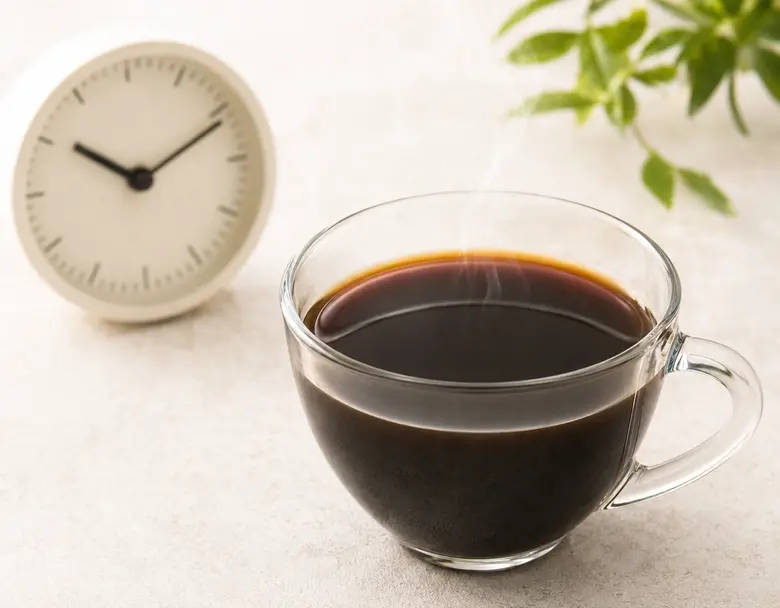
Black coffee usually does not break a clean intermittent fast because it is typically consumed without meaningful calories. The boundary changes when you add sugar, milk, cream, syrups, collagen, MCT oil, or other calorie-containing ingredients.[1][2]
Caffeine timing still matters. Black coffee may fit the fasting window, but it is not a reason to push through dizziness, anxiety, reflux, palpitations, poor sleep, or feeling unwell.[3]
Key takeaways
- Plain black coffee can fit many clean fasting routines.[1]
- Coffee with sugar, milk, cream, collagen, MCT oil, or syrups belongs in the eating window.[2]
- A “zero-calorie” or “sugar-free” label does not automatically answer every fasting question; check calories and ingredients.[4]
- Afternoon or evening caffeine can work against sleep for some people.[3]
- If coffee worsens symptoms, reduce it or move it into the eating window.
Table of Contents
Coffee choices during intermittent fasting
| Coffee choice | Clean-fast answer | Practical note |
|---|---|---|
| Black coffee | Usually fits | Keep it plain |
| Espresso | Usually fits | No sugar or milk |
| Americano | Usually fits | No calorie-containing add-ins |
| Coffee with milk | Breaks a clean fast | Adds calories, protein, carbohydrate, or fat |
| Coffee with cream | Breaks a clean fast | Adds fat and calories |
| Sweetened coffee | Breaks a clean fast | Adds sugar and calories |
| Collagen coffee | Breaks a clean fast | Adds protein and calories |
| MCT oil coffee | Breaks a clean fast | Adds fat and calories |
If you are comparing other add-ins, use the fasting boundary guide as a broader check.
Why add-ins change the answer
Packaged ingredients and add-ins should be checked by serving size, calories, fat, carbohydrate, and added sugars instead of relying on the word “coffee.”[2]
Common add-ins that belong in the eating window include:
- Sugar or honey
- Milk or plant milk
- Cream or half-and-half
- Sweetened syrups
- Protein powder
- Collagen
- MCT oil or butter
- Flavored creamers
If your fasting goal is flexible consistency rather than a clean fast, you may choose a different rule. Just name it honestly as flexible fasting.
When black coffee is not a good fasting tool
Black coffee can be a convenient drink, but it should not become the main strategy for forcing a fast.
Reduce coffee, change timing, or stop fasting if coffee contributes to:
- Jitters or anxiety
- Reflux or stomach discomfort
- Palpitations
- Poor sleep
- Headaches
- Feeling shaky or dizzy
- Using caffeine to ignore strong hunger signals
Adults generally need at least 7 hours of sleep, and avoiding caffeine in the afternoon or evening can support healthy sleep habits for some people.[3]
FAQ
Can you drink black coffee while intermittent fasting?
Yes, plain black coffee can fit many fasting routines.[1] Keep it unsweetened and without calorie-containing add-ins.
Does black coffee with sweetener break a fast?
It depends on your fasting rules. Non-sugar sweeteners may add few or no calories, but they belong in a gray-area discussion rather than the cleanest default.[4]
Does coffee with cream break intermittent fasting?
Yes for a clean fast. Cream adds calories and fat, so it belongs in the eating window.
Does black coffee help fasting results?
Do not treat coffee as a fasting booster. It may make the fasting window feel easier for some people, but it is not a substitute for sleep, hydration, balanced meals, or medical guidance.
What else can I drink while fasting?
Water and unsweetened tea are the other simple defaults; the guide to water during intermittent fasting explains the water side in more detail.
Bottom line
Plain black coffee usually fits a clean fasting window. Coffee with calories does not. Keep caffeine timing and symptoms in view, and move coffee into the eating window if it makes fasting feel worse.
Medical disclaimer
This article is for general educational purposes only and is not medical advice. Talk with a qualified health care professional before fasting if you have a medical condition, take medications, are pregnant or breastfeeding, are underweight, have a history of an eating disorder, or feel unwell while fasting.
References
- Johns Hopkins Medicine. Intermittent Fasting: What Is It, And How Does It Work? https://www.hopkinsmedicine.org/health/expert-qa/intermittent-fasting-what-is-it-and-how-does-it-work
- FDA. How to Understand and Use the Nutrition Facts Label https://www.fda.gov/food/nutrition-facts-label/how-understand-and-use-nutrition-facts-label
- CDC. About Sleep https://www.cdc.gov/sleep/about/index.html
- FDA. Aspartame and Other Sweeteners in Food https://www.fda.gov/food/food-additives-petitions/aspartame-and-other-sweeteners-food