



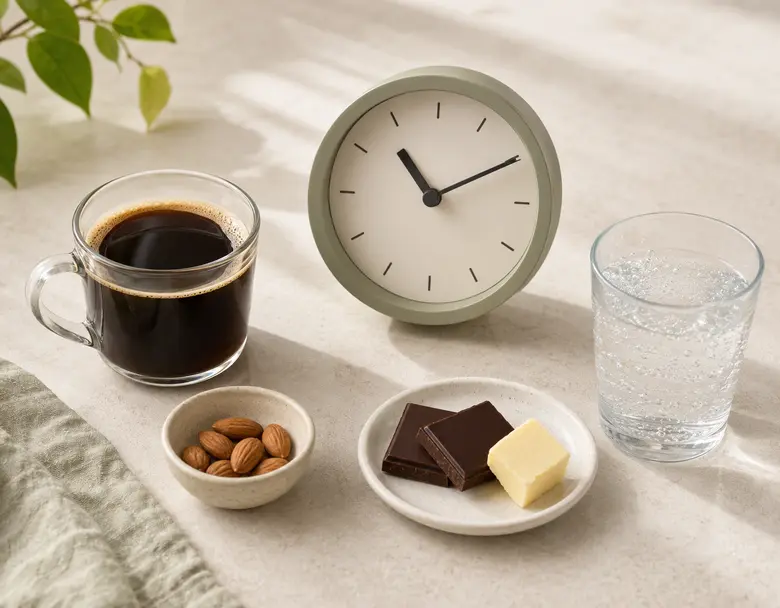
Calories usually break a clean intermittent fast. Water, black coffee, and unsweetened tea are the simplest fasting-window choices, while foods, sweetened drinks, milk, cream, juice, alcohol, protein shakes, and calorie-containing add-ins belong in the eating window.[1][2]
If you take medication or supplements, do not change timing just to keep a fast. Some medications need food, and medication instructions should come before fasting rules.[3]
The best food to break intermittent fasting is usually a balanced, easy-to-repeat meal rather than a huge portion, sugary snack, or highly restrictive choice.
Key takeaways
- A clean fasting window is simplest with water, black coffee, or unsweetened tea.[1]
- Foods and calorie-containing drinks belong in the eating window.
- Non-sugar sweeteners may add few or no calories, but they do not automatically make every diet drink a strong fasting default.[4]
- Break a fast with a balanced meal, not a very large or highly sugary meal.[5]
- Medications and painkillers should follow the label and clinician or pharmacist guidance, not generic fasting rules.[3]
Table of Contents
What usually breaks a fast
| Item | Clean-fast answer | Practical note |
|---|---|---|
| Water | Does not break a clean fast | Simplest default |
| Black coffee | Usually fits | Keep it unsweetened |
| Unsweetened tea | Usually fits | Keep it unsweetened |
| Milk or cream | Breaks a clean fast | Use during the eating window |
| Sugar or honey | Breaks a clean fast | Adds calories and sweetness |
| Juice or smoothies | Breaks a clean fast | Treat as food or drink inside the eating window |
| Protein shakes | Breaks a clean fast | Use as part of a meal or snack |
| Alcohol | Breaks a clean fast | Also may be harder to tolerate without food |
| Supplements with calories | Usually break a clean fast | Check the label |
| Diet soda | Depends on your fasting rules | Not the strongest default drink |
For everyday fasting, the simplest rule is: if it has meaningful calories, keep it inside the eating window.
Better foods to break an intermittent fast
Breaking the fast does not require a special food. A balanced, familiar meal is a safer default than a very large meal.
Good options include:
- Greek yogurt with oats, berries, and nuts
- Eggs with vegetables and whole-grain toast
- Rice, tofu or chicken, vegetables, and olive-oil dressing
- Lentil soup with salad and whole-grain bread
- Oatmeal with fruit, seeds, and milk or yogurt
A healthy eating pattern can emphasize vegetables, fruit, protein foods, whole grains, healthy fats, and drinks with little or no added sugar.[5][6]
For more food ideas, read What can I eat while intermittent fasting?.
Foods that can make breaking a fast harder
Some foods are not forbidden, but they may make the first meal less comfortable or less filling.
Limit these when the window opens:
- Very large meals after a long fast
- Sugary drinks or desserts as the main first choice
- Heavy fried meals if they upset your stomach
- Alcohol before a real meal
- New supplements or weight-loss products you have not used before
Added sugars can quietly crowd out more filling meals and make it harder to meet nutrient needs within calorie limits.[7]
Do supplements break intermittent fasting?
It depends on the supplement and your fasting rules. Gummies, protein powders, collagen, MCT oil, and supplements with calories usually break a clean fast. Capsules or tablets without calories may not add meaningful energy, but they can still affect your stomach or need food.
Do not use fasting rules to override medical instructions. If a supplement or medication label says to take it with food, follow the label or ask a clinician or pharmacist.
Do painkillers break intermittent fasting?
Painkillers are a medication question before they are a fasting question. Some medicines can irritate the stomach, interact with other medications, or need food or water. Follow the label and your clinician or pharmacist's advice.
If taking a painkiller with food breaks your fasting window, protecting your health is more important than keeping a perfect fast.
FAQ
How do I break an intermittent fast?
Start with a balanced meal that includes protein, fiber-rich plants, and a satisfying carbohydrate or healthy fat. Eat at a normal pace instead of trying to fit a huge meal into the first few minutes.
Do foods that do not break intermittent fasting exist?
Food contains calories, so it generally belongs in the eating window. For a clean fast, stick with water, black coffee, or unsweetened tea during the fasting window.[1]
Does coffee break a fast?
Black coffee usually fits a clean fasting window. Coffee with sugar, milk, cream, collagen, MCT oil, or sweetened syrups belongs in the eating window.
Do zero-calorie sweeteners break a fast?
They may add few or no calories, but that does not automatically make every sweetened drink a strong fasting default.[4] If sweet drinks increase cravings or make fasting harder, choose water, black coffee, or unsweetened tea.
What drinks can I have while fasting?
Water, black coffee, and unsweetened tea are the simplest defaults. For more detail, read What other drinks can you drink?.
Bottom line
A clean intermittent fast is easiest to understand when you keep the fasting window to water, black coffee, and unsweetened tea. Break the fast with a balanced meal, keep calorie-containing drinks and supplements in the eating window, and do not let fasting rules interfere with medication safety.
Medical disclaimer
This article is for general educational purposes only and is not medical advice. Always follow medication labels and clinician or pharmacist guidance. Talk with a qualified health care professional before fasting if you have a medical condition, take medications, are pregnant or breastfeeding, are underweight, have a history of an eating disorder, or feel unwell while fasting.
References
- Johns Hopkins Medicine. Intermittent Fasting: What Is It, And How Does It Work? https://www.hopkinsmedicine.org/health/expert-qa/intermittent-fasting-what-is-it-and-how-does-it-work
- CDC. About Water and Healthier Drinks https://www.cdc.gov/healthy-weight-growth/water-healthy-drinks/index.html
- Cleveland Clinic. 6 Tips for Fasting Safely https://health.clevelandclinic.org/tips-for-fasting-the-healthy-way
- FDA. Aspartame and Other Sweeteners in Food https://www.fda.gov/food/food-additives-petitions/aspartame-and-other-sweeteners-food
- CDC. Tips for Healthy Eating for a Healthy Weight https://www.cdc.gov/healthy-weight-growth/healthy-eating/index.html
- Harvard T.H. Chan School of Public Health. Healthy Eating Plate https://nutritionsource.hsph.harvard.edu/healthy-eating-plate/
- FDA. Added Sugars on the Nutrition Facts Label https://www.fda.gov/food/nutrition-facts-label/added-sugars-nutrition-facts-label