



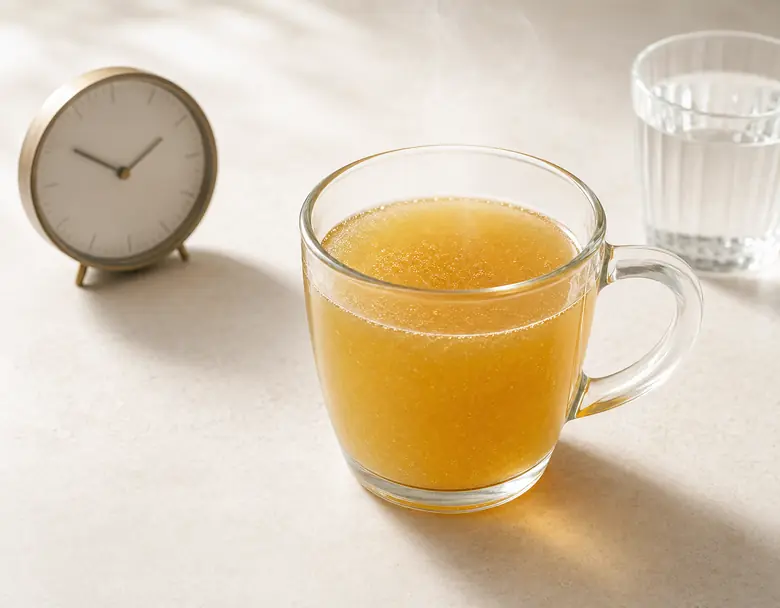
Yes, bone broth usually breaks a clean fast because it contains calories, protein, sodium, and other nutrients. It may fit an eating window or a refeed plan, but it should not be grouped with water, black coffee, or unsweetened tea for a clean fasting window.[1][2]
Key takeaways
- Bone broth is not a clean fasting-window drink.
- Chicken broth and beef broth can also break a clean fast if they contain calories or nutrients.
- Broth may be useful as food in the eating window, especially if you enjoy it as part of a meal.
- Do not use broth as a safety fix for long fasts, dehydration, blood pressure issues, kidney disease, or medication concerns.[2]
- Check the label for calories, protein, sodium, serving size, and added ingredients.
Table of Contents
Why bone broth breaks a clean fast
A clean fasting window is usually kept to non-calorie drinks such as water, black coffee, or unsweetened tea.[1] Bone broth is different because it is a food-like drink. It may contain calories, protein, fat, carbohydrate, sodium, and flavoring ingredients.
If your goal is a strict fast, keep bone broth in the eating window. If your goal is a flexible routine and broth helps you avoid a more disruptive choice, be honest about the tradeoff: it is a modified fast, not a clean fast.
Bone broth, chicken broth, and fasting-window choices
| Drink | Clean fasting-window fit | Why |
|---|---|---|
| Water | Yes | No calories |
| Black coffee | Usually yes | Common zero-calorie fasting option |
| Unsweetened tea | Usually yes | Common zero-calorie fasting option |
| Plain sparkling water | Usually yes | No calories if unsweetened |
| Bone broth | No for a clean fast | Contains calories and nutrients |
| Chicken broth | No for a clean fast | Usually contains sodium and may contain calories |
| Broth with collagen or protein | No | Adds protein and calories |
| Electrolyte drink with sugar or calories | No for a clean fast | Label-dependent |
Nutrition labels show serving size, calories, and nutrient information, so check the label instead of relying on the word “broth.”[3]
When bone broth may fit your routine
Bone broth may fit:
- As part of the eating window
- As a warm drink with a meal
- As a lower-calorie alternative to a heavier snack
- In a clinician-guided refeed plan after a longer fast
- As an ingredient in soup or a savory meal
It should not be presented as a fasting hack or a way to make aggressive fasting safe. Sodium can be high in broth, and too much sodium can be a concern for blood pressure and cardiovascular health.[2]
What to drink during intermittent fasting instead
For a clean fast, keep drinks simple:
- Water
- Plain sparkling water
- Black coffee
- Unsweetened tea
Avoid during the fasting window:
- Bone broth or chicken broth
- Sweetened coffee or tea
- Milk, cream, or creamer
- Protein powder or collagen drinks
- MCT oil or butter coffee
- Juice, smoothies, soda, or alcohol
If you feel like you need broth to get through every fast, the fasting window may be too long or your eating-window meals may need adjustment.
When to stop or get guidance
Do not use broth to push through dizziness, fainting, severe weakness, confusion, persistent headaches, vomiting, or symptoms that feel unsafe. Stop the fast and get medical guidance when needed.
People with kidney disease, blood pressure concerns, heart disease, diabetes, medication needs, eating disorder history, pregnancy, or breastfeeding should avoid self-guided aggressive fasting and get individualized advice.[1][2]
FAQ
Can I drink chicken broth while intermittent fasting?
For a clean fast, no. Chicken broth usually contains sodium and may contain calories or other nutrients. Keep it in the eating window.
Does bone broth break a fast if it is low calorie?
For a clean fast, yes. Even low-calorie broth is not the same as water, black coffee, or unsweetened tea.
Is bone broth better than coffee during fasting?
It depends on the goal. For a clean fasting window, black coffee is a more appropriate option than broth.[1]
Can I use bone broth during a long fast?
Do not use broth as a safety strategy for long fasts. Long fasts can carry risks and should not be self-managed through broth.
Can bone broth help with electrolytes while fasting?
Broth can contain sodium, but that does not mean it is appropriate for every fasting routine. Check sodium and get guidance if blood pressure, kidney disease, medications, electrolyte concerns, or symptoms are involved.[2][4]
Bottom line
Bone broth breaks a clean intermittent fast. Keep it in the eating window unless you are intentionally following a modified fasting approach. For the fasting window, water, black coffee, and unsweetened tea are cleaner default choices.
Medical disclaimer
This article is for general wellness education and should not replace medical advice. Speak with a qualified health care professional before fasting if you have kidney disease, blood pressure concerns, heart disease, diabetes, medication needs, eating disorder history, pregnancy, breastfeeding, or symptoms that feel unsafe.
References
- Johns Hopkins Medicine. “Intermittent Fasting: What Is It, And How Does It Work?” https://www.hopkinsmedicine.org/health/expert-qa/intermittent-fasting-what-is-it-and-how-does-it-work
- CDC. “About Sodium and Health.” https://www.cdc.gov/salt/about/index.html
- FDA. “How to Understand and Use the Nutrition Facts Label.” https://www.fda.gov/food/nutrition-facts-label/how-understand-and-use-nutrition-facts-label
- MedlinePlus. “Fluid and Electrolyte Balance.” https://medlineplus.gov/fluidandelectrolytebalance.html