



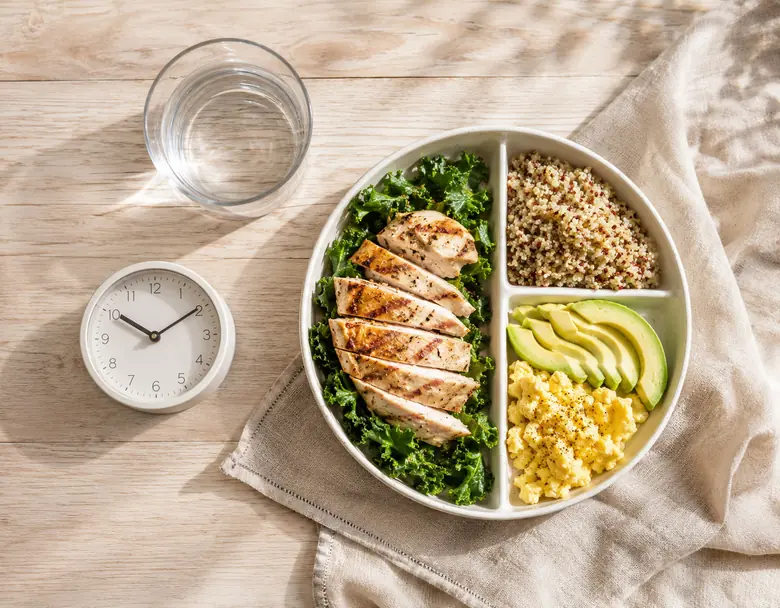
A beginner intermittent fasting meal plan should make the eating window easier, not stricter. Build meals around protein foods, vegetables, fruit, whole grains or other fiber-rich carbohydrates, healthy fats, and mostly unsweetened drinks. Fasting changes when you eat; it does not make food quality, hydration, total intake, or medical context irrelevant.[1][2]
The examples below are flexible templates, not a fixed prescription. Adjust portions, food choices, timing, culture, budget, activity, appetite, and medical needs. If a plan makes you rush, undereat, overeat, or feel unwell, the fasting window may be too narrow.
Key takeaways
- Use simple, repeatable meals rather than complicated food rules.
- Include a clear protein source and fiber-rich plant foods in your main meals.
- Add satisfying carbohydrates and healthy fats so the eating window is balanced.
- Water, black coffee, and unsweetened tea are the simplest fasting-window drinks for many everyday routines.[3]
- Sugary drinks, frequent desserts, and low-fiber snack grazing can crowd out more filling meals.
- If fasting causes dizziness, persistent digestive symptoms, binge-like eating, or medication conflicts, shorten or stop the fast and seek guidance.
Table of Contents
- Key takeaways
- How to use this beginner meal plan
- A simple three-day beginner meal plan
- What to eat during the eating window
- What to eat when the eating window opens
- Foods and drinks to limit more often
- What to drink during the fasting window
- How many meals should a beginner eat?
- Meal prep for a beginner fasting routine
- Does this meal plan help with weight loss?
- Common beginner meal-plan mistakes
- When should you adjust or stop?
- Who should get medical guidance before using this plan?
- FAQ
- Bottom line
- Medical disclaimer
- References
How to use this beginner meal plan
This plan can fit a 12:12, 14:10, or 16:8 routine. The number of meals depends on the length of your eating window and how easily you can meet your needs.
| Eating-window moment | What to include | Examples |
|---|---|---|
| First meal | Protein + fiber-rich plants + satisfying carbohydrate or fat | Yogurt with oats and berries; eggs with vegetables and toast; tofu with rice and vegetables |
| Optional snack | Protein or fiber, if needed | Fruit with nuts; hummus with vegetables; cottage cheese; yogurt |
| Final meal | Protein + vegetables + carbohydrate + healthy fat | Salmon with potatoes and salad; beans with rice and avocado; chicken with quinoa and vegetables |
| Drinks | Mostly unsweetened | Water, sparkling water, black coffee, unsweetened tea |
If a shorter eating window makes you rush or under-eat, use a longer window before making the plan stricter. A meal plan should help you eat normally inside the window rather than encourage one oversized meal.
A simple three-day beginner meal plan
Use these meals as examples and swap foods within the same category. Portions should match your hunger, body, activity, and nutritional needs.
| Day | First meal | Optional snack | Final meal |
|---|---|---|---|
| Day 1 | Greek yogurt, oats, berries, and nuts | Apple with peanut butter | Chicken or tofu bowl with rice and vegetables |
| Day 2 | Eggs, vegetables, fruit, and whole-grain toast | Hummus with carrots | Lentil soup, salad, and whole-grain bread |
| Day 3 | Oatmeal with milk or yogurt, seeds, and fruit | Cottage cheese or nuts | Fish, beans, or tempeh with potatoes and greens |
You can repeat the three-day pattern and change the protein, vegetables, fruit, grains, or seasoning. The aim is a reliable structure, not a perfect menu.
Optional seven-day rotation
If you prefer a longer example, use the following as a rotation rather than a rigid prescription:
| Day | First meal | Final meal |
|---|---|---|
| 1 | Yogurt, oats, berries, and nuts | Salmon or tofu, vegetables, and brown rice |
| 2 | Eggs, vegetables, and whole-grain toast | Chicken, beans, or lentils with salad and sweet potato |
| 3 | Cottage cheese or tofu with fruit and seeds | Fish or tempeh tacos with vegetables and beans |
| 4 | Oatmeal with yogurt, fruit, and seeds | Turkey, tofu, or bean chili with vegetables |
| 5 | Tofu scramble with potatoes and fruit | Chicken, lentil, or fish bowl with quinoa and greens |
| 6 | Greek yogurt with banana and nut butter | Bean, egg, or tofu salad with whole-grain bread |
| 7 | Eggs or yogurt with fruit and oats | Lean protein or legumes with vegetables and a starchy side |
Add a snack only when hunger, activity, or the length of the eating window makes it useful. Swap within categories: beans, lentils, tofu, eggs, dairy, fish, poultry, and lean meat can serve as protein options; rice, oats, potatoes, quinoa, and whole-grain bread can serve as carbohydrate options. This keeps the plan usable across budgets, preferences, and dietary patterns.
What to eat during the eating window
Protein foods
Choose options such as eggs, fish, poultry, lean meat, tofu, tempeh, beans, lentils, Greek yogurt, cottage cheese, edamame, or other suitable foods. Include protein in both main meals when possible, especially if your eating window is short.
Vegetables and fruit
Leafy greens, broccoli, peppers, carrots, tomatoes, berries, apples, citrus, bananas, and melon can add fiber, volume, and nutrients. Fruit can fit comfortably in the eating window; it does not need to be treated as a forbidden food.
Whole grains and starchy plants
Oats, brown rice, quinoa, potatoes, sweet potatoes, beans, and whole-grain bread can provide satisfying carbohydrates and fiber. Intermittent fasting does not automatically require a low-carbohydrate diet.
Healthy fats
Olive oil, avocado, nuts, seeds, nut butter, and fatty fish can add flavor and help meals feel complete. Use portions that fit your overall needs rather than treating healthy fats as unlimited.
A simple meal formula
Use this formula when you do not want to follow a fixed menu:
Protein + fiber-rich plants + satisfying carbohydrate or fat + unsweetened drink
Examples include salmon with roasted vegetables and potatoes, beans with greens and brown rice, tofu with vegetables and avocado, eggs with fruit and oats, or yogurt with berries and nuts.
For more detailed eating-window meal ideas, see intermittent fasting meals for your eating window.
When a higher-protein version may be useful
If you have a short eating window or find that meals do not keep you satisfied, make the protein component explicit at both main meals: for example, yogurt and eggs earlier in the window, then fish, poultry, tofu, beans, lentils, or tempeh later. Pair it with vegetables or fruit and a satisfying carbohydrate or fat rather than removing entire food groups. A high-protein pattern is still subject to the same medical and portion considerations as any other meal plan.
What to eat when the eating window opens
Your first meal after a normal overnight fast does not need to be special, huge, or extremely low in carbohydrates. A balanced meal is usually a steadier choice than a large sugary or greasy meal.
Good first-meal options include:
- Greek yogurt with berries, oats, and nuts;
- eggs with vegetables and whole-grain toast;
- tofu with rice, vegetables, and avocado;
- chicken or bean salad with fruit and olive-oil dressing;
- lentil soup with vegetables and whole-grain bread.
If you regularly feel out of control when the eating window opens, the fasting window may be too long or the first meal may need more planning. Do not use the first meal as a reward for enduring a difficult fast.
Foods and drinks to limit more often
You do not need a total ban list. Instead, notice which choices make the eating window less filling or harder to repeat.
| Limit frequent reliance on | Why it can make the routine harder |
|---|---|
| Sugary coffee drinks | Add calories quickly and may not feel filling |
| Soda, sweet tea, sports drinks, or energy drinks | Add sugar or calories without much satiety |
| Dessert as the main snack | Can crowd out protein and fiber-rich foods |
| Large fast-food meals after a long fast | May feel uncomfortable and encourage compensation |
| Frequent packaged snack grazing | Makes it harder to notice hunger and fullness |
| Alcohol before a balanced meal | Can add calories and affect sleep and judgment |
Added sugars can make it harder to meet nutrient needs while staying within calorie limits.[4] Read the label on sweetened drinks, flavored yogurt, cereals, sauces, and packaged snacks rather than relying on health claims on the front of the package.
What to drink during the fasting window
For a clean everyday fasting window, the simplest choices are water, plain sparkling water if tolerated, black coffee, and unsweetened tea.[3]
Move these to the eating window when your goal is to avoid meaningful calories:
- sugar, honey, syrup, or sweetened drinks;
- milk, cream, or sweetened plant milk;
- juice, smoothies, alcohol, or sports drinks;
- protein powder, collagen, MCT oil, or other calorie-containing additions.
For a broader drink guide, see what you can have during intermittent fasting. Medical, laboratory, surgical, and religious fasting rules may be stricter than everyday intermittent fasting.
How many meals should a beginner eat?
Many beginners do well with two or three meals inside the eating window. The right number depends on the length of the window, appetite, schedule, activity, and whether you can meet your nutritional needs without rushing.
- A 12:12 or 14:10 routine may allow three meals or two meals plus a snack.
- A 16:8 routine may fit two complete meals and an optional snack.
- A shorter window may make it harder to eat enough protein, fiber, fluids, and total food.
There is no benefit to forcing one meal if two or three meals would make the plan more balanced and repeatable.
Meal prep for a beginner fasting routine
Meal prep can reduce last-minute choices when the eating window opens. Keep a small set of flexible foods available:
| Category | Easy options |
|---|---|
| Protein | Eggs, fish, poultry, tofu, tempeh, beans, lentils, Greek yogurt |
| Fiber-rich carbohydrates | Oats, brown rice, quinoa, potatoes, sweet potatoes, whole-grain bread |
| Vegetables | Leafy greens, carrots, peppers, cucumbers, broccoli, tomatoes |
| Fruit | Berries, apples, bananas, citrus, melon |
| Healthy fats | Olive oil, avocado, nuts, seeds, nut butter |
Prepare one or two proteins, a grain or starchy plant, washed vegetables, fruit, and a simple sauce. This gives you enough combinations without turning the meal plan into a rigid checklist.
For a busy week, prepare components rather than seven identical meals: cook a batch of eggs, tofu, beans, chicken, or fish; make one grain or potato base; wash or roast vegetables; and portion a few snacks. Keep substitutions available for allergies, vegetarian or cultural preferences, and foods that do not agree with you. Meal prep should reduce decision fatigue, not force you to eat a food that repeatedly causes symptoms.
Does this meal plan help with weight loss?
It may support a structured eating pattern, but it does not guarantee weight loss. Results depend on total intake, food choices, activity, sleep, stress, and consistency. Intermittent fasting is not a reason to compensate with very large meals or to under-eat during the eating window.[5]
If weight management is a goal, start with filling meals, reduce liquid calories and unplanned grazing, and review trends over several weeks. If the fasting window repeatedly leads to overeating, use a wider window or another eating pattern.
Common beginner meal-plan mistakes
Treating fasting as permission to eat anything
Fasting does not make food quality irrelevant. A short eating window filled with sugary drinks, desserts, or low-fiber snacks may leave you hungry and undernourished.
Starting with an overly narrow window
If you cannot fit balanced meals into the window, the solution is usually a wider window rather than stricter food rules.
Breaking the fast with a huge meal
A balanced first meal is often easier to tolerate than a large, highly sugary, or very greasy meal. If you regularly feel out of control at the first meal, reassess the fasting schedule.
Cutting too many foods at once
Combining fasting with very low calories, very low carbohydrates, intense exercise, and a long ban list can make the plan difficult to sustain. Change one or two things at a time.
Ignoring medication and medical context
Some medicines and supplements need food or specific timing. People with diabetes, kidney disease, pregnancy, breastfeeding, a history of eating disorders, or other medical conditions should get professional guidance before changing meal timing.[6]
When should you adjust or stop?
Shorten or pause the fasting routine if you experience:
- dizziness, fainting, unusual weakness, or confusion;
- persistent headaches, nausea, vomiting, diarrhea, or constipation;
- poor sleep, worsening mood, or difficulty concentrating;
- repeated binge-like eating or distress around food;
- medication timing problems or difficulty eating enough;
- symptoms that feel unsafe or interfere with normal activities.
Do not treat severe symptoms as a normal part of adapting. For a more detailed safety checklist, see fasting warning signs and when to stop.
Who should get medical guidance before using this plan?
Talk with a qualified healthcare professional before changing your eating schedule if you:
- are pregnant or breastfeeding;
- are under 18, underweight, or recovering from illness or surgery;
- have diabetes, kidney disease, or another chronic condition;
- take medication that depends on food timing or affects blood sugar, blood pressure, fluids, or electrolytes;
- have a current or past eating disorder or significant anxiety around food or weight.
The who is suitable for intermittent fasting guide can help frame questions for a clinician. This article is not individualized nutrition therapy.
FAQ
What should a beginner eat during intermittent fasting?
Choose balanced eating-window meals with protein foods, vegetables or fruit, fiber-rich carbohydrates, healthy fats, and mostly unsweetened drinks.
How many meals should I eat in the eating window?
Two or three meals is a practical starting point for many beginners. Add a planned snack if needed, and use a wider window if you cannot eat enough without rushing.
What should I eat first after fasting?
Start with a balanced meal such as yogurt with oats and fruit, eggs with vegetables and toast, tofu with rice and vegetables, or lentil soup with whole-grain bread.
Can I eat carbohydrates on an intermittent fasting meal plan?
Yes. Oats, beans, lentils, potatoes, fruit, quinoa, and whole grains can fit a balanced eating-window plan.
Can I meal prep for intermittent fasting?
Yes. Prepare protein foods, cooked grains or potatoes, washed vegetables, fruit, and simple sauces so the eating window does not depend on last-minute choices.
Do I need supplements when starting intermittent fasting?
Not automatically. Food quality comes first. If a supplement or medication needs food, follow the label and professional guidance rather than moving it casually into the fasting window.
Is this a weight-loss meal plan?
It can support a structured eating pattern, but it does not promise weight loss. Weight changes depend on total intake, activity, sleep, stress, consistency, and medical context.
Bottom line
A beginner intermittent fasting meal plan should make balanced eating easier inside the window. Use simple meals built around protein, fiber-rich plants, satisfying carbohydrates, and healthy fats. Keep fasting-window drinks simple, limit liquid calories and constant grazing, and widen or pause the schedule if it becomes difficult to eat normally.
Medical disclaimer
This article is for general education only and is not medical advice or individualized nutrition counseling. Speak with a qualified healthcare professional or registered dietitian before starting or changing a fasting or meal plan if you have a medical condition, take medications, are pregnant or breastfeeding, are underweight, have a history of an eating disorder, or feel unwell while fasting.
References
- CDC. Tips for Healthy Eating for a Healthy Weight
- Harvard T.H. Chan School of Public Health. Healthy Eating Plate
- Johns Hopkins Medicine. Intermittent Fasting: What Is It, And How Does It Work?
- U.S. Food & Drug Administration. Added Sugars on the Nutrition Facts Label
- NIDDK. Choosing a Safe & Successful Weight-loss Program
- Cleveland Clinic. 6 Tips for Fasting Safely