



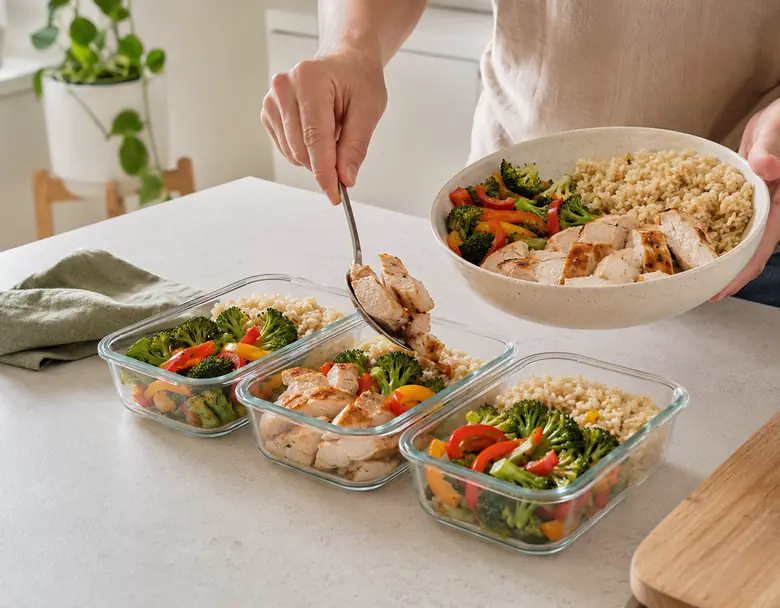
Meal prep can make intermittent fasting easier by reducing decisions when you are hungry and protecting the eating window from last-minute takeout or grazing. The goal is not to cook seven identical meals or make the routine rigid. Prepare flexible components that can become balanced meals, including a protein food, plants, a satisfying carbohydrate, a suitable fat, and fluids.
Key takeaways
- Prep meal components rather than forcing the same complete meal every day.
- Prepare the first meal after fasting so hunger does not decide what you eat.
- Keep backup foods available for busy days and leave room for social meals.
- High-protein and high-fiber meals can support fullness, but meal prep does not guarantee weight loss.
- During a clean fast, water, black coffee, or unsweetened tea are the clearest defaults; calorie-containing drinks belong in the eating window. [1][2]
- If fasting or meal prep creates anxiety, binge-restrict behavior, or under-eating, widen the eating window and seek support when needed.
Table of Contents
The easiest meal-prep formula
Build most meals from five flexible parts:
- Protein: eggs, fish, chicken, turkey, Greek yogurt, cottage cheese, tofu, tempeh, beans, lentils, or another suitable option.
- Plants: vegetables or fruit, fresh or frozen.
- Carbohydrate: oats, rice, potatoes, quinoa, whole-grain pasta, whole-grain bread, or another satisfying fiber-rich option.
- Fat and flavor: avocado, olive oil, nuts, seeds, yogurt sauce, herbs, spices, or a dressing.
- Fluids: water with meals and throughout the day; choose fasting-window drinks according to your fasting definition and tolerance.
This formula is a planning tool, not a required plate ratio or calorie prescription. Portions should fit your hunger, body, activity, health goals, and medical needs.
Prep the first meal after your fast
The first meal does not need to be tiny, but it should be calm and balanced rather than a very large, highly refined meal. Useful options include:
- Greek yogurt with berries, nuts, and oats;
- eggs or tofu with vegetables and whole-grain toast;
- a rice bowl with chicken, beans, tofu, vegetables, and avocado;
- lentil soup with a side salad;
- a tuna, chickpea, or tofu salad wrap;
- oatmeal with yogurt or nuts and fruit.
If a meal repeatedly leaves you hungry soon afterward, add a clear protein source, fruit or vegetables, fiber-rich carbohydrates, or enough total food. For more first-meal ideas, see Best First Meal After Fasting.
A beginner-friendly prep plan
Cook components once
Choose one or two foods from each category:
- Protein: chicken, tofu, lentils, eggs, beans, fish, or turkey.
- Vegetables: roasted broccoli, peppers, zucchini, carrots, or frozen vegetables.
- Carbohydrates: rice, potatoes, oats, quinoa, or whole-grain pasta.
- Flavor: a low-sugar sauce, olive-oil dressing, herbs, spices, or salsa.
Store components separately when possible so the same preparation can become different meals.
Assemble in minutes
- Bowl: rice, vegetables, protein, and sauce.
- Wrap: whole-grain tortilla, protein, greens, and yogurt sauce.
- Salad: greens, beans or chicken, vegetables, and olive-oil dressing.
- Soup plate: lentil or vegetable soup with toast or fruit.
- Breakfast-style meal: eggs or yogurt with fruit, oats, or whole-grain toast.
Keep backup options
Frozen vegetables, canned beans or tuna, plain yogurt, pre-washed greens, microwavable grains, fruit, eggs, and simple dressings can prevent an unplanned fast-food decision. Check labels for added sugar, sodium, allergens, and storage instructions rather than assuming a “healthy” label is enough. [3]
Meal prep by fasting schedule
| Schedule | Useful prep focus | Common mistake |
|---|---|---|
| 12:12 | One planned first meal and a normal dinner | Treating the overnight gap as permission to skip needed meals |
| 14:10 | Two balanced meals and an optional planned snack | Making the window too small for comfortable nutrition |
| 16:8 | A ready first meal, a complete second meal, and flexible backup | Saving all food for one very large dinner |
| Variable schedule | Components that can move between meals | Cooking a rigid seven-day menu that cannot fit real life |
If you cannot fit adequate food, protein, fluids, or medication timing into the window, widen it instead of forcing the schedule. For the broader food framework, see Intermittent Fasting Diet: What It Means and How to Eat.
What to limit during the eating window
Meal prep does not require banning foods, but a routine can become harder when the eating window is dominated by sugary drinks, sweet coffee drinks, juice, pastries, candy, low-fiber snack foods, large fried meals immediately after fasting, alcohol near bedtime, or “saving calories” all day and eating chaotically at night.
Review the pattern rather than labeling one food as forbidden. If restricting certain foods increases cravings or rebound eating, a more flexible plan may be safer and more sustainable.
How to keep meal prep flexible
- Prep three or four components instead of seven identical meals.
- Keep one emergency meal ready for busy days.
- Use different sauces, spices, and vegetables to prevent boredom.
- Leave room for travel, family meals, and social occasions.
- Review what you actually ate before making the fasting window stricter.
FAQ
What are easy meals for an intermittent fasting eating window?
Balanced bowls, wraps, salads, soups, yogurt-and-oat combinations, eggs with vegetables, tofu with rice, and lentil meals are flexible starting points. Include a protein source, plants, a satisfying carbohydrate, and enough food for the next fasting period.
Should I meal prep breakfast if I skip breakfast while fasting?
You can prep the first meal of your eating window even if it occurs at noon or later. “Breakfast” describes the first meal, not a mandatory clock time.
Can meal prep help with weight loss during fasting?
It can make balanced meals and consistent portions easier, but weight loss depends on the full pattern of food intake, activity, sleep, and health. Meal prep is a support tool, not a guarantee.
What should I drink while fasting?
Water is the simplest default. Black coffee or unsweetened tea may fit some clean-fast definitions, but caffeine and other drinks affect people differently. See What Can You Drink During Intermittent Fasting?.
Bottom line
The most useful intermittent-fasting meal prep is flexible, balanced, and ready before hunger becomes urgent. Prepare components and a reliable first meal, keep practical backups, and make the eating window large enough for adequate nutrition. A plan that cannot survive busy days or social meals needs adjusting, not more rigid rules.
Medical disclaimer
This article is general educational information, not medical advice. Consult a qualified healthcare professional before fasting if you have diabetes, take medication, are pregnant or breastfeeding, are under 18, have an eating-disorder history, are underweight, or have another condition affected by food, hydration, or weight change.
References
- CDC. Tips for Healthy Eating for a Healthy Weight https://www.cdc.gov/healthy-weight-growth/healthy-eating/index.html
- Harvard T.H. Chan School of Public Health. Healthy Eating Plate https://nutritionsource.hsph.harvard.edu/healthy-eating-plate/
- FDA. How to Understand and Use the Nutrition Facts Label https://www.fda.gov/food/nutrition-facts-label/how-understand-and-use-nutrition-facts-label