



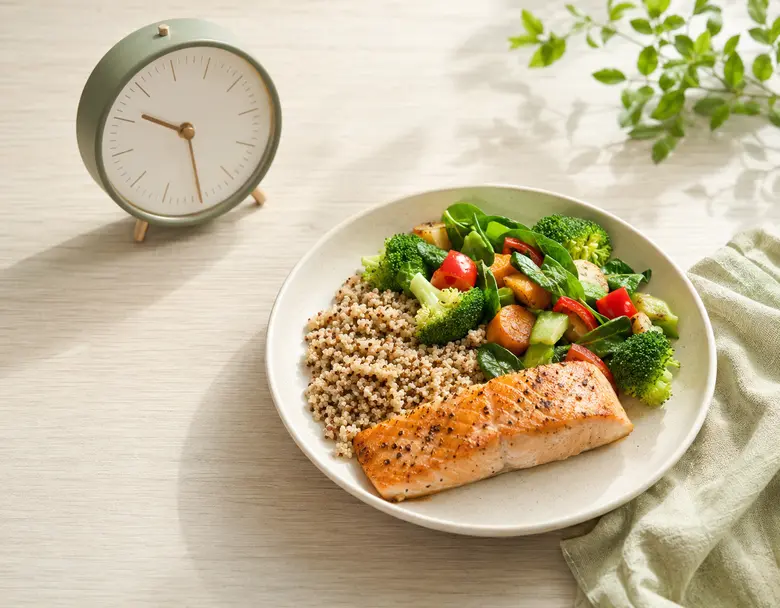
Intermittent fasting changes when you eat; it does not remove the need for balanced meals. A useful eating-window plan combines protein foods, vegetables or fruit, fiber-rich carbohydrates, healthy fats, and mostly unsweetened drinks. The plan should help you repeat meals calmly rather than trying to “make up” for the fast with one oversized meal.
Key takeaways
- There is no single intermittent-fasting diet that suits everyone.
- Build meals around protein, plants, satisfying carbohydrates, healthy fats, and enough total food.
- Water, black coffee, and unsweetened tea are simple fasting-window choices; calorie-containing drinks belong in the eating window. [1][2]
- Food quality still matters even when eating hours are limited.
- A diet plan should leave room for preferences, culture, budget, activity, medication timing, and social meals.
- Dizziness, persistent digestive symptoms, binge-like eating, medication conflicts, or unsafe restriction are reasons to shorten or pause the fast and seek guidance. [3][4]
Table of Contents
- Key takeaways
- What does an intermittent fasting diet mean?
- A simple eating-window plate
- What to eat when the fast ends
- Example one-day eating-window plan
- Foods and drinks to limit more often
- How to plan supplements and medication
- How to adjust without making fasting stricter
- When to pause and get guidance
- FAQ
- Bottom line
- Medical disclaimer
- References
What does an intermittent fasting diet mean?
Intermittent fasting is an eating pattern that organizes fasting and eating periods. Unlike a named diet that prescribes a fixed food list, many fasting schedules primarily define the timing of meals. You still need to decide what foods, portions, fluids, and meal frequency allow you to meet your needs.
That distinction matters: placing highly processed snacks and sugary drinks inside a short eating window does not automatically create a balanced diet. Likewise, eating carbohydrates or having a flexible meal does not mean the fasting plan has failed.
A simple eating-window plate
At most main meals, consider including:
- vegetables or fruit for fiber, volume, and variety;
- protein foods such as eggs, fish, poultry, tofu, beans, lentils, Greek yogurt, or lean meat;
- whole grains or other fiber-rich carbohydrates such as oats, brown rice, quinoa, whole-grain bread, potatoes, or sweet potatoes;
- healthy fats such as olive oil, avocado, nuts, seeds, or nut butter;
- water or another mostly unsweetened drink.
This is a flexible framework, not a mandatory plate ratio or medical prescription. Portions and food choices should fit your appetite, health goals, activity, allergies, culture, and medical needs. [1][2]
What to eat when the fast ends
The first meal after fasting should be satisfying and easy to repeat. Examples include:
- Greek yogurt with berries, nuts, and oats;
- eggs with vegetables and whole-grain toast;
- tofu, rice, vegetables, and an olive-oil dressing;
- chicken or bean salad with avocado and fruit;
- oatmeal with milk or yogurt, fruit, and seeds.
If you become hungry soon afterward, review protein, fiber, meal size, hydration, sleep, and whether the fasting window is too long. Do not automatically respond with a longer fast or a highly restrictive next meal. For more first-meal guidance, see Best First Meal After Fasting.
Example one-day eating-window plan
For a schedule such as 14:10 or 16:8, one flexible example is:
- First meal: eggs or tofu, vegetables, whole-grain toast, and fruit.
- Optional snack: plain yogurt with berries, fruit with nuts, or edamame if hungry.
- Final meal: salmon, chicken, beans, lentils, or tempeh with vegetables and potatoes, rice, or quinoa.
- Drinks: water with meals; choose fasting-window drinks according to your fasting definition.
This example is not a calorie target and does not mean everyone needs three eating occasions. If two meals are uncomfortable or inadequate, use a longer eating window.
Foods and drinks to limit more often
You do not need a universal forbidden-food list. However, a routine may be less satisfying when most intake comes from sweetened coffee drinks, soda, sweet tea, lemonade, energy drinks, candy, cookies, pastries, large portions of chips or fried snacks, or sauces and flavored yogurts with more added sugar than expected. [4][5]
Alcohol can also affect sleep, appetite, hydration, and food choices. A large late-night meal may make the next fasting period harder, even if it technically fits the eating window.
How to plan supplements and medication
Keep prescribed medication separate from general supplement advice. Take medicines and supplements with food when the label or clinician recommends it. Be cautious with products promising rapid fat loss, detox, appetite elimination, or “fasting acceleration.”
If you have a medical condition, take medication, are pregnant or breastfeeding, or have a history of disordered eating, get qualified guidance before changing eating windows or supplements. Do not treat a general diet plan as a substitute for medical nutrition therapy.
For beverage rules, see What Can You Drink During Intermittent Fasting?. For meal preparation, see Intermittent Fasting Meal Prep.
How to adjust without making fasting stricter
- Add protein to the first meal if you snack soon afterward.
- Add vegetables, fruit, beans, lentils, oats, or whole grains if meals feel too small or low in fiber.
- Move from random snacks to one planned snack if grazing is taking over the window.
- Reduce sweetened drinks before cutting more food from balanced meals.
- Compare how different eating-window lengths feel before moving to a stricter schedule.
- If weight loss is the goal, review the complete week rather than judging one meal or one scale reading.
When to pause and get guidance
Pause or shorten the fast for fainting, persistent dizziness, severe weakness, repeated headaches, worsening sleep, persistent digestive symptoms, menstrual changes, binge-like eating, or increasing anxiety around food. Get professional guidance if the routine conflicts with diabetes care, medication timing, pregnancy, breastfeeding, recovery from illness or surgery, or another medical condition. [3]
FAQ
Is there one diet plan for intermittent fasting?
No. Fasting defines timing, while the food pattern should fit nutrition needs, goals, preferences, health, and daily life.
Can I eat carbohydrates during intermittent fasting?
Yes. Carbohydrates such as oats, potatoes, rice, fruit, beans, and whole grains can fit a balanced eating-window plan. The amount and type should fit your needs and goals.
What should I drink while fasting?
Water is the simplest default. Black coffee or unsweetened tea may fit some clean-fast definitions, while milk, sugar, juice, and other calorie-containing drinks belong in the eating window.
Should I count calories with intermittent fasting?
Not everyone needs to count. A short period of tracking can help identify portions, drinks, snacks, and meal patterns, but tracking should not increase anxiety or restrictive behavior.
What if I feel too hungry after fasting?
Review meal adequacy, protein, fiber, hydration, sleep, and the length of the fasting window. Widen the window if needed instead of repeatedly overriding hunger.
Bottom line
An intermittent fasting diet plan should organize meal timing without sacrificing food quality, adequate nutrition, flexibility, or health. Use a balanced plate, prepare a satisfying first meal, keep drinks simple during the fast, and choose the least restrictive routine that you can repeat safely.
Medical disclaimer
This article is general educational information, not medical advice. Consult a qualified healthcare professional before fasting or changing your diet if you have diabetes, take medication, are pregnant or breastfeeding, are under 18, have an eating-disorder history, are underweight, or have another relevant health condition.
References
- CDC. Tips for Healthy Eating for a Healthy Weight https://www.cdc.gov/healthy-weight-growth/healthy-eating/index.html
- Harvard T.H. Chan School of Public Health. Healthy Eating Plate https://nutritionsource.hsph.harvard.edu/healthy-eating-plate/
- Cleveland Clinic. 6 Tips for Fasting Safely https://health.clevelandclinic.org/tips-for-fasting-the-healthy-way
- FDA. Added Sugars on the Nutrition Facts Label https://www.fda.gov/food/nutrition-facts-label/added-sugars-nutrition-facts-label
- CDC. About Water and Healthier Drinks https://www.cdc.gov/healthy-weight-growth/water-healthy-drinks/index.html