

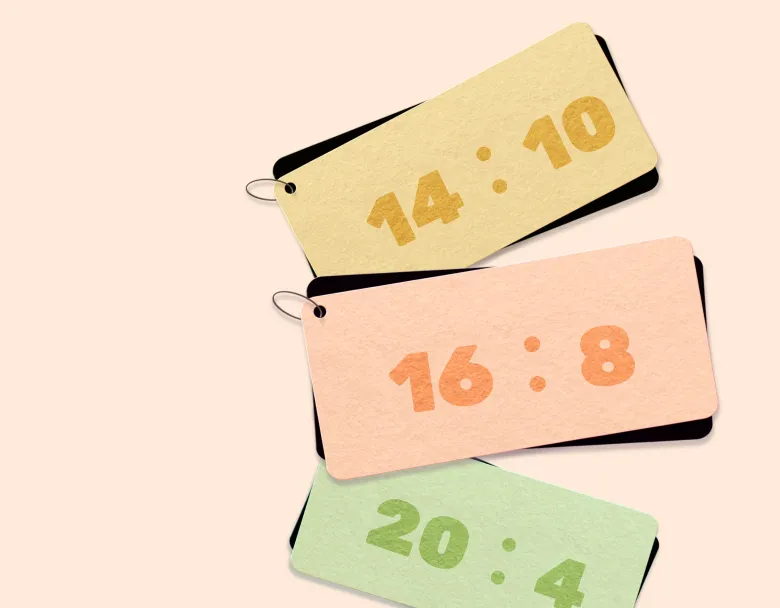
A reasonable intermittent fasting schedule for many women starts gently, often with 12:12 or 14:10, before considering 16:8. Women are not one single group, and fasting may affect menstrual rhythm, ovulation, symptoms, and energy differently depending on life stage, health history, and stress level [1].
Key takeaways
- There is no single best intermittent fasting schedule for all women.
- A 12:12 schedule is often the most conservative starting point.
- Premenopausal women should be especially cautious with longer fasting windows.
- Pregnancy, breastfeeding, and trying to conceive are not times to experiment with fasting.
- Menstrual changes, dizziness, sleep problems, irritability, and persistent fatigue are signs to shorten or stop.
A gentler starting point: 12:12
A 12:12 schedule means fasting for 12 hours and eating within a 12-hour window. For example, you might finish dinner at 7 p.m. and eat breakfast at 7 a.m.
This is often the least disruptive option because much of the fasting time happens overnight. It may help reduce late-night snacking without forcing a major change in breakfast, lunch, or dinner.
For women who are new to fasting, under stress, active, or unsure how their cycle will respond, 12:12 is usually a better first test than jumping into a strict 16:8 schedule.
When 14:10 may make sense
A 14:10 schedule means fasting for 14 hours and eating within 10 hours. Cleveland Clinic lists 14:10 as one common time-restricted eating method, alongside 16:8 [2].
This can be a practical next step if 12:12 feels easy and does not trigger symptoms. A 14:10 day might look like eating from 9 a.m. to 7 p.m. or 8 a.m. to 6 p.m.
The goal is not to make the eating window as short as possible. The goal is to find a routine that supports balanced meals, hydration, sleep, and stable energy.
Be careful with 16:8
A 16:8 schedule means fasting for 16 hours and eating within 8 hours. It is popular, but popularity does not make it right for every woman.
Cleveland Clinic notes that premenopausal women may be better served by low-intensity fasting schedules at first, and one suggested entry point is a 12-hour fasting schedule [1]. Fasting may affect ovulation and menstrual rhythm in some women, especially when the routine is too intense or layered on top of stress, under-eating, or heavy training [1].
If you try 16:8, treat it as an experiment. If your period changes, sleep worsens, headaches increase, or you feel unusually irritable or depleted, move back to a shorter window or stop.
How menstrual cycle timing can change the plan
For women who menstruate, the same fasting schedule may not feel the same across the whole month.
Cleveland Clinic suggests that fasting may be better tolerated shortly after a period begins and during the week after, while the two weeks before a period may require more caution [1]. The week before a period can be a more vulnerable time for stress, lower energy, and food cravings [1].
A practical approach:
- Use 12:12 during more sensitive cycle phases.
- Avoid increasing fasting hours the week before your period.
- Keep meals steady if PMS symptoms, cravings, headaches, or poor sleep appear.
- Track cycle changes separately from app-tracked fasting data unless the app explicitly supports cycle tracking.
Schedules by situation
| Situation | More cautious option | Why |
|---|---|---|
| New to fasting | 12:12 | Lower disruption and easier symptom monitoring |
| Regular cycle, no symptoms | 12:12 or 14:10 | Allows structure without pushing intensity |
| Week before period | 12:12 or no fasting | Symptoms and stress sensitivity may be higher |
| Postmenopause | 12:12, 14:10, or carefully tested 16:8 | Menstrual effects are no longer the same, but symptoms still matter |
| Trying to conceive, pregnant, or breastfeeding | Avoid fasting unless clinician-directed | Higher-risk life stage |
Signs your fasting window is too long
Shorten or stop the schedule if you notice:
- skipped, delayed, or unusual periods
- persistent headaches
- dizziness
- irritability that feels out of character
- trouble sleeping
- heart palpitations
- hair or skin changes
- low libido
- intense cravings or overeating after fasting
- fatigue that affects work, caregiving, or exercise
Mayo Clinic lists possible intermittent fasting side effects including tiredness, dizziness, headaches, mood changes, constipation, diabetes management issues, and menstrual effects [3].
How GoFasting can help with a cautious test
If fasting is appropriate for you, GoFasting can help you log fasting windows, weight, steps, calorie intake, and water intake, then review patterns as you adjust your routine.
Use tracking as feedback, not judgment. Tracking does not decide whether fasting is medically appropriate, and it should not replace attention to menstrual changes, mood, sleep, or other symptoms.
FAQ
Is 16:8 good for women?
It can work for some women, but it is not the safest starting point for everyone. A gentler 12:12 or 14:10 schedule is often a better first test.
Should women fast every day?
Not necessarily. Some women may do better with shorter fasting windows, fewer fasting days, or no fasting during more sensitive cycle phases.
Can intermittent fasting affect periods?
Yes, fasting may affect menstrual rhythm or ovulation in some women, especially when the fasting window is too long or overall food intake is too low [1].
Bottom line
The best intermittent fasting schedule for women is usually the one that is gentle enough to repeat without disrupting energy, mood, sleep, menstrual rhythm, or nutrition. Start with 12:12, consider 14:10 only if symptoms are stable, and treat 16:8 as optional rather than required.
Medical disclaimer
This article is for general educational purposes only and is not medical advice. Talk with a qualified healthcare professional before fasting if you are pregnant, breastfeeding, trying to conceive, have diabetes or blood sugar concerns, take medication, have a history of eating disorders, or notice menstrual or hormonal symptoms.
References
- Cleveland Clinic. "How Intermittent Fasting Affects Women." https://health.clevelandclinic.org/intermittent-fasting-for-women
- Cleveland Clinic. "Intermittent Fasting: What It Is, Benefits and Schedules." https://health.clevelandclinic.org/intermittent-fasting-4-different-types-explained
- Mayo Clinic. "Intermittent fasting: What are the benefits?" https://www.mayoclinic.org/healthy-lifestyle/nutrition-and-healthy-eating/expert-answers/intermittent-fasting/faq-20441303
- Johns Hopkins Medicine. "Intermittent Fasting: What Is It, And How Does It Work?" https://www.hopkinsmedicine.org/health/expert-qa/intermittent-fasting-what-is-it-and-how-does-it-work