



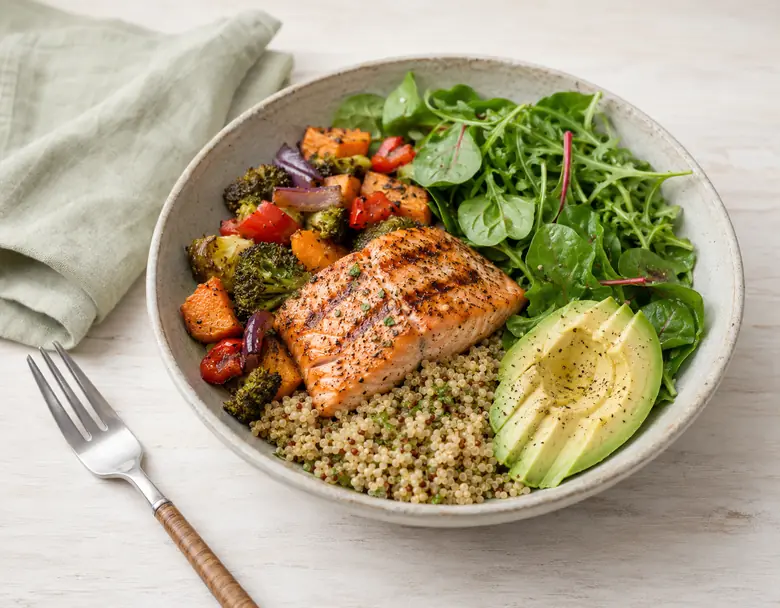
Fasting recipes for weight loss should make your eating window easier, not smaller at all costs. The best default is a balanced meal that includes protein, fiber-rich plants, satisfying carbohydrates or healthy fats, and mostly unsweetened drinks. Intermittent fasting can reduce eating opportunities, but the eating window still needs enough nutrition to keep the routine repeatable.
Use these recipes as flexible meal ideas. Adjust portions, ingredients, and meal timing for your needs, schedule, appetite, and any medical guidance you have.
Table of Contents
The eating-window formula
A simple intermittent fasting meal can follow this structure:
| Build the plate with | Examples |
|---|---|
| Protein foods | Eggs, fish, poultry, tofu, tempeh, beans, lentils, Greek yogurt, lean meats |
| Fiber-rich plants | Leafy greens, broccoli, peppers, tomatoes, berries, apples, beans, vegetables |
| Satisfying carbs or healthy fats | Oats, brown rice, potatoes, quinoa, avocado, nuts, seeds, olive oil |
| Low-sugar drinks | Water, unsweetened tea, black coffee, sparkling water without calories |
Healthy eating patterns can emphasize vegetables, fruits, protein foods, whole grains, dairy without added sugars, and healthy fats while staying within daily calorie needs [1]. Protein is an essential macronutrient, and the overall protein package matters, not only grams [2].
For a broader food overview, see What to Eat During Intermittent Fasting.
High-protein fasting recipes
1. Egg, avocado, and greens plate
Ingredients
- 2 eggs, boiled or scrambled
- 1/2 avocado
- 2 cups leafy greens
- cherry tomatoes
- olive oil and vinegar
- optional whole-grain toast or roasted potatoes
Why it works: Eggs add protein, avocado adds satisfying fat, and greens add volume. Add a carbohydrate if you need more energy or are breaking a longer fast.
2. Greek yogurt berry bowl
Ingredients
- plain Greek yogurt without added sugar
- berries
- chia seeds or ground flaxseed
- chopped nuts
- cinnamon
Why it works: This is a quick high-protein option that can feel lighter than a full hot meal. Check labels for added sugars, especially with flavored yogurt [3].
3. Salmon rice bowl
Ingredients
- salmon or canned salmon
- brown rice or quinoa
- cucumber, carrots, greens, or cabbage
- avocado or sesame seeds
- low-sugar sauce or lemon-olive oil dressing
Why it works: It combines protein, fiber, and a satisfying carbohydrate. Keep sauces moderate because sugar and sodium can add up quickly.
4. Tofu vegetable stir-fry
Ingredients
- tofu or tempeh
- broccoli, peppers, mushrooms, snap peas, or zucchini
- olive oil or avocado oil
- garlic, ginger, and low-sodium soy sauce
- cauliflower rice, brown rice, or noodles depending on your plan
Why it works: It is flexible for vegetarian eating windows and can be made higher or lower in carbohydrates without changing the whole meal.
Quick meals for a shorter eating window
If you follow 16:8, 18:6, or a similar schedule, you may not want complicated meals. Choose meals that are easy to repeat.
| Meal idea | Fast assembly |
|---|---|
| Turkey or tofu lettuce wraps | Protein, crunchy vegetables, avocado, and a side of fruit |
| Tuna or chickpea salad plate | Greens, tomatoes, cucumber, olive oil dressing, whole-grain crackers if desired |
| Chicken vegetable soup | Protein, vegetables, beans or potatoes if desired |
| Cottage cheese bowl | Cottage cheese, berries, nuts, cinnamon |
| Bean and egg breakfast tacos | Eggs, beans, salsa, avocado, corn tortillas |
The first meal after a fast does not need to be special or extreme. A balanced meal with protein foods, fiber-rich plants, and satisfying carbohydrates or healthy fats is a safer default than a very large sugary meal.
What to avoid when choosing fasting recipes
A recipe can look healthy and still work against your goal if it makes the eating window too calorie-dense or not filling enough.
Watch for:
- smoothies that are mostly juice, sweetened yogurt, or large portions of nut butter
- salads with very little protein
- "keto" snacks that are easy to overeat
- sweetened coffee drinks during or after the fast
- large desserts used as a reward for fasting
- meals so small that they trigger late-night hunger
Added sugars can make it harder to meet nutrient needs while staying within calorie limits [3]. Replacing high-calorie foods with lower-calorie choices and reducing portions can support weight control [4].
A one-day example
This is a flexible example, not a prescription.
| Time | Meal |
|---|---|
| Fasting window | Water, unsweetened tea, or black coffee |
| First meal | Greek yogurt berry bowl with chia and nuts |
| Main meal | Salmon rice bowl with vegetables and avocado |
| Optional snack | Cottage cheese, fruit, or vegetables with hummus |
| Evening | Stop eating at the planned time; hydrate normally |
If this feels too restrictive, widen the eating window. If it feels too heavy, reduce portion size or split the main meal into two smaller eating moments.
GoFasting can help you log fasting windows, calorie intake, water intake, weight, and steps, then review patterns as you adjust your routine.
FAQ
What are good fasting recipes for weight loss?
Good options include meals with protein, fiber-rich plants, and satisfying carbohydrates or healthy fats, such as egg plates, Greek yogurt bowls, salmon rice bowls, tofu stir-fries, and bean-based meals.
Are high-protein fasting recipes better?
Protein can support meal structure and fullness, but more protein is not automatically better for every person. Choose protein foods as part of a balanced eating-window pattern [2].
Can I eat carbs in intermittent fasting recipes?
Yes. Intermittent fasting does not require low carb. Whole grains, beans, fruit, potatoes, or other satisfying carbohydrates can fit when they support your overall plan.
What should I eat first after fasting?
Start with a balanced meal rather than a very large sugary meal. Protein plus fiber-rich plants is a practical default.
Are smoothies good for intermittent fasting weight loss?
They can be, but check what is inside. Juice-heavy smoothies or large portions of sweetened yogurt, syrups, or nut butter can become high-calorie quickly.
Medical disclaimer
This article is for general education only and is not medical advice. Nutrition needs vary by age, health conditions, medications, pregnancy or breastfeeding status, activity level, and eating history. Talk with a healthcare professional or registered dietitian before making major diet or fasting changes if any of those factors apply.
References
- CDC. Tips for Healthy Eating for a Healthy Weight https://www.cdc.gov/healthy-weight-growth/healthy-eating/index.html
- Harvard T.H. Chan School of Public Health. Protein https://nutritionsource.hsph.harvard.edu/what-should-you-eat/protein/
- FDA. Added Sugars on the Nutrition Facts Label https://www.fda.gov/food/nutrition-facts-label/added-sugars-nutrition-facts-label
- Mayo Clinic. Counting calories: Get back to weight-loss basics https://www.mayoclinic.org/healthy-lifestyle/weight-loss/in-depth/calories/art-20048065