



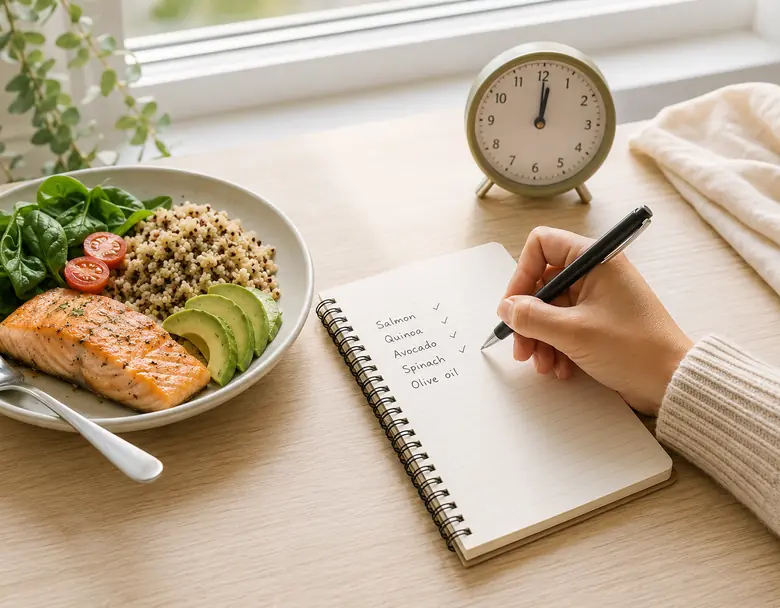
Food logging can make intermittent fasting more useful when it answers practical questions: Are you eating enough? Are meals balanced? Is hunger related to a long window, poor sleep, or skipped protein? The purpose is pattern recognition, not creating a stricter rule system or proving that every calorie was perfect.
Key takeaways
- Log fasting start and end times together with meals, drinks, hunger, sleep, activity, and symptoms.
- Focus first on repeatable patterns such as meal timing, protein, fiber, sugary drinks, and rebound eating.
- Calories can be useful for some goals, but they are not the only measure of a successful routine.
- A simple three-day or one-week record is often enough to identify the next adjustment.
- Tracking that increases anxiety, compulsive checking, or restrict-and-binge behavior should be paused.
Table of Contents
What to record
Fasting window
Record the time of the last calorie-containing food or drink and the time you begin eating again. Note whether the fast changed because of exercise, work, social plans, symptoms, or medication needs. This explains exceptions instead of treating them as failures.
Meals and drinks
You do not need perfect detail. Note the main foods, approximate portions, protein source, fruit or vegetables, high-fiber carbohydrates, added-sugar drinks, alcohol, and fasting-window drinks. Nutrition labels can help you compare packaged foods, but labels are estimates and should not replace judgment.[1]
Context and response
Add hunger, energy, mood, digestion, sleep, activity, and any symptoms. The most useful entry may be “very hungry after a short night” or “ate rapidly after a hard workout,” not a precise calorie total.
A simple three-day template
| Item | Example note |
|---|---|
| Fast | 8:30 p.m. to 10:30 a.m. |
| First meal | Yogurt, oats, berries, nuts; hunger 6/10 |
| Main meal | Chicken, beans, vegetables, rice |
| Drinks | Water; coffee at 8 a.m. |
| Context | Slept 6 hours; walked 30 minutes |
| Review | Hungry at 4 p.m.; no dizziness; late snack avoided |
Repeat the record for three typical days and, if useful, one weekend day. Look for repeated patterns before making a change. If the first meal is consistently followed by overeating, shorten the fast or improve meal composition. If energy is low around training, move the workout or eating window. If sleep worsens, review caffeine and late meal timing.
Common logging mistakes include recording weekdays but not weekends, forgetting calorie-containing drinks, entering meals from memory several days later, treating one high-calorie meal as failure, or tracking calories while ignoring protein, fiber, fluids, and meal satisfaction. The record should explain your routine, not punish deviations.
How to use an app without becoming rigid
GoFasting can help you log fasting windows and review related weight, steps, food, and water patterns. Set the minimum tracking level that answers your question. A timer cannot tell you whether a fast is medically appropriate, whether a meal is nutritionally adequate, or whether a symptom is safe to ignore.
Avoid turning the app into a pass-or-fail system. Planned flexibility for illness, travel, social meals, training, or medication is part of a sustainable routine. If tracking creates fear around food, compulsive weighing, or a restrict-and-rebound cycle, stop the tracking experiment and seek qualified support.[2]
For a dedicated tracker workflow, see Intermittent Fasting Food Tracker. If you are deciding what to record before choosing a schedule, see How to Choose the Best Intermittent Fasting Plan by Goal or Health Context.
What a useful review looks like
At the end of the week, ask:
- Did the window fit work, family meals, exercise, and sleep?
- Did meals include enough protein, fiber, fluids, and variety?
- Did I experience dizziness, weakness, persistent hunger, poor recovery, or poor sleep?
- Did logging help me make one practical change?
If a full food log feels burdensome, use a lighter reset for three days: mark whether each main meal included protein and plants, note sugary drinks and unplanned snacks, and record the eating-window start and stop time. Add calorie or portion detail only if the pattern remains unclear.
Match the log to the question
| Question you want to answer | Minimum useful record |
|---|---|
| Am I eating enough during the window? | Meal times, rough portions, hunger, energy, and symptoms |
| Why am I hungry during the fast? | Last meal composition, fasting length, sleep, stress, caffeine, and activity |
| Is training affected? | Workout time, last meal, performance, recovery, and post-workout food |
| Is sleep changing? | Last meal, caffeine, late fluids, fasting length, and sleep quality |
| Are weekends different? | Add at least one typical weekend day instead of judging weekdays alone |
This keeps tracking tied to a decision and avoids collecting detailed numbers that do not change what you do next.
If the answers show repeated symptoms, under-eating, bingeing, or medical conflicts, change or stop the fasting plan rather than collecting more data.
FAQ
Do I need to count calories while intermittent fasting?
No. Calorie tracking may help some people answer a specific question, but meal quality, hunger, energy, protein, fiber, sleep, and consistency also matter. Use the least burdensome method that is useful.
What should I log first?
Start with fasting times, meals and drinks, hunger, sleep, activity, and symptoms. Add calories or portions only if they help you make a decision.
Is a fasting timer enough?
No. A timer records duration, not nutrition, recovery, medication needs, or safety. Pair it with a brief context note.
Can food logging trigger disordered eating?
It can be stressful for some people. If tracking increases anxiety, obsessive checking, restriction, or bingeing, stop and discuss a safer approach with a qualified professional.[2]
Bottom line
Use food logging as a feedback tool. Record enough context to understand hunger, energy, sleep, training, and meal quality; then make one measured adjustment. More data is not better if it makes eating more anxious or rigid.
Medical disclaimer
This article is for general education and is not medical advice. Speak with a qualified health care professional before fasting or changing your diet if you are pregnant or breastfeeding, under 18, underweight, have diabetes or another medical condition, take medication affected by meals, have eating-disorder risk, or feel unwell.
References
- U.S. Food and Drug Administration. How to Understand and Use the Nutrition Facts Label https://www.fda.gov/food/nutrition-facts-label/how-understand-and-use-nutrition-facts-label
- National Institute of Mental Health. Eating Disorders https://www.nimh.nih.gov/health/topics/eating-disorders