



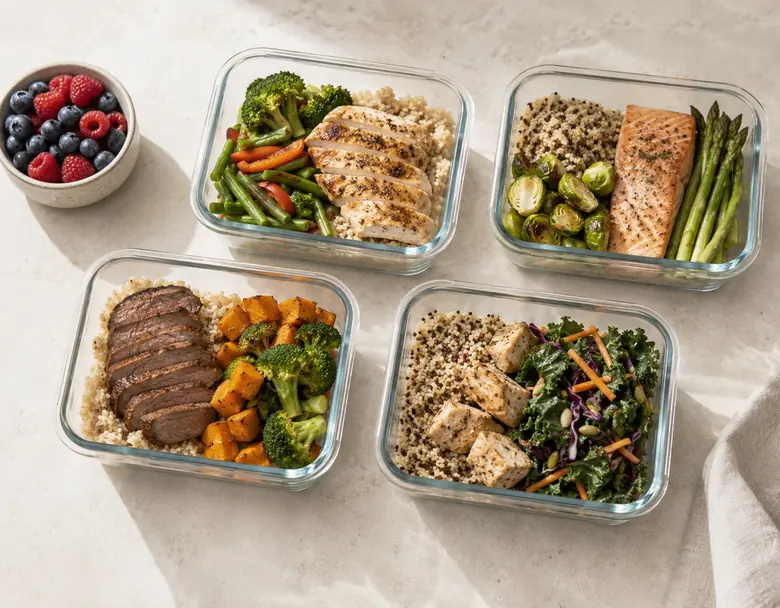
Healthy meal prep for intermittent fasting and weight loss should make balanced eating easier before you are hungry. Prep helps you use the eating window for steady meals instead of rushing, skipping nutrients, or overeating when the fast ends.
A weight-loss plan should include a healthy eating and drinking pattern that fits your calorie needs, habits, preferences, and health context.[1]
Key takeaways
- Prep meal components, not only complete meals, so your eating window stays flexible.
- Build meals around protein foods, vegetables, fruit, fiber-rich carbohydrates, healthy fats, and mostly unsweetened drinks.[2]
- High-protein meal prep can support fullness, but weight-loss progress does not come from protein alone.
- Intermittent fasting meal prep works best when the eating window is long enough for calm, balanced meals.
- If weight-loss pressure triggers binge-like eating or food anxiety, pause the plan and get support.
Table of Contents
A simple meal prep formula
| Meal part | Prep ideas | Easy examples |
|---|---|---|
| Protein food | Cook 2 to 3 options | Chicken, fish, tofu, tempeh, eggs, beans, lentils, Greek yogurt |
| Vegetables | Wash, chop, roast, or steam | Greens, peppers, broccoli, carrots, cucumbers, tomatoes |
| Fiber-rich carb | Batch cook one or two | Oats, potatoes, brown rice, quinoa, whole-grain pasta, beans |
| Healthy fat | Portion add-ons | Avocado, olive oil, nuts, seeds |
| Drinks | Keep simple choices ready | Water, sparkling water, black coffee, unsweetened tea |
A balanced plate can include vegetables and fruit, whole grains, healthy protein, healthy plant oils, and water, tea, or coffee with little or no sugar.[3]
Intermittent fasting meal prep that fits the eating window
For a 14:10 or 16:8 schedule, prep for two main meals and one optional snack. The goal is not to eat as little as possible. The goal is to eat enough balanced food without turning the window into a rush.
| Eating-window moment | Prep goal | Example |
|---|---|---|
| First meal | Protein + fiber + satisfying carb | Egg bowl with potatoes and vegetables; tofu rice bowl; Greek yogurt with oats and berries |
| Optional snack | Prevent overeating later | Cottage cheese and fruit; hummus and vegetables; nuts with yogurt |
| Final meal | Protein + vegetables + filling side | Salmon with quinoa and greens; bean chili with salad; chicken or tempeh bowl |
If your current schedule makes you skip meals and then overeat later, use a longer eating window before making the plan stricter.
High-protein meal prep ideas
High-protein does not need to mean low-carb or repetitive. Try:
- Greek yogurt bowls with oats, berries, nuts, and seeds
- Egg muffins with vegetables and whole-grain toast
- Chicken, tofu, or lentil bowls with rice and roasted vegetables
- Salmon or tempeh with potatoes and salad
- Bean chili with avocado and greens
- Cottage cheese with fruit and whole-grain crackers
Protein can help meals feel more satisfying, but muscle and fitness goals also depend on activity and muscle-strengthening work when appropriate.[4]
Foods and drinks to limit more often
Limit choices that make meal prep less filling or harder to maintain:
- Sugary coffee drinks
- Soda, sweet tea, sports drinks, and energy drinks
- Frequent desserts as the main snack
- Fried takeout after long fasts
- Low-protein packaged snack grazing
- Alcohol before a balanced meal
Added sugars can make it harder to meet nutrient needs while staying within calorie limits.[5]
How to prep without making the plan too rigid
Meal prep should reduce stress, not create another rule system.
- Prep three or four flexible components instead of seven identical meals.
- Keep one emergency meal ready for busy days.
- Use sauces, spices, and different vegetables to avoid boredom.
- Leave room for social meals.
- Review what you actually ate before changing the fasting window.
For a more beginner-focused structure, pair this with Beginner Intermittent Fasting Meal Plan.
How GoFasting can support meal prep routines
GoFasting can help you log fasting windows, weight, steps, calorie intake, and water intake, then review patterns as you adjust your routine.
Tracking can show whether meal prep is making your eating window easier to repeat. It does not set a weight-loss outcome or decide what calorie target is right for you.
FAQ
What is healthy meal prep for weight loss?
It is planning meals and snacks that support a realistic calorie pattern, balanced nutrition, and repeatable habits instead of relying on last-minute choices.
Is meal prep good for intermittent fasting?
Yes, it can help you eat balanced meals inside the eating window. It is especially useful if fasting makes you feel rushed or likely to overeat later.
What should I meal prep for 16/8 fasting?
Prep two main meals and an optional snack with protein foods, vegetables or fruit, fiber-rich carbohydrates, and healthy fats.
Do I need high-protein meal prep to lose weight?
Not necessarily, but including protein foods at meals can make the plan more satisfying. Total intake, food quality, activity, sleep, stress, and consistency still matter.[1][6]
Bottom line
Healthy meal prep for weight loss works best when it makes balanced meals easier to repeat. Prep protein foods, plants, filling carbohydrates, healthy fats, and simple drinks so your eating window supports your goals without becoming extreme.
Medical disclaimer
This article is for general educational purposes only and is not medical advice. Talk with a qualified health care professional before changing your diet or fasting routine if you have a medical condition, take medications, are pregnant or breastfeeding, are underweight, have an eating disorder history, or feel unwell.
References
- NIDDK. Choosing a Safe & Successful Weight-loss Program https://www.niddk.nih.gov/health-information/weight-management/choosing-a-safe-successful-weight-loss-program
- CDC. Tips for Healthy Eating for a Healthy Weight https://www.cdc.gov/healthy-weight-growth/healthy-eating/index.html
- Harvard T.H. Chan School of Public Health. Healthy Eating Plate https://nutritionsource.hsph.harvard.edu/healthy-eating-plate/
- CDC. Adult Activity: An Overview https://www.cdc.gov/physical-activity-basics/guidelines/adults.html
- FDA. Added Sugars on the Nutrition Facts Label https://www.fda.gov/food/nutrition-facts-label/added-sugars-nutrition-facts-label
- CDC. Steps for Losing Weight https://www.cdc.gov/healthy-weight-growth/losing-weight/index.html