



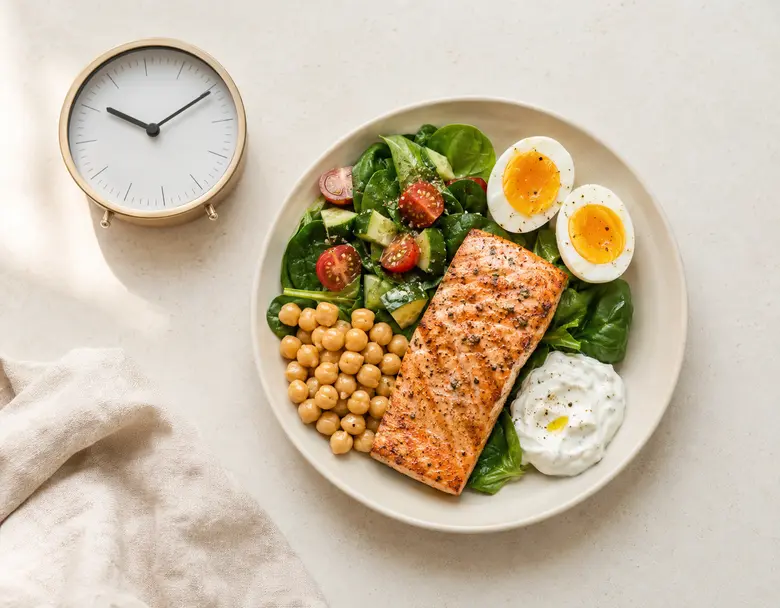
A high-protein intermittent fasting meal plan should help you eat satisfying meals during the eating window without turning fasting into a crash diet. Build each eating-window meal around a protein food, vegetables or fruit, fiber-rich carbohydrates, healthy fats, and mostly unsweetened drinks.[1][2]
This plan can fit 14:10 or 16:8, but the eating window should be long enough for you to eat calmly and meet your needs.
Key takeaways
- Put protein foods in both main meals instead of saving protein for one large meal.
- Add fiber-rich plants and satisfying carbohydrates so the plan is balanced, not just high protein.
- Water, black coffee, and unsweetened tea are the simplest fasting-window drinks.[3]
- A high-protein plan is not automatically a weight-loss plan; portions and total intake still matter.
- If you have kidney disease, diabetes, pregnancy, breastfeeding, medication issues, or an eating disorder history, get individualized guidance before fasting or changing protein intake.
Table of Contents
- Key takeaways
- High-protein eating-window template
- Three-day high-protein intermittent fasting meal plan
- High-protein food list for fasting meal prep
- What to limit so the plan stays filling
- How to make the plan work for weight loss without overdoing it
- How GoFasting can support the plan
- FAQ
- Bottom line
- Medical disclaimer
- References
High-protein eating-window template
| Eating-window moment | Protein anchor | Add-ons |
|---|---|---|
| First meal | Eggs, Greek yogurt, tofu, tempeh, fish, poultry, beans, lentils | Fruit or vegetables, oats, toast, rice, potatoes, avocado, olive oil |
| Snack if needed | Cottage cheese, yogurt, edamame, tuna, hummus, nuts with another protein | Fruit, vegetables, whole-grain crackers |
| Final meal | Fish, chicken, turkey, tofu, tempeh, beans, lentils, lean meat | Large vegetable serving, whole grain or starchy plant, healthy fat |
| Drinks | Water, sparkling water, black coffee, unsweetened tea | Save caloric drinks for the eating window |
A healthy eating plan can include a variety of nutrient-dense foods while staying within calorie needs.[1]
Three-day high-protein intermittent fasting meal plan
| Day | First meal | Snack if needed | Final meal |
|---|---|---|---|
| Day 1 | Greek yogurt with oats, berries, chia, and nuts | Cottage cheese with fruit | Salmon or tofu with quinoa, greens, and olive oil |
| Day 2 | Egg and vegetable scramble with whole-grain toast | Hummus with vegetables and edamame | Chicken, lentil, or tempeh bowl with rice, beans, salsa, and avocado |
| Day 3 | Turkey, tofu, or bean wrap with vegetables | Greek yogurt or tuna with whole-grain crackers | Lean chili with beans, salad, and potatoes or whole-grain bread |
Swap proteins based on preference. The goal is repeatable structure, not a perfect menu.
High-protein food list for fasting meal prep
| Category | Options |
|---|---|
| Animal-based proteins | Eggs, fish, poultry, lean meat, Greek yogurt, cottage cheese |
| Plant-based proteins | Tofu, tempeh, edamame, lentils, beans, chickpeas, soy milk |
| Protein-supporting carbs | Oats, quinoa, brown rice, potatoes, whole-grain bread, whole-grain pasta |
| Vegetables | Greens, peppers, carrots, tomatoes, cucumbers, broccoli, zucchini |
| Fruit | Berries, apples, oranges, bananas, melon |
| Healthy fats | Olive oil, avocado, nuts, seeds |
A balanced plate can emphasize vegetables and fruits, whole grains, healthy protein, healthy plant oils, and water, tea, or coffee with little or no sugar.[2]
What to limit so the plan stays filling
A high-protein fasting plan can still fall apart if the eating window is dominated by low-fiber snacks or sugary drinks. Limit:
- Sugary coffee drinks
- Soda, sweet tea, sports drinks, and energy drinks
- Protein bars that are mostly candy-like snacks
- Frequent desserts as the main snack
- Large fried meals after a long fast
- Alcohol before a balanced meal
Added sugars can make it harder to meet nutrient needs while staying within calorie limits.[4]
How to make the plan work for weight loss without overdoing it
If weight loss is one goal, keep the plan realistic. Intermittent fasting may help some people reduce eating opportunities, but it should not be framed as a guaranteed or clearly superior weight-loss method.[5]
Practical checks:
- Include protein at each meal, not just at dinner.
- Add vegetables or fruit to increase volume and fiber.
- Keep the eating window long enough to avoid rushed meals.
- Use snacks only when they prevent overeating later.
- Watch liquid calories and frequent extras.
- Compare trends over weeks, not single days.
How GoFasting can support the plan
GoFasting can help you log fasting windows, weight, steps, calorie intake, and water intake, then review patterns as you adjust your routine.
If your logs show that a short window causes skipped meals or very large dinners, try a longer eating window or a less aggressive schedule.
FAQ
Can I do high-protein intermittent fasting on 16/8?
Yes, if the 8-hour window gives you enough time for balanced meals. If you rush meals or feel unwell, use a longer window such as 14:10.
What should I eat first after fasting on a high-protein plan?
Choose a balanced meal with a protein food, vegetables or fruit, and a satisfying carbohydrate or healthy fat.
Is a high-protein intermittent fasting meal plan good for weight loss?
It can support fullness and structure, but weight loss is not guaranteed. Total intake, food quality, activity, sleep, stress, and consistency all matter.[5][6]
Do I need protein powder?
Not automatically. Whole foods can work well. If you use protein powder, choose one that fits your eating window and medical needs.
Can I eat carbs on a high-protein fasting plan?
Yes. Fiber-rich carbohydrates such as oats, potatoes, beans, fruit, quinoa, and whole grains can make meals more satisfying and balanced.
Bottom line
A high-protein intermittent fasting meal plan should make the eating window more satisfying, not more restrictive. Anchor meals with protein, add fiber-rich plants and balanced carbohydrates, keep fasting-window drinks simple, and adjust the schedule if it becomes hard to repeat.
Medical disclaimer
This article is for general educational purposes only and is not medical advice. Talk with a qualified health care professional before fasting or changing protein intake if you have kidney disease, diabetes, a medical condition, take medications, are pregnant or breastfeeding, are underweight, have an eating disorder history, or feel unwell while fasting.
References
- CDC. Tips for Healthy Eating for a Healthy Weight https://www.cdc.gov/healthy-weight-growth/healthy-eating/index.html
- Harvard T.H. Chan School of Public Health. Healthy Eating Plate https://nutritionsource.hsph.harvard.edu/healthy-eating-plate/
- Johns Hopkins Medicine. Intermittent Fasting: What Is It, And How Does It Work? https://www.hopkinsmedicine.org/health/expert-qa/intermittent-fasting-what-is-it-and-how-does-it-work
- FDA. Added Sugars on the Nutrition Facts Label https://www.fda.gov/food/nutrition-facts-label/added-sugars-nutrition-facts-label
- Cochrane. Intermittent fasting for adults with overweight or obesity https://www.cochrane.org/evidence/CD015610_intermittent-fasting-traditional-dietary-advice-or-no-treatment-which-works-better-help-adults
- CDC. Steps for Losing Weight https://www.cdc.gov/healthy-weight-growth/losing-weight/index.html