


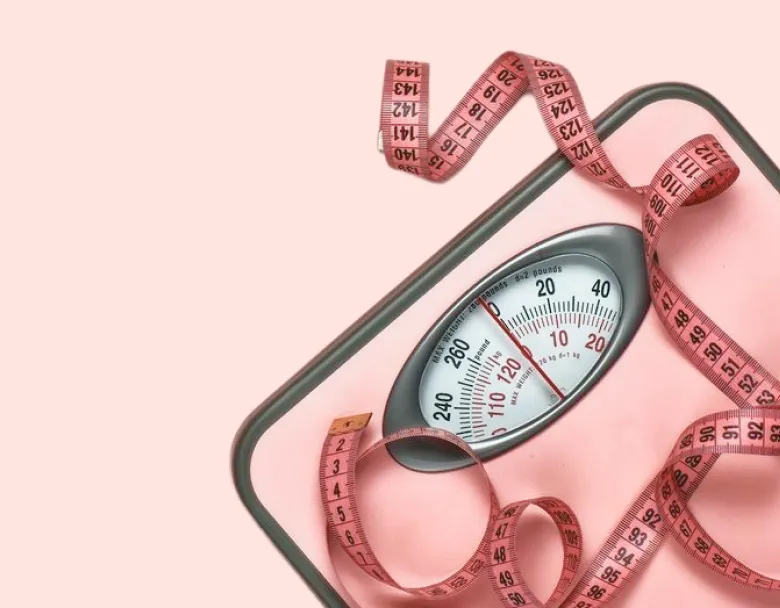
For many adults, a gradual range of about 4 to 8 pounds (2 to 4 kg) in a month is often used as a general reference. It comes from the commonly cited pace of about 1 to 2 pounds (0.5 to 1 kg) a week. But it is a starting point—not a personal prescription, and not a number everyone should try to reach.[1]
The better question is: can you follow the plan without extreme restriction, worsening symptoms, or a cycle of losing and regaining? A smaller, steadier change can be more useful than a dramatic month that makes the next month harder.
Key takeaways
- A monthly range can be useful for setting expectations, but it cannot account for every person’s starting point, health history, medicines, or daily life.
- A slower month is not automatically a failed month. Progress should be judged by whether the routine is safe, workable, and repeatable.
- A longer-term percentage goal can be more meaningful than a fixed number on the scale. NIDDK notes that an initial 5% to 10% of starting weight over six months is a common goal for adults with overweight or obesity.[2]
- Do not use extreme calorie restriction, dehydration, or longer fasting windows to force a monthly number.
- If you are pregnant or breastfeeding, under 18, have a medical condition, take medication, or have a current or past eating disorder, get individualized advice before trying to lose weight or make fasting more restrictive.
Table of Contents
- Key takeaways
- How much weight is realistic to lose in a month?
- When a fixed number can be misleading
- What makes a monthly goal realistic?
- A four-week review: continue, slow down, or get support
- When you should not set a generic monthly weight-loss goal
- Can intermittent fasting help with a monthly weight-loss goal?
- What if a restrictive plan promises faster results?
- Frequently asked questions
- Bottom line
- Medical disclaimer
- References
How much weight is realistic to lose in a month?
For many adults who have been advised that weight loss is appropriate, 4 to 8 pounds (2 to 4 kg) in a month is a commonly cited gradual range.[1] It is not a promise and it is not a pass/fail target.
Your own month may be slower or faster for reasons that have little to do with effort. Starting weight, medical conditions, medicines, sleep, stress, activity, food access, and the kind of plan you can actually repeat all affect the result. The scale also cannot tell you whether a change came from a sustainable routine or from a short-lived restriction.
Use a monthly range to reduce pressure—not to create a new rule. If your target requires skipped meals, very low intake, symptoms, or anxiety around food, the target is not serving its purpose.
When a fixed number can be misleading
Eight pounds means something different for a person who weighs 140 pounds and a person who weighs 260 pounds. A fixed monthly number can also distract from whether the plan is supporting health, meals, energy, and daily life.
| If you are thinking… | A more useful question is… |
|---|---|
| “I have to lose 4 kg this month.” | “Is this a realistic, safe trend for my starting point and health situation?” |
| “The scale moved quickly in week one, so I should speed up.” | “Can I repeat this routine without needing more extreme rules?” |
| “I only lost 2 kg, so the month failed.” | “Did I build a pattern I can continue next month?” |
| “I should make my fasting window longer to reach the number.” | “Would a longer window help my routine, or make meals and energy harder to manage?” |
For adults with overweight or obesity, a longer-term starting milestone of 5% to 10% of starting weight over about six months can be more meaningful than turning every month into a separate deadline.[2] This is a health-focused milestone, not a calculation for self-prescribing a monthly target.
What makes a monthly goal realistic?
A realistic goal is not only about the scale. It leaves room for an eating pattern you can follow, physical activity that suits your ability, support for habits, and a plan for maintaining progress. These are the elements NIDDK identifies in safer, more successful weight-management programs.[2]
A goal is realistic when it leaves room for normal life
The plan should still work on ordinary workdays, busy weeks, family meals, travel, and lower-energy days. If it only works when every meal, workout, and social event is controlled, it may be too demanding to sustain.
A goal is realistic when you do not need to keep escalating it
Adding more rules every week—longer fasting windows, lower intake, or compensation after meals—is a warning that the goal may be driving the plan rather than the other way around.
A goal is realistic when it includes what happens after the month
Weight-management support should include a plan for maintaining changes, not just for reaching a short-term number.[2] Ask whether the habits you use this month are habits you could reasonably keep next month.
A four-week review: continue, slow down, or get support
Instead of trying to control every daily weigh-in, review the month as a pattern.
| What you observe | What to consider next |
|---|---|
| Your weight trend changes gradually and meals, energy, and routine feel manageable | Continue with the same basic structure; avoid making it stricter only to increase the pace. |
| The scale changes slowly, but your meals, sleep, and activity are stable | A slower month may still be a sustainable month. Keep reviewing the broader trend. |
| You are relying on skipped meals, severe restriction, or increasingly rigid fasting rules | Slow down and simplify the plan rather than adding another restriction. |
| You feel faint, repeatedly dizzy, severely weak, dehydrated, or distressed around food | Stop trying to force the target and seek appropriate medical or mental-health support. |
Weekly trend notes can be more useful than reacting to one day. Alongside weight, record whether you are sleeping, eating regular meals, moving in ways that feel appropriate, and functioning normally. The aim is to learn whether the plan is workable—not to turn tracking into another source of pressure.
When you should not set a generic monthly weight-loss goal
Do not rely on a general online range as your target if you are pregnant or breastfeeding, under 18, have a current or past eating disorder, are at a medically healthy weight but feel pressure to lose more, or have a condition or medicine that can affect weight, appetite, hydration, or blood glucose.
If you have diabetes, especially if you use insulin or other glucose-lowering medicines, changes to eating patterns or fasting can require changes in medical management. Discuss that with your healthcare team before you reduce meals or extend a fasting window.[3]
Can intermittent fasting help with a monthly weight-loss goal?
Intermittent fasting can be one way to add structure to eating for some people. It may reduce eating opportunities, but it does not guarantee a calorie deficit, a certain amount of weight loss, or better results than another sustainable approach.
The useful test is whether fasting helps you eat in a way that feels manageable. If it leads to rebound eating, skipped nutritious meals, poor sleep, or increasing stress around food, choose a wider window or a different structure. Read more about how intermittent fasting works for weight loss, and see intermittent fasting versus calorie counting for a comparison of approaches.
What if a restrictive plan promises faster results?
Be cautious of any plan that guarantees a specific amount of loss in a specific number of days, promises loss without changes to eating or activity, or uses before-and-after stories as its main evidence. NIDDK identifies promises such as “lose 30 pounds in 30 days” as warning signs when evaluating weight-loss programs.[2]
If you are considering a restrictive 20:4 fasting pattern because of a one-month target, first read what 20:4 intermittent fasting results may look like after one month. A more restrictive schedule is not automatically a better choice.
Frequently asked questions
Is losing 10 pounds in a month too much?
For many adults, 10 pounds in a month is above the commonly cited gradual range. A faster change can happen, but it is not a number to force through severe restriction or a more extreme fasting plan. If the pace concerns you or comes with symptoms, seek individualized advice.
Is 2 kg in a month enough?
For many people, 2 kg is within a gradual range. “Enough” also depends on whether the routine is safe, sustainable, and appropriate for your starting point and health needs.
Why did I not lose weight this month?
A single month does not explain the whole pattern. Review whether the plan was consistent, whether it fit your daily life, and whether food, sleep, activity, stress, medicines, or health factors may be relevant. Avoid responding by immediately making the plan more restrictive.
Should I use a longer fasting window to lose weight faster?
Not automatically. A longer fast is not guaranteed to improve results and can make meals, energy, sleep, and social routines harder to manage. If you need to adjust your schedule, use a gradual approach to changing your fasting window without making it harder.
Should I talk with a doctor before trying to lose weight?
It is especially important to get individualized guidance if you have a health condition, take medicines, are pregnant or breastfeeding, are under 18, have diabetes, or have a history of disordered eating.
Bottom line
For many adults, gradual weight loss of about 4 to 8 pounds (2 to 4 kg) in a month is a useful reference—not a rule to force. A realistic goal fits your health needs and life, does not require extreme restriction, and can be repeated after the month is over. If a number is making the plan more rigid or unsafe, make the goal smaller or get individualized support.
Medical disclaimer
This article is for general education and does not replace medical advice, diagnosis, or treatment. Speak with a qualified healthcare professional before starting a weight-loss or fasting plan, particularly if you are pregnant or breastfeeding, have diabetes or another health condition, take medication, or have a history of disordered eating.
References
- Why losing 10 pounds in a month isn’t the right goal. Cleveland Clinic. Updated July 2024.
- Choosing a safe and successful weight-loss program. National Institute of Diabetes and Digestive and Kidney Diseases. Accessed September 2026.
- What can you tell your patients about intermittent fasting and type 2 diabetes?. National Institute of Diabetes and Digestive and Kidney Diseases. Published May 2024.