



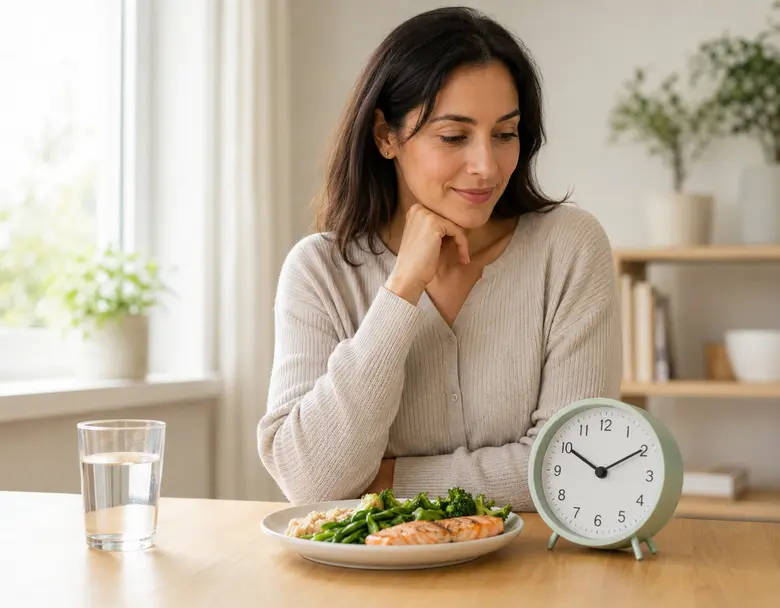
There is no single intermittent fasting schedule that is right for all women. Life stage, menstrual symptoms, pregnancy, breastfeeding, fertility goals, menopause, medications, diabetes or blood-sugar concerns, eating disorder history, and medical conditions can change whether fasting is appropriate. If fasting is appropriate, a gentler schedule such as 12:12 or 14:10 is usually a more cautious starting point than aggressive fasting.[1][2]
Key takeaways
- Women should not be treated as one fasting category.
- Pregnancy and breastfeeding are not standard fasting-experiment contexts.[3][4]
- Menstrual changes, fertility concerns, palpitations, sleep disruption, or worsening symptoms are reasons to pause and get guidance.[2]
- A 12:12 or 14:10 schedule is often a safer starting point than 16:8 or longer fasts.
- GoFasting can help log fasting windows, but it cannot determine whether fasting is medically appropriate.
Table of Contents
Intermittent fasting schedules women may compare
| Schedule | What it means | Cautious use case |
|---|---|---|
| 12:12 | 12 hours fasting, 12 hours eating | Gentle start, late-night snack reduction |
| 14:10 | 14 hours fasting, 10 hours eating | More structure while leaving room for meals |
| 16:8 | 16 hours fasting, 8 hours eating | Only if shorter windows feel steady and symptoms do not worsen |
| 18:6 or longer | More restrictive windows | Not a default recommendation |
| 24-hour or longer fasts | Full-day or multi-day fasting | Avoid self-guided use; higher safety concerns |
Longer fasts are not automatically better and may be dangerous for some people.[1]
Life-stage and symptom considerations
| Situation | Why it matters | Better next step |
|---|---|---|
| Regular cycles, no medical concerns | Fasting may still affect sleep, hunger, or mood | Start with 12:12 or 14:10 and monitor symptoms |
| Irregular cycles or fertility concerns | Fasting may complicate an already sensitive context | Pause and get qualified guidance |
| Pregnancy | Nutrient, calorie, fluid, and medical needs change | Do not use fasting as a weight-management tool |
| Breastfeeding | Calorie, fluid, and micronutrient needs can be higher | Get individualized guidance before restricting windows |
| Perimenopause or menopause | Sleep, mood, hot flashes, and cardiometabolic risk may already be changing[6] | Avoid assuming symptoms are from fasting or harmless |
| Diabetes or medications | Meal timing can affect blood sugar and medication safety | Use clinician-guided timing |
| Eating disorder history | Fasting may worsen restriction or food anxiety | Avoid self-guided fasting and seek support |
Women of childbearing age and premenopausal women should be cautious, and trying to conceive, pregnancy, and breastfeeding require avoidance or clinician guidance.[2]
How to start more cautiously
If fasting is appropriate for your health context, keep the first experiment conservative.
- Start with 12:12 for one week.
- Move to 14:10 only if meals, sleep, mood, and symptoms stay steady.
- Keep fasting-window drinks simple: water, black coffee, or unsweetened tea.[1]
- Eat enough protein, fiber-rich plants, and satisfying meals during the eating window.
- Track fasting windows separately from personal observations such as sleep, mood, menstrual changes, hunger, digestion, or palpitations.
- Do not push to 16:8 if symptoms worsen.
GoFasting can support consistency by helping you log fasting windows and review patterns. It should not be used to assess hormones, fertility, pregnancy, menopause stage, or medical risk.
When to pause fasting
Pause fasting and get guidance if you notice:
- Menstrual changes or missed periods
- Fertility concerns
- Dizziness, fainting, severe weakness, or palpitations
- Worsening sleep, headaches, hot flashes, irritability, or low libido
- Hair or skin changes that concern you
- Rebound eating or binge-restrict cycles
- Growing anxiety around food or weight control
If fasting increases anxiety around food, binge-restrict cycles, or fixation on weight or food control, stop and seek qualified support.[5]
FAQ
What intermittent fasting schedule is good for women?
If fasting is appropriate, 12:12 or 14:10 is usually a more cautious starting point than stricter windows.
Is 16:8 okay for women?
It may fit some women, but it is not a default. Try shorter windows first and stop if symptoms, sleep, cycles, or eating patterns worsen.
Should women fast during pregnancy?
Pregnancy is not a normal fasting-experiment context. Nutrient, calorie, fluid, supplement, and medical needs should be handled with a clinician.[3]
Can women fast while breastfeeding?
Breastfeeding changes calorie, fluid, and micronutrient needs. Get individualized guidance before restricting eating windows or calories.[4]
What if fasting affects my period?
Pause fasting and get qualified guidance. Menstrual changes should not be ignored or managed by simply changing the fasting window.
Bottom line
Intermittent fasting schedules for women should be chosen cautiously and individually. Start gently if fasting is appropriate, watch symptoms closely, and treat pregnancy, breastfeeding, fertility concerns, menstrual changes, medications, and medical conditions as reasons for qualified guidance.
Medical disclaimer
This article is for general wellness education and should not replace medical advice. Speak with a qualified health care professional before fasting if you are pregnant or breastfeeding, trying to conceive, under 18, have diabetes or blood-sugar concerns, take medications that require food, have menstrual changes, have a history of eating disorders, have a medical condition, or feel unwell while fasting.
References
- Johns Hopkins Medicine. “Intermittent Fasting: What Is It, And How Does It Work?” https://www.hopkinsmedicine.org/health/expert-qa/intermittent-fasting-what-is-it-and-how-does-it-work
- Cleveland Clinic. “How Intermittent Fasting Affects Women.” https://health.clevelandclinic.org/intermittent-fasting-for-women
- Office on Women’s Health. “Staying healthy and safe.” https://womenshealth.gov/pregnancy/youre-pregnant-now-what/staying-healthy-and-safe
- CDC. “Maternal Diet and Breastfeeding.” https://www.cdc.gov/breastfeeding-special-circumstances/hcp/diet-micronutrients/maternal-diet.html
- National Institute of Mental Health. “Eating Disorders.” https://www.nimh.nih.gov/health/topics/eating-disorders
- Office on Women’s Health. “Menopause basics.” https://womenshealth.gov/menopause/menopause-basics