



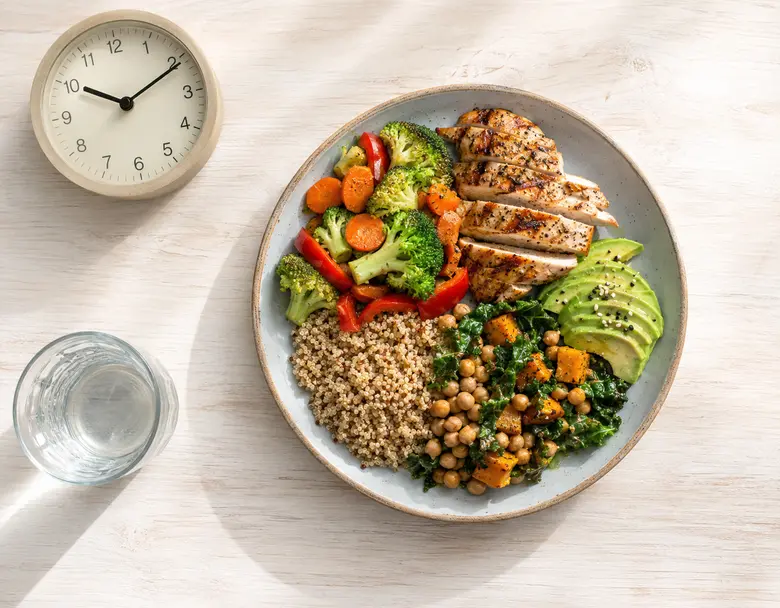
OMAD means “one meal a day.” It is a very restrictive form of intermittent fasting, not a default beginner plan. Some people like its simplicity, but OMAD can make it harder to meet nutrition needs, fuel activity, manage medications, and avoid overeating during the one meal.
Key takeaways
- OMAD is usually a 23:1 pattern: about 23 hours fasting and one eating window.
- It is more restrictive than 12:12, 14:10, or 16:8 and is not necessary for most people.[1]
- Avoid OMAD or get medical guidance first if you have diabetes, take medication requiring food, are underweight, have eating-disorder history, are pregnant or breastfeeding, or have chronic disease.[2][3]
- A gentler schedule is usually a safer first step.
Table of Contents
How OMAD intermittent fasting works
OMAD compresses daily eating into one meal or short eating window. Unlike 16:8, which still allows multiple meals, OMAD puts most nutrition into one sitting. That makes the plan simple on paper but difficult in real life.
| Schedule | Fasting window | Eating window | Restriction level |
|---|---|---|---|
| 12:12 | 12 hours | 12 hours | Gentle |
| 14:10 | 14 hours | 10 hours | Moderate |
| 16:8 | 16 hours | 8 hours | Moderate to restrictive |
| OMAD | About 23 hours | About 1 hour | Very restrictive |
Who should not use OMAD as a self-guided plan
Do not treat OMAD as a casual experiment if you have diabetes, take insulin or sulfonylureas, use medications that need food, are underweight, have a history of eating disorder, are pregnant or breastfeeding, have kidney disease, are recovering from illness or surgery, or have another chronic condition.[2][3]
OMAD also may be a poor fit if you do physically demanding work, train intensely, struggle with binge-restrict cycles, or find that long fasting windows make you irritable, dizzy, or preoccupied with food.
A safer way to approach OMAD curiosity
If you are curious about OMAD, test whether a less restrictive routine already solves the problem.
- Start with 12:12 or 14:10.
- Move to 16:8 only if the shorter schedule feels steady.
- Keep protein foods, fiber-rich plants, satisfying carbohydrates, and healthy fats in the eating window.[4]
- Stop escalating if symptoms, overeating, or medication conflicts appear.
- Discuss OMAD with a clinician before trying it if any medical risk applies.
What to eat if you do one meal a day
One meal still needs to be a real meal, not just a large snack. Build around protein foods, vegetables or fruit, whole grains or starchy plants, healthy fats, and fluids. Avoid using OMAD as permission to eat a very large low-nutrient meal.
If meeting nutrition needs in one meal feels unrealistic, that is useful feedback. A wider eating window may be the better plan.
GoFasting can help you log fasting windows and review patterns if you are comparing schedules. It cannot determine whether OMAD is medically appropriate.
FAQ
Is OMAD intermittent fasting good for weight loss?
It may reduce eating opportunities for some people, but it does not guarantee weight loss. Research does not support framing intermittent fasting as clearly superior to traditional dietary advice for weight loss.[5]
Is OMAD better than 16:8?
Not for most people. OMAD is more restrictive, and more restrictive does not automatically mean better.
Can beginners start with OMAD?
A beginner is usually better off starting with 12:12, 14:10, or 16:8 before considering anything more restrictive.
Bottom line
OMAD is simple but intense. For most people, the smarter question is not “Can I force one meal a day?” but “What is the least restrictive schedule that supports steady meals, health, and consistency?”
Medical disclaimer
This article is for general education only and is not medical advice. Ask a qualified clinician before trying OMAD if you have medical conditions, take medication, are pregnant or breastfeeding, are underweight, or have eating-disorder history.
References
- Cleveland Clinic. Intermittent Fasting: What It Is, Benefits and Schedules https://health.clevelandclinic.org/intermittent-fasting-4-different-types-explained
- Cleveland Clinic. 6 Tips for Fasting Safely https://health.clevelandclinic.org/tips-for-fasting-the-healthy-way
- CDC. Manage Blood Sugar https://www.cdc.gov/diabetes/treatment/index.html
- CDC. Tips for Healthy Eating for a Healthy Weight https://www.cdc.gov/healthy-weight-growth/healthy-eating/index.html
- Cochrane. Intermittent fasting for adults with overweight or obesity https://www.cochrane.org/evidence/CD015610_intermittent-fasting-traditional-dietary-advice-or-no-treatment-which-works-better-help-adults