

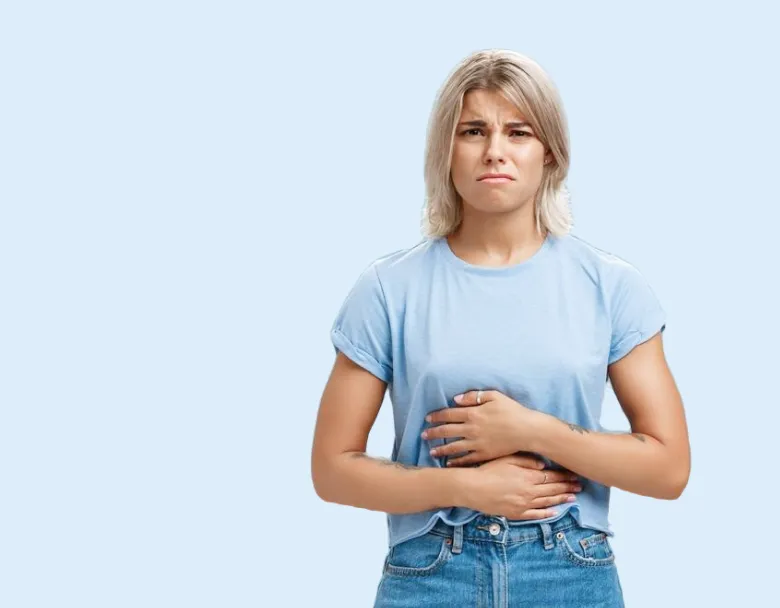
Most bloating after a meal is trapped gas. It builds up when you eat quickly and swallow air, eat a large amount in one sitting, or eat foods that your gut ferments into gas, such as beans, lentils, and cruciferous vegetables. [1][2] It usually feels like fullness or a tight, swollen belly, and it usually settles on its own. [1]
If you break a longer fast, it can feel more noticeable: after hours without food, it is easy to eat fast and eat a lot the moment your window opens, and both push more air and more food through your gut at once. [3] The fixes are mostly about pace, portion, and food choices, and they are covered below. Bloating that keeps coming back, hurts, or arrives with other symptoms is a different situation, and there is a short list further down for when to check in with a doctor.
주요 시사점
- Bloating after eating is usually gas, from swallowed air plus gas your gut bacteria make while breaking down certain foods. [1]
- Eating fast and eating large meals both make it worse, which is why the first meal after a long fast can feel especially bloated. [3][4]
- Common food triggers include beans, peas, lentils, cruciferous vegetables, carbonated drinks, and high-salt or processed foods. [2][3]
- The simplest fixes are slowing down, chewing well, keeping portions moderate, easing off fizzy drinks and salt, and taking a short walk. [3][4]
- It is usually harmless and passes on its own; occasional bloating after a big or fast meal is normal. [1][3]
- See a doctor if bloating is severe or persistent, or comes with weight loss, blood in your stool, vomiting, or a change in your bowel habits. [5]
Why a meal leaves you bloated
Bloating is that feeling of fullness or swelling in your belly, and gas is usually behind it. [1] Gas gets into your digestive tract in two main ways: air you swallow while eating and drinking, and gas your gut bacteria produce as they break down parts of food your stomach and small intestine did not fully digest. [1]
A few everyday things load both of those at once:
- Eating fast. Eating or drinking quickly makes you swallow more air, and that air has to go somewhere. [1] Gulping a meal is one of the most common reasons a normal portion still leaves you bloated.
- Large portions. A big meal is simply more food and more air arriving in a short time, so there is more to move through and more to ferment. [4]
- Fizzy drinks. Carbonated drinks add gas directly and make you swallow extra air on top of that. [1][4]
- Gas-forming foods. Some foods contain carbohydrates your gut ferments into gas. Beans, peas, and lentils, and cruciferous vegetables such as broccoli, cauliflower, cabbage, and Brussels sprouts are common ones, along with certain fruits and dairy. [2]
- Salt and processed foods. High-salt and heavily processed foods encourage water retention, which can add to the bloated, puffy feeling. [3]
None of these are unique to any one eating style. They are the ordinary reasons a meal can feel heavy, which is also why ordinary changes tend to help.
Why the first meal after a fast can feel worse
If you eat in a set window or break a longer fast, the first meal is a common time to feel bloated. After hours without food, it is easy to eat quickly and eat a large amount as soon as you can, and both of those are exactly what drives gas and swallowed air. [1][4] Piling a lot of gas-forming or fizzy items into that first meal can add to it. [2]
This is usually a pacing-and-portion issue rather than a sign that something is wrong. Spreading the meal out, keeping the first plate moderate, and going easy on the biggest gas-forming foods right when you break the fast tends to make it more comfortable.
How to ease bloating after eating
Most post-meal bloating responds to the same simple habits that health agencies recommend for gas in general. You do not need all of them at once; changing one thing and seeing what happens is usually enough.
| 수정 | 도움이 되는 이유 | How to do it |
|---|---|---|
| Slow down and chew | Less gulping means less swallowed air [1][4] | Put your fork down between bites; take your time with the first plate |
| Keep portions moderate | Smaller meals give your gut less to move and ferment at once [4] | Break a fast with a moderate meal rather than one very large one |
| Ease off fizzy drinks | Carbonation adds gas directly and by swallowed air [1][4] | Swap sparkling drinks for water or plain tea, especially with meals |
| Mind the biggest triggers | Fewer fermentable foods in one sitting means less gas [2] | Go easy on beans, lentils, and cruciferous veg together in one meal |
| Cut back on salt | High salt encourages water retention and puffiness [3] | Lean on whole foods; limit heavily salted, processed options |
| Take a short walk | Light activity helps move gas through your gut [3][4] | A gentle walk after eating, rather than sitting still for a long time |
Two more notes. Stay hydrated across the day with water rather than fizzy drinks, since water does not add carbonation and helps digestion along. [4] And introduce high-fiber foods gradually rather than all at once, because a sudden jump can bring extra gas while your gut adjusts. [2]
Is bloating after eating normal?
For most people, yes. Occasional bloating after a big meal, a fast meal, or a plate heavy in gas-forming foods is common and usually settles on its own as the gas passes. [1][3] 불편하고 위험하지 않으며 뭔가 잘못하고 있다는 의미도 아닙니다.
팽만감이 자주 발생하거나 통증이 있거나 다른 증상이 동반되면 상황이 달라집니다. If you already have a condition like irritable bowel syndrome (IBS) or another known gut condition, bloating can be a bigger and more regular part of daily life, and it is worth working through your own triggers with a clinician rather than guessing. [3] 다음 섹션에서는 더 빨리 조치를 취할 가치가 있는 신호를 다룹니다.
의사를 만나야 할 때
Bloating is usually harmless, but see a doctor if it is severe or does not go away, or if it comes with any of these: blood in your stool, a change in how often you have bowel movements or in the consistency of your stools, unexplained weight loss, ongoing or repeated vomiting, or prolonged stomach or chest pain. [5] Also check in if gas or bloating keeps interfering with your daily life, or if bloating lasts more than a week or comes with fever, bleeding, or unexplained weakness. [3][5]
These symptoms do not prove anything on their own, but they are good reasons to stop guessing and get checked, because they can point to a problem that needs treatment rather than a diet tweak. [5] If you have a known gut condition such as IBS or inflammatory bowel disease, or your symptoms suddenly change, bring it to your clinician rather than managing it alone. [1][3]
GoFasting가 적합한 방식
팽만감은 식사 전후에 실제로 어떤 변화가 있었는지 볼 수 있으면 더 쉽게 이해할 수 있습니다. GoFasting can help you log your fasting window, weight, steps, calorie intake, and water intake, so you can review patterns over time, for example whether the bloated days line up with very large meals, a short eating window, or low water intake. 이와는 별도로, 당신이 얼마나 더부룩하고, 배고프고, 편안함을 느끼는지 주의를 기울이고, 관련된 음식을 개인적인 관찰로 기록해 보세요.
The point is not to diagnose anything. 첫 식사의 속도를 늦추거나 탄산음료를 줄이는 등 한 가지를 바꿀 수 있도록 간단한 기록을 남겨두고 도움이 되는지 살펴보는 것입니다.
FAQ
Why do I bloat even after a normal-sized meal?
Often it is how you ate rather than how much. 빨리 먹으면 공기를 삼키게 되고 탄산 음료는 가스를 더 많이 추가하므로 적당한 식사를 해도 여전히 배가 더부룩해질 수 있습니다. [1][4] 속도를 늦추고 탄산화를 건너뛰는 것이 좋은 첫 번째 테스트입니다.
How long does bloating after eating last?
대부분의 사람들은 가스가 배출되면서 몇 시간 내에 증상이 완화됩니다. [1] 정기적으로 심하거나 일주일 이상 지속되거나 위의 위험 신호 증상이 나타나면 기다리지 말고 의사의 진찰을 받으십시오. [3][5]
Which foods are most likely to cause bloating?
Common ones are beans, peas, and lentils, cruciferous vegetables such as broccoli and cauliflower, carbonated drinks, and high-salt or processed foods. [2][3] Dairy and certain fruits bother some people too. 한 번에 하나의 그룹을 테스트하여 자신만의 트리거를 찾을 수 있습니다.
팽만감은 단식이 나에게 효과가 없다는 것을 의미합니까?
그 자체로는 아닙니다. 단식을 마친 후 복부 팽만감은 일반적으로 빨리 먹거나 한 번에 많이 먹는 것과 관련이 있으며, 두 가지 모두 조절할 수 있습니다. [4] If bloating is painful, persistent, or comes with other symptoms, treat that as a medical question rather than a fasting question. [5]
Can walking really help with bloating?
Light activity like a short walk can help move gas through your gut, so it is a reasonable thing to try after a meal instead of sitting still for a long stretch. [3][4]
의료 면책조항: 이 기사는 교육 목적으로만 작성되었으며 의학적 조언이 아닙니다. Speak with a qualified healthcare professional about bloating that is severe, persistent, or comes with red-flag symptoms such as blood in the stool, unexplained weight loss, vomiting, or a change in bowel habits, and before starting or changing an intermittent fasting routine if you have a medical condition, are pregnant or breastfeeding, or take medication.
참고자료
- National Institute of Diabetes and Digestive and Kidney Diseases (NIDDK). Symptoms & Causes of Gas in the Digestive Tract. Accessed July 7, 2026 https://www.niddk.nih.gov/health-information/digestive-diseases/gas-digestive-tract/symptoms-causes
- National Institute of Diabetes and Digestive and Kidney Diseases (NIDDK). Eating, Diet, & Nutrition for Gas in the Digestive Tract. Accessed July 7, 2026 https://www.niddk.nih.gov/health-information/digestive-diseases/gas-digestive-tract/eating-diet-nutrition
- Cleveland Clinic. Bloated Stomach: What It Is, Causes & When To Be Concerned. Accessed July 7, 2026 https://my.clevelandclinic.org/health/symptoms/21740-bloated-stomach
- Mayo Clinic. Belching, gas and bloating: Tips for reducing them. Accessed July 7, 2026 https://www.mayoclinic.org/diseases-conditions/gas-and-gas-pains/in-depth/gas-and-gas-pains/art-20044739
- Mayo Clinic. Gas and gas pains — Symptoms & causes. Accessed July 7, 2026 https://www.mayoclinic.org/diseases-conditions/gas-and-gas-pains/symptoms-causes/syc-20372709