



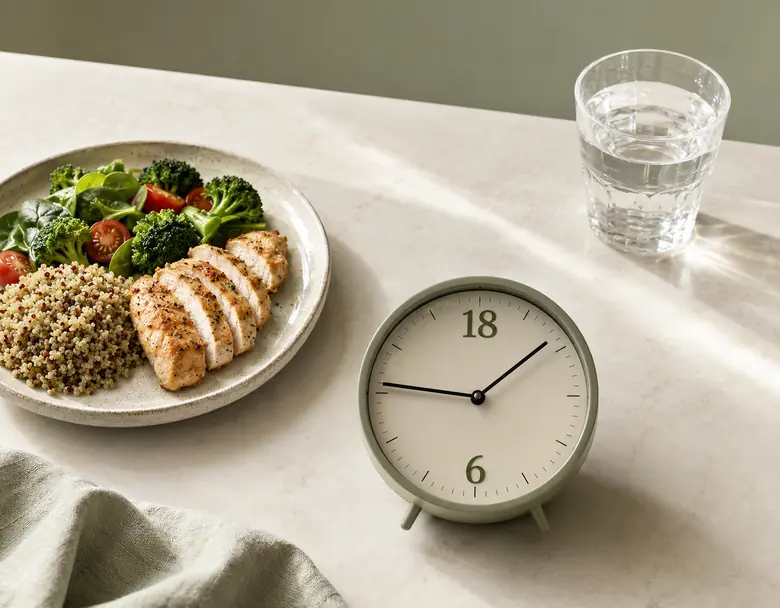
18/6 intermittent fasting means fasting for 18 hours and eating within a 6-hour window. For example, you might fast from 7 p.m. to 1 p.m. the next day, then eat from 1 p.m. to 7 p.m. It is a stricter form of daily time-restricted eating than 14:10 or 16:8, so it is usually not the easiest first step.[1]
If you are new to intermittent fasting, start with a shorter window first. An 18-hour fast can feel too restrictive if it causes overeating, symptoms, or difficulty fitting enough balanced meals into the day.
Key takeaways
- 18/6 means 18 fasting hours and a 6-hour eating window.
- It is usually more restrictive than 12:12, 14:10, or 16:8.
- It may fit some people who already tolerate shorter fasting windows.
- Water, black coffee, and unsweetened tea are simple fasting-window drinks.[3]
- Do not self-guide 18/6 if medications, diabetes, pregnancy, breastfeeding, underweight status, recovery from illness, kidney disease, or eating-disorder risk are part of the picture.[4]
Table of Contents
What 18/6 intermittent fasting means
The 18/6 method is a daily time-restricted eating schedule. You fast for 18 hours, then eat meals and snacks during a 6-hour window.
| Part | What it means | Example |
|---|---|---|
| Fasting window | No calorie-containing foods or drinks | 7 p.m. to 1 p.m. |
| Eating window | Meals and snacks fit here | 1 p.m. to 7 p.m. |
| Main challenge | Enough nutrition in a shorter window | Two balanced meals may require planning |
18/6 is not automatically better than 16:8. Longer fasts can increase difficulty, and longer fasting windows are not necessarily better for everyone.[1]
Sample 18/6 schedules
Choose the 6-hour eating window that fits your real day. The schedule should not force you to skip meals you need for work, family, training, or medication timing.
| Schedule style | Fasting window | Eating window | May fit |
|---|---|---|---|
| Midday | 7 p.m. to 1 p.m. | 1 p.m. to 7 p.m. | People who prefer lunch and early dinner |
| Earlier | 5 p.m. to 11 a.m. | 11 a.m. to 5 p.m. | People who prefer earlier eating |
| Later | 9 p.m. to 3 p.m. | 3 p.m. to 9 p.m. | People with later social dinners |
For most general routines, exact clock times do not have to be identical every day if the fasting length and eating-window structure stay consistent enough to repeat. For more detail, read Do fasting times have to be fixed every day.
Who may fit 18/6
18/6 may fit someone who has already adapted to shorter schedules and can eat enough balanced food in 6 hours.
It may be more reasonable if you:
- Have already tried 14:10 or 16:8
- Do not overeat when the eating window opens
- Can fit two balanced meals into 6 hours
- Can keep fasting-window drinks simple
- Do not have medication, medical, pregnancy, breastfeeding, or eating-disorder concerns
If you are still learning the basics, read How to choose your plan? before choosing 18/6.
When 18/6 may be too restrictive
A 6-hour eating window can be too short for some people. The plan is not working if it creates a cycle of restriction and rebound eating.
| Sign | Better next step |
|---|---|
| You feel driven to overeat when the window opens | Return to 16:8 or 14:10 |
| You cannot fit enough balanced food into 6 hours | Widen the eating window |
| You feel dizzy, weak, or unsafe | Stop or shorten the fast and get guidance if needed |
| You become anxious around food timing | Use a less restrictive schedule |
| Medication timing conflicts with fasting | Get medical guidance before continuing |
Side effects can include tiredness, dizziness, headaches, mood changes, constipation, diabetes management issues, and menstrual effects.[5] Persistent or severe symptoms should change the plan.
How to start 18/6 gradually
Do not jump from no fasting routine to 18/6. Build tolerance first.
- Start with 12:12 for several days.
- Try 14:10 if 12 hours feels easy.
- Move to 16:8 only if meals and symptoms remain manageable.
- Try 17 hours before moving to 18 hours.
- Keep 18/6 only if the 6-hour eating window supports balanced eating.
GoFasting can help you log fasting windows and review whether your routine is becoming easier to repeat. Tracking can support consistency, but it does not decide whether 18/6 is medically appropriate.
What to drink during an 18-hour fast
Keep fasting-window drinks simple: water, black coffee, or unsweetened tea.[3] Plain sparkling water can also be a low-calorie choice.[6]
Sweetened drinks, juice, alcohol, milk, cream, and calorie-containing add-ins fit better in the eating window. Diet drinks may add few or no calories, but that does not automatically make every diet drink a strong fasting default.[7]
For more detail, read What other drinks can you drink?.
When 18/6 should not be self-guided
Do not treat 18/6 as a self-guided experiment if diabetes, medications that require food, kidney disease, pregnancy, breastfeeding, underweight status, recovery from illness or surgery, or eating-disorder risk are part of the picture.[4]
For diabetes, skipped meals, insulin or other diabetes medicines, activity, alcohol, and carbohydrate intake can change blood sugar risk.[8]
FAQ
What is 18/6 intermittent fasting?
18/6 intermittent fasting means fasting for 18 hours and eating during a 6-hour window. It is a daily time-restricted eating schedule.
Is 18/6 better than 16:8?
Not automatically. 18/6 is stricter, but stricter is not always more useful. If 18/6 causes overeating or symptoms, 16:8 or 14:10 may be a better fit.
Can beginners do 18/6 intermittent fasting?
Some beginners may want to try it, but it is usually more reasonable to start with 12:12 or 14:10, then move gradually toward longer fasting windows.
What can I eat during the 6-hour window?
This article does not provide a meal plan, but the eating window should include balanced meals with protein foods, fiber-rich plants, satisfying carbohydrates or healthy fats, and mostly unsweetened drinks.[9]
What can I drink during the fasting window?
Water, black coffee, and unsweetened tea are simple choices.[3] Sweetened drinks, juice, alcohol, cream, milk, and calorie-containing add-ins belong in the eating window.
Bottom line
18/6 intermittent fasting is a stricter daily fasting schedule with an 18-hour fast and 6-hour eating window. It may fit some people who already tolerate shorter fasts, but it is not the most appropriate starting point for many beginners. Start gradually, keep meals balanced, and shorten or stop the fast if symptoms or medical factors make the schedule risky.
Medical disclaimer
This article is for general educational purposes only and is not medical advice. Speak with a qualified health professional before starting or changing a fasting routine if you have a medical condition, take medications, are pregnant or breastfeeding, are underweight, have a history of an eating disorder, or experience symptoms that concern you.
References
- Johns Hopkins Medicine. Intermittent Fasting: What Is It, And How Does It Work?
- Johns Hopkins Medicine. Intermittent Fasting: What Is It, And How Does It Work?
- Cleveland Clinic. 6 Tips for Fasting Safely
- Mayo Clinic. Intermittent fasting: What are the benefits?
- CDC. About Water and Healthier Drinks
- U.S. Food & Drug Administration. Aspartame and Other Sweeteners in Food
- CDC. Manage Blood Sugar
- CDC. Tips for Healthy Eating for a Healthy Weight