



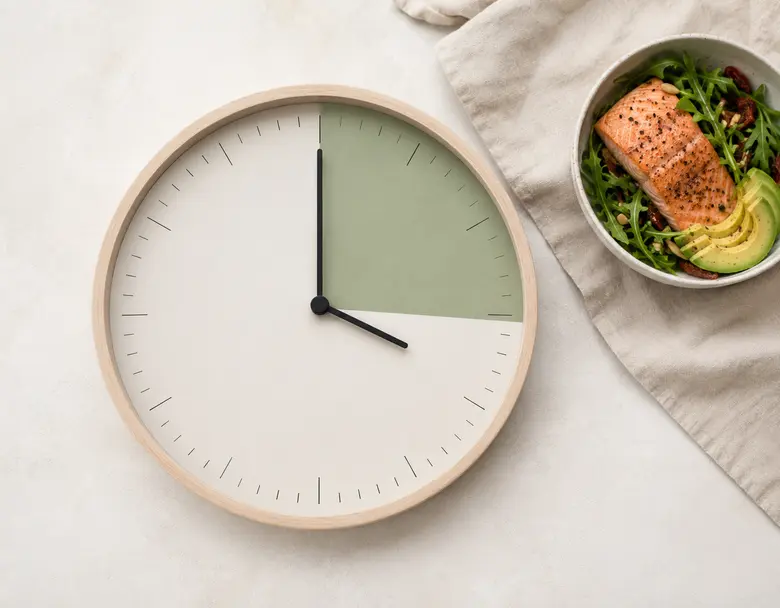
20/4 intermittent fasting means fasting for 20 hours and eating during a 4-hour window. For example, you might eat between 2 p.m. and 6 p.m., then fast until 2 p.m. the next day.
This is a restrictive schedule. It is not a beginner default, not necessary for everyone, and not automatically better than 14:10, 16:8, or 18:6.[1][2]
Key takeaways
- 20/4 fasting gives you a 4-hour eating window, which can make it harder to fit enough balanced food.
- It is better suited to experienced adults who already tolerate shorter fasting windows without symptoms or overeating.
- Beginners usually do better starting with 12:12, 14:10, or 16:8 before considering 20/4.[1][2]
- Stop or shorten the fast if you have dizziness, headaches, digestive symptoms, unusual weakness, mood changes, or binge-like eating.[3]
- Do not use 20/4 as a self-guided plan if you have diabetes, take medications that require food, are pregnant or breastfeeding, are underweight, have kidney disease, are recovering from illness or surgery, or have eating-disorder risk.[4]
Table of Contents
What a 20/4 schedule looks like
| Window | Example time | What happens |
|---|---|---|
| Fasting window | 6 p.m. to 2 p.m. | Water, black coffee, or unsweetened tea are the simplest default drinks |
| Eating window opens | 2 p.m. | First balanced meal or smaller meal if large meals feel uncomfortable |
| Eating window continues | 4 p.m. | Optional snack or second meal component |
| Eating window closes | 6 p.m. | Final meal before fasting resumes |
The clock time can move. The defining feature is the 20-hour fast and 4-hour eating window.
For schedule selection help, read How to choose your plan?. For timing flexibility, read Do fasting times have to be fixed every day.
Who may be a better fit for 20/4
20/4 may be more reasonable for someone who:
- Has already used 16:8 or 18:6 without feeling unwell
- Can eat enough protein, fiber, fluids, and calories within four hours
- Does not use medications that require food during the fasting window
- Does not feel out of control around food when the window opens
- Can stop or step back if symptoms appear
Even then, 20/4 should be treated as an experiment, not a permanent badge of discipline.
Who should choose a gentler schedule or get guidance first
Choose a gentler approach, or speak with a clinician first, if any of these apply:
- You are new to intermittent fasting
- You have diabetes or blood sugar concerns
- You take medications that require food or affect blood sugar, blood pressure, or fluids
- You are pregnant, breastfeeding, underweight, recovering from illness or surgery, or have kidney disease
- You have a current or past eating disorder, binge eating, or strong food anxiety
- You get dizziness, headaches, diarrhea, constipation, sleep disruption, mood changes, or unusual fatigue when fasting
Intermittent fasting is not for everyone, and possible side effects can include tiredness, dizziness, headaches, mood changes, constipation, and menstrual effects.[3]
How to start 20/4 more carefully
Do not jump from all-day eating to 20/4 overnight.
A more cautious path:
- Start with 12:12 for several days.
- Move to 14:10 if 12:12 feels easy.
- Try 16:8 and protect meal quality.
- Consider 18:6 only if 16:8 feels steady.
- Try 20/4 for limited days, not as an all-or-nothing rule.
- Return to a longer eating window if symptoms or overeating appear.
Longer fasts are not automatically better. Some longer fasts may be dangerous for some people.[1]
What to eat during the 4-hour window
A 4-hour eating window can make nutrition harder, so the meals need to be intentional.
Prioritize:
- Protein foods such as eggs, fish, poultry, tofu, beans, lentils, or Greek yogurt
- Vegetables and fruit
- Whole grains or starchy plants such as oats, rice, quinoa, potatoes, or whole-grain bread
- Healthy fats such as olive oil, avocado, nuts, or seeds
- Water during and outside the eating window when allowed
Limit relying on sugary drinks, desserts, alcohol, or very large high-fat meals to fill the window. Food quality still matters during intermittent fasting.[5]
How GoFasting can support a 20/4 experiment
If you are testing 20/4 after easier schedules, GoFasting can help you log fasting windows, weight, steps, calorie intake, and water intake, then review patterns as you adjust your routine.
Tracking is most useful when it helps you make the plan less extreme when needed. It does not determine whether 20/4 is medically appropriate.
FAQ
Is 20/4 intermittent fasting the same as OMAD?
Not exactly. 20/4 gives you a 4-hour eating window, which may include one meal, two smaller meals, or a meal plus snack. OMAD usually means one meal a day. Both are restrictive and are not beginner defaults.
Can I drink coffee during 20/4 fasting?
Black coffee can fit many fasting routines, but sweeteners, milk, cream, collagen, MCT oil, or sugary add-ins are better treated as eating-window choices. For more detail, read What other drinks can you drink?.
How many days a week should I do 20/4?
There is no universal number. If you try it, start with limited days and watch for symptoms, meal quality, and overeating. Daily 20/4 may be too restrictive for many people.
Is 20/4 better than 16:8?
Not automatically. A more restrictive window is not always more effective or healthier. If 16:8 is easier to repeat and supports balanced meals, it may be the better choice.
When should I stop 20/4 fasting?
Stop or shorten the fast if you feel dizzy, weak, unwell, develop persistent digestive symptoms, experience mood or sleep disruption, or feel out of control around food. Get medical guidance if symptoms are severe or you have medical or medication concerns.
Bottom line
20/4 intermittent fasting is an advanced, restrictive schedule. It may fit some experienced adults for limited use, but it is not necessary for most people and should not replace balanced meals, hydration, or medical guidance when needed.
Medical disclaimer
This article is for general educational purposes only and is not medical advice. Talk with a qualified health care professional before trying 20/4 fasting if you have a medical condition, take medications, are pregnant or breastfeeding, are underweight, have a history of an eating disorder, or feel unwell while fasting.
References
- Johns Hopkins Medicine. Intermittent Fasting: What Is It, And How Does It Work? https://www.hopkinsmedicine.org/health/expert-qa/intermittent-fasting-what-is-it-and-how-does-it-work
- Cleveland Clinic. Intermittent Fasting: What It Is, Benefits and Schedules https://health.clevelandclinic.org/intermittent-fasting-4-different-types-explained
- Mayo Clinic. Intermittent fasting: What are the benefits? https://www.mayoclinic.org/healthy-lifestyle/nutrition-and-healthy-eating/expert-answers/intermittent-fasting/faq-20441303
- Cleveland Clinic. 6 Tips for Fasting Safely https://health.clevelandclinic.org/tips-for-fasting-the-healthy-way
- CDC. Tips for Healthy Eating for a Healthy Weight https://www.cdc.gov/healthy-weight-growth/healthy-eating/index.html