

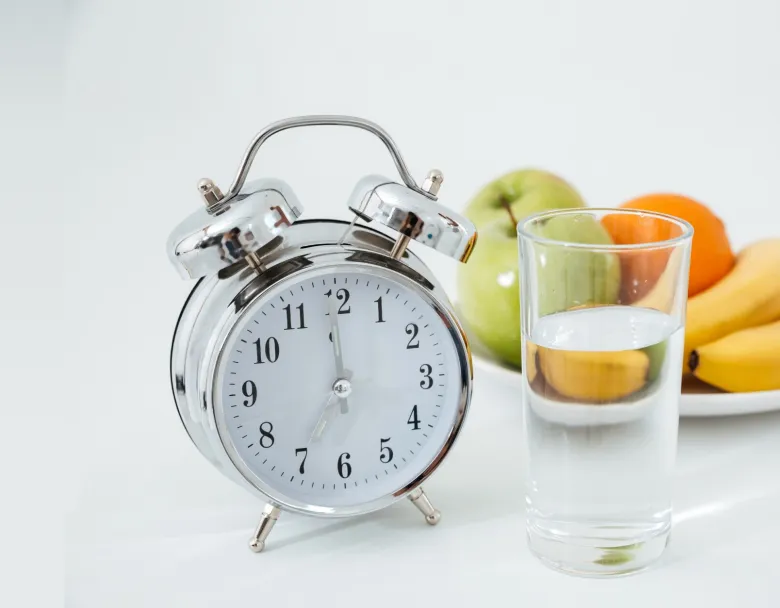
The 16:8 intermittent fasting schedule means fasting for 16 hours and eating during an 8-hour window. A common version is eating from noon to 8 p.m. and fasting from 8 p.m. to noon the next day. Other people prefer 10 a.m. to 6 p.m. or 8 a.m. to 4 p.m.
The schedule is simple on paper, but it is not automatically the right starting point for everyone. It works best when the eating window still leaves enough room for balanced meals, hydration, social life, and a steady routine. If 16:8 leads to dizziness, rebound overeating, poor sleep, or anxiety around food, a shorter fast such as 12:12 or 14:10 may fit better.
Key takeaways
- A 16:8 schedule has a 16-hour fasting window and an 8-hour eating window.
- Water is the simplest fasting-window drink. Johns Hopkins also lists black coffee and tea as common options during fasting periods [1].
- The eating window still matters. Protein, fiber-rich carbohydrates, healthy fats, and enough total food make the next fast easier [5][6].
- 16:8 is common, but it is not automatically better than 12:12 or 14:10.
- Longer fasts are not always better. Johns Hopkins cautions that longer 24-, 36-, 48-, or 72-hour fasts are not necessarily more effective and may be dangerous for some people [1].
- GoFasting can help you log fasting windows, weight, steps, calorie intake, and water intake while you test and adjust a routine.
What is the 16:8 intermittent fasting schedule?
Intermittent fasting is an eating pattern that alternates between fasting periods and eating periods. Johns Hopkins describes intermittent fasting as switching between fasting and eating on a regular schedule [1].
With 16:8, you fast for 16 hours and eat during 8 hours. Most of the fast happens overnight, so the practical change is usually either delaying breakfast, finishing dinner earlier, or both.
For example:
| Eating window | Fasting window | Who it may fit |
|---|---|---|
| 8 a.m.-4 p.m. | 4 p.m.-8 a.m. | Early risers who prefer breakfast and an earlier dinner |
| 10 a.m.-6 p.m. | 6 p.m.-10 a.m. | People who want a middle-ground window |
| Noon-8 p.m. | 8 p.m.-noon | People who prefer a later first meal and family dinner |
There is no single correct 16:8 window. The better window is the one that lets you eat normal meals, drink enough water, and repeat the schedule without feeling unwell.
Is 16:8 a good beginner schedule?
It can be, but many beginners do better with a gentler start. A 16-hour fast is more restrictive than a simple overnight fast. If you are new to fasting, 12:12 or 14:10 can help you learn your response before tightening the window.
Consider starting with 16:8 if you already feel comfortable with a later first meal, you do not have medical or medication concerns, and you can still eat enough in 8 hours.
Consider starting with 12:12 or 14:10 if you wake up very hungry, have a physically demanding morning, train early, take medication with food, have a history of disordered eating, are pregnant or breastfeeding, are under 18, or manage diabetes or another medical condition.
Mayo Clinic notes that time-restricted eating may involve fasting up to 16 hours per day, but also says intermittent fasting is not for everyone and may cause side effects such as tiredness, dizziness, headaches, mood swings, constipation, menstrual effects, and diabetes management issues [2].
A simple 7-day 16:8 starter plan
Do not jump into 16:8 just because it looks clean on a tracker. Use the first week to test fit.
| Day | Schedule | Focus |
|---|---|---|
| 1-2 | 12:12 or 14:10 | Keep meals normal and notice hunger, sleep, mood, and digestion |
| 3-4 | 14:10 or 15:9 | Shorten the eating window only if the first step felt stable |
| 5-7 | 16:8 | Try 16:8 only if you can still eat balanced meals and feel steady |
If you choose a noon-to-8 p.m. eating window, the day might look like this:
- Morning: water, black coffee, or unsweetened tea if tolerated
- Noon: first balanced meal
- 3 p.m.: snack or smaller meal if needed
- 7 p.m.: dinner
- 8 p.m.: fasting window begins
If that window makes you overeat at night, move earlier. If it makes mornings feel weak or distracted, use a shorter fast.
What to eat on a 16:8 schedule
The 8-hour window is not a pass to ignore nutrition. Harvard Health notes that the quantity and quality of what you eat still matter during intermittent fasting [5]. Harvard T.H. Chan also notes that research does not consistently show intermittent fasting is superior to continuous calorie reduction for weight loss [6].
Build eating-window meals around:
- Protein, such as eggs, Greek yogurt, fish, poultry, tofu, tempeh, beans, lentils, or lean meat
- Fiber-rich carbohydrates, such as vegetables, fruit, oats, potatoes, beans, quinoa, brown rice, or whole-grain bread
- Healthy fats, such as olive oil, avocado, nuts, seeds, or fatty fish
- Water across the day
A practical 16:8 day could include:
| Time | Meal idea | Why it works |
|---|---|---|
| Noon | Greek yogurt with berries, oats, and nuts, or eggs with vegetables and toast | Combines protein, fiber, and enough energy to break the fast calmly |
| 3 p.m. | Fruit with cottage cheese, hummus with vegetables, or a small leftovers bowl | Helps prevent arriving at dinner overly hungry |
| 7 p.m. | Salmon, chicken, tofu, beans, or lentils with vegetables and potatoes, rice, or quinoa | Gives the last meal more staying power |
If you struggle to fit enough food into 8 hours, 16:8 may be too tight. A 10-hour eating window can be more realistic and still reduce late-night grazing.
What can you drink during the fasting window?
Water is the simplest default. Johns Hopkins lists water, black coffee, and tea as common drinks during fasting periods [1].
For a stricter fasting window, avoid drinks with calories, sugar, milk, cream, juice, smoothies, alcohol, or sweetened syrups. If your main goal is a sustainable routine rather than a strict metabolic rule, a small splash of milk may not matter as much as the overall pattern, but it does technically add calories.
Be careful with too much caffeine. Coffee can make fasting feel easier for some people, but it can also worsen jitters, reflux, sleep, or appetite swings.
Common 16:8 mistakes
Starting too aggressively
Going straight from all-day eating to 16:8 can feel dramatic. If the fast causes dizziness, headaches, irritability, or rebound overeating, shorten it.
Eating too little
Some people skip breakfast, eat a tiny lunch, and then wonder why the evening feels chaotic. A shorter eating window makes meal quality more important, not less.
Turning the eating window into a free-for-all
Fasting does not cancel total intake. If the window becomes mostly snacks, sugary drinks, alcohol, or oversized late meals, the schedule may not support your goals.
Chasing longer fasts
Once 16:8 feels easy, it can be tempting to move to 18:6 or 20:4. More hours are not automatically better. Johns Hopkins cautions that much longer fasts are not necessarily more effective and may be dangerous for some people [1].
Ignoring personal warning signs
Fasting should not require fainting, severe weakness, anxiety around food, binge eating, or pushing through symptoms that feel unsafe.
When should you shorten, pause, or ask for medical guidance?
Intermittent fasting is not appropriate for everyone. Ask a qualified healthcare professional before trying 16:8 if you have diabetes, use insulin or glucose-lowering medication, take medicine that must be taken with food, have a chronic medical condition, are pregnant or breastfeeding, are under 18, are underweight, or have a current or past eating disorder [1][2][6].
Shorten or stop the fast if you notice fainting, severe dizziness, persistent weakness, confusion, chest pain, nausea, repeated headaches, binge eating, intense anxiety around food, sleep disruption, menstrual changes, or symptoms that feel unsafe.
The point of 16:8 is not to prove discipline. It is to test whether a defined eating window supports your life without making health, meals, or mood harder to manage.
How GoFasting can help you test 16:8
GoFasting can help you log fasting windows, weight, steps, calorie intake, and water intake. That can make it easier to compare a 14:10 week with a 16:8 week and see whether the stricter schedule actually improves consistency.
Use tracking as feedback, not judgment. Separately, pay attention to personal observations such as hunger, energy, sleep, mood, digestion, and whether the routine feels sustainable.
After one week, ask:
- Did I complete the schedule without feeling unwell?
- Did I eat enough protein, fiber, and total food?
- Did the window reduce late-night snacking or trigger overeating?
- Did sleep and mood stay steady?
- Would a 14:10 schedule be easier to repeat?
FAQ
What is the best time for a 16:8 fasting schedule?
There is no universal best time. Noon to 8 p.m. is common, but 10 a.m. to 6 p.m. or 8 a.m. to 4 p.m. may fit better if you prefer breakfast or an earlier dinner.
Can I do 16:8 every day?
Some people use 16:8 daily, but daily fasting is not required. If it causes symptoms, poor meals, or stress around food, shorten the fast or take non-fasting days.
How long does it take for 16:8 to work?
You can judge routine fit within the first week, but weight or health markers need longer and may not change for everyone. Johns Hopkins notes that some people need 2 to 4 weeks to become accustomed to intermittent fasting [1].
Is 16:8 better than 14:10?
Not always. 16:8 is stricter. It is only better if it helps you eat well, stay consistent, and feel steady. For many beginners, 14:10 is easier to repeat.
Can I drink coffee during 16:8 fasting?
Plain black coffee is commonly used during fasting windows [1]. Coffee with sugar, milk, cream, or syrups adds calories and belongs in the eating window for a stricter fast.
Bottom line
The intermittent fasting 16:8 schedule is simple: fast for 16 hours, eat during 8 hours. The smarter question is whether that window helps you build a repeatable routine while eating enough nutritious food.
Start gently, choose an eating window that fits your life, and review your response before making the fast longer. GoFasting can help you track fasting windows, weight, steps, calorie intake, and water intake while you test what is realistic.
Medical disclaimer
This article is for general education only and is not medical advice. Speak with a qualified healthcare professional before starting or changing a fasting routine, especially if you are pregnant, breastfeeding, under 18, underweight, taking medication, managing diabetes or another chronic condition, or have a current or past eating disorder.
References
- Johns Hopkins Medicine. Intermittent Fasting: What Is It, And How Does It Work? https://www.hopkinsmedicine.org/health/expert-qa/intermittent-fasting-what-is-it-and-how-does-it-work
- Mayo Clinic. Intermittent fasting: What are the benefits? Published March 8, 2025 https://www.mayoclinic.org/healthy-lifestyle/nutrition-and-healthy-eating/expert-answers/intermittent-fasting/faq-20441303
- Cleveland Clinic. Intermittent Fasting: 4 Different Types Explained https://health.clevelandclinic.org/intermittent-fasting-4-different-types-explained
- Cochrane. Intermittent fasting for adults with overweight or obesity. 2026. DOI: 10.1002/14651858.CD015610.pub2 https://www.cochrane.org/evidence/CD015610_intermittent-fasting-traditional-dietary-advice-or-no-treatment-which-works-better-help-adults
- Harvard Health Publishing. Should you try intermittent fasting for weight loss? Published July 28, 2022 https://www.health.harvard.edu/blog/should-you-try-intermittent-fasting-for-weight-loss-202207282790
- Harvard T.H. Chan School of Public Health, The Nutrition Source. Diet Review: Intermittent Fasting for Weight Loss https://nutritionsource.hsph.harvard.edu/healthy-weight/diet-reviews/intermittent-fasting/