

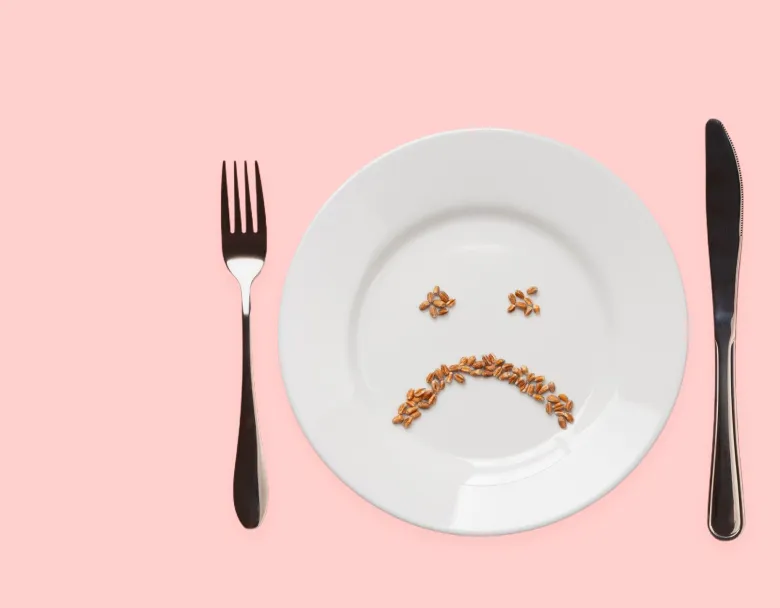
Fasting can be a long-term way of eating, but staying safe comes before staying consistent. A few symptoms mean stop the fast right now and get medical help — fainting, chest pain, a racing or irregular heartbeat, confusion, severe dizziness, or the signs of very low blood sugar if you take diabetes medication. Others are quieter and mean it is time to pause and reassess rather than push through: ongoing fatigue, hair loss, feeling cold all the time, missed periods, or a growing preoccupation with fasting. And some people should not be fasting at all right now, or should check with a clinician before they start.
This article sorts those signals into three groups — stop now and get help, stop and reassess, and signs that fasting is turning into disordered eating — and then covers who should not fast without medical advice. For every signal, there is a clear next step. None of this replaces advice from your own doctor, and if something feels like an emergency, treat it as one.
Key takeaways
- Stop the fast and seek urgent care for fainting, chest pain, a racing or irregular heartbeat, confusion, or severe, persistent dizziness. These are not symptoms to push through. [1][3]
- If you take insulin or other glucose-lowering medication, shakiness, sweating, confusion, or trouble speaking can mean dangerously low blood sugar — treat it with fast-acting carbohydrate right away and get help if it does not improve. [2]
- Persistent weakness, hair thinning, always feeling cold, missed periods, or poor recovery are reasons to pause and eat normally, and to see a clinician if they continue. [6]
- Chasing ever-longer fasts, binge-and-restrict cycles, fear of eating, or "making up" for food with extra fasting or exercise are warning signs of disordered eating — a reason to talk to a professional, not to try harder. [4][5][6]
- Some people should not fast, or should ask a clinician first: pregnancy, breastfeeding, being under 18, diabetes or medication that needs food, a current or past eating disorder, and being underweight. [6][7]
- A warning sign does not prove fasting caused it, but it is a good reason to stop, look more closely, and get the right help.
Stop the fast now and get medical help
Some symptoms are not "part of an adjustment period." They point to problems like a large drop in blood pressure, an electrolyte disturbance, a heart issue, or dangerously low blood sugar, and they mean end the fast and get medical attention. Break the fast by eating or drinking something, and for the more serious signs, call your local emergency number.
| Warning sign | Why it matters | What to do |
|---|---|---|
| Fainting, or feeling you are about to pass out | Can signal a large blood-pressure drop or fluid and electrolyte problems | Stop the fast, sit or lie down, eat and drink; get urgent care if it recurs [3] |
| Chest pain, pressure, or pain spreading to the arm or jaw | May be a heart problem, especially with sweating or shortness of breath | Call your local emergency number now [1] |
| A racing, pounding, or irregular heartbeat (palpitations) | Can reflect an electrolyte imbalance or heart rhythm problem | Stop the fast and seek urgent care if it is severe or does not settle [3] |
| Confusion or trouble thinking clearly | A sign of very low blood sugar or another serious problem | Eat right away; get emergency help if it does not clear quickly [2] |
| Severe or persistent dizziness, especially on standing | Points to low blood pressure or dehydration | Stop the fast, rehydrate and eat; seek care if it persists [3] |
| Shakiness, sweating, or slurred speech while on diabetes medication | Signs of hypoglycemia (low blood sugar), which can become an emergency | Treat with fast-acting carbohydrate immediately; get help if no improvement [2] |
Mild hunger, some tiredness, or a passing headache are commonly reported while fasting. The signs above are different in kind. Medically supervised fasting programs have recorded rare but serious events, including severe dehydration and dangerously low blood sodium, which is exactly why these signals should not be ignored. [3]
If you take insulin or a medication that increases insulin, low blood sugar deserves special attention. The early signs — feeling shaky, hungry, sweaty, dizzy, or confused, or having trouble speaking — can come on fast and, left untreated, can progress to passing out or a seizure. [2] Treat it immediately with fast-acting carbohydrate such as juice or glucose tablets, and if it does not improve, get emergency help. Fasting while on these medications is something to plan with your clinician in advance, not to improvise (see below).
Signs to stop and reassess your fasting
Other symptoms are not emergencies, but they are your body signaling that the current routine is asking too much. The right response is to pause or ease off and eat normally for a while — not to fast harder — and to see a clinician if they persist. Many of these are signs of simply not getting enough energy or nutrients over time.
- Persistent weakness or fatigue. Ongoing tiredness that does not lift with rest can mean you are under-fueling. Ease back on fasting and eat adequately; if it continues, see a clinician, as it can also reflect a medical cause.
- Hair thinning or hair loss. Noticeable shedding can follow a period of under-eating or rapid weight loss. Return to regular, balanced intake, and check in with a clinician if it keeps up.
- Feeling cold all the time. Persistent cold intolerance can accompany very low energy intake. Treat it as a cue to eat more consistently and to get checked if it does not resolve.
- Missed or irregular periods. Skipped periods can be a sign that your body is not getting enough energy. This is a reason to stop restricting and speak with a clinician, not something to wait out. [6]
- Poor recovery — you feel worse, not better, over weeks. If a routine leaves you more drained, foggy, or run-down the longer you do it, that is feedback. Shorten or pause the fast and reassess.
- A pull toward longer and longer fasts. Feeling you must keep extending fasts, or that a normal fast no longer "counts," is a reason to deliberately reduce frequency and step back from extremes. This one overlaps with the warning signs in the next section.
A single one of these does not prove fasting is the cause. But taken together, or when one persists, they are good reasons to pause, eat normally, and look more closely — including with a clinician if the symptom does not settle. [6]
When fasting starts to look like disordered eating
Fasting can quietly shade into a harmful relationship with food, and this can happen to people who started with ordinary goals. It is worth naming the warning signs plainly, because they can be hard to see from the inside — and because the right response is support, not more willpower.
Signs worth taking seriously include:
- Cycles of restricting, then binge eating, then restricting again.
- Intense fear or anxiety around eating, or around specific foods.
- "Making up" for eating with extra fasting, extra exercise, or other compensatory behavior.
- A growing preoccupation or obsession with food, weight, or body shape that crowds out other parts of life.
- Real distress, guilt, or panic on days you cannot fast.
Eating disorders are serious but treatable illnesses, and becoming fixated on food, weight, or body shape can be one of the signals. [4] If any of this feels familiar, the next step is not to fast more strictly. It is to talk with a doctor or a qualified mental health professional. If you are not sure whether what you are experiencing counts, a free, confidential online screening from the National Eating Disorders Association takes only a few minutes and can help you decide whether to seek an evaluation. [5]
If you or someone you know is in crisis or having thoughts of self-harm, contact the 988 Suicide and Crisis Lifeline by calling or texting 988, or chat at 988lifeline.org. [4] For eating-disorder support by text, you can also text "NEDA" to 741741 to reach a trained Crisis Text Line volunteer. Reaching out early makes recovery more likely; this is a health issue, not a failure of discipline. [4]
Who should not fast, or should stop and check with a clinician first
Some people carry enough added risk that fasting is not an appropriate thing to take on alone, and for some it should be avoided for now entirely. This is the part to sort out before starting — or a reason to stop and get advice if you have already begun.
Talk with a clinician first, or hold off on fasting, if you:
- Are pregnant. Pregnancy raises your energy and nutrient needs, and requires steady nourishment for you and your baby, so fasting for weight loss is not appropriate. [6][7]
- Are breastfeeding. Nursing also increases nutritional demands; it is generally advised to wait until after weaning before returning to intermittent fasting. [6]
- Are under 18 and still growing. Children and adolescents need consistent nutrition to develop, and should not take on fasting regimens. [6]
- Have diabetes or take glucose-lowering medication. Going without food can push blood sugar dangerously low, so any fasting plan needs to be worked out with your clinician, and the low-blood-sugar signs above become especially important. [2][6]
- Have a current or past eating disorder, or a history of restrictive eating. Going without food can reactivate harmful patterns, so fasting is generally something to avoid. [6]
- Are underweight. If your weight is already low, further restriction adds risk rather than benefit; talk with a clinician before fasting. [6]
- Take regular medication or manage a chronic condition. Some medicines need to be taken with food, and fasting can change how your body handles fluid, electrolytes, and medication, so get medical guidance first. [6]
If any of these apply, the safe move is a conversation with your doctor or pharmacist about whether fasting is appropriate at all — not adjusting the length of a fast to try to make it fit. Some of these situations are reasons to avoid fasting entirely, and no amount of shortening the fast makes them safe. [6]
FAQ
What fasting symptoms are an emergency?
Fainting, chest pain or pressure (especially with sweating, shortness of breath, or pain spreading to the arm or jaw), a racing or irregular heartbeat, confusion, and severe or persistent dizziness. Stop the fast and get urgent care; for chest pain, call your local emergency number right away. [1][3]
I feel tired and cold and my hair is thinning — should I stop fasting?
Treat these as a signal to ease off and eat normally rather than fast harder, since they often reflect not getting enough energy over time. If they continue after you return to regular eating, see a clinician, because they can also have medical causes. [6]
How do I know if fasting has become disordered eating?
Warning signs include binge-and-restrict cycles, fear of eating, "making up" for food with extra fasting or exercise, and preoccupation or distress around food and weight. If that sounds familiar, talk to a professional; a free, confidential NEDA screening can help you decide whether to seek an evaluation. [4][5]
Is it safe to fast if I take medication for diabetes?
Not without medical guidance. Skipping food while on insulin or other glucose-lowering medicine can cause dangerously low blood sugar. Plan any fasting with your clinician, and learn to recognize and treat the early signs of hypoglycemia. [2][6]
Can I fast while pregnant or breastfeeding?
No — pregnancy and breastfeeding raise your nutritional needs, so fasting for weight loss is not appropriate during either. Wait until after weaning to consider returning to it, and check with your clinician. [6][7]
Medical disclaimer: This article is for educational purposes only and is not medical advice. It does not replace guidance from a qualified healthcare professional. Stop fasting and seek urgent care for fainting, chest pain, an irregular or racing heartbeat, confusion, or severe dizziness. Do not fast without medical advice if you are pregnant or breastfeeding, are under 18, are underweight, have diabetes or take medication, or have a current or past eating disorder. If food, weight, or fasting feel out of control, speak with a qualified professional.
References
- MedlinePlus, U.S. National Library of Medicine. Chest pain. Accessed July 7, 2026 https://medlineplus.gov/ency/article/003079.htm
- National Institute of Diabetes and Digestive and Kidney Diseases (NIDDK). Low Blood Glucose (Hypoglycemia). Accessed July 7, 2026 https://www.niddk.nih.gov/health-information/diabetes/overview/preventing-problems/low-blood-glucose-hypoglycemia
- Finnell JS, Saul BC, Goldhamer AC, Myers TR. Is fasting safe? A chart review of adverse events during medically supervised, water-only fasting. BMC Complement Altern Med. 2018;18(1):67. DOI: 10.1186/s12906-018-2136-6. PMID: 29458369 https://pmc.ncbi.nlm.nih.gov/articles/PMC5819235/
- National Institute of Mental Health (NIMH). Eating Disorders. Accessed July 7, 2026 https://www.nimh.nih.gov/health/topics/eating-disorders
- National Eating Disorders Association (NEDA). Eating Disorder Screening Tool. Accessed July 7, 2026 https://www.nationaleatingdisorders.org/screening-tool/
- Harvard T.H. Chan School of Public Health, The Nutrition Source. Diet Review: Intermittent Fasting for Weight Loss. Accessed July 7, 2026 https://nutritionsource.hsph.harvard.edu/healthy-weight/diet-reviews/intermittent-fasting/
- American College of Obstetricians and Gynecologists (ACOG). Nutrition During Pregnancy. Accessed July 7, 2026 https://www.acog.org/womens-health/faqs/nutrition-during-pregnancy