



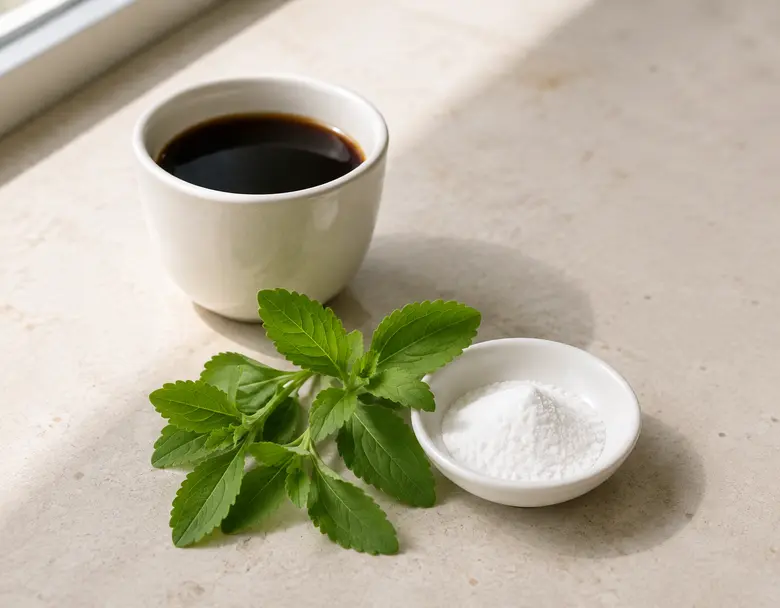
Stevia usually does not add meaningful calories when used as a high-intensity sweetener, so many people treat it as unlikely to break a calorie-focused fast. But whether stevia fits your intermittent fasting routine depends on your goal, the full ingredient list, and whether sweet taste makes fasting harder for you.
Key takeaways
- Stevia-derived sweeteners are very sweet and are often used in small amounts.
- For a strict "clean fast," water, black coffee, and unsweetened tea are simpler choices.
- For a calorie-focused fast, plain stevia may be acceptable for some people.
- Check labels because stevia products can include other ingredients.
- Do not turn this into a full artificial-sweetener rulebook; the practical answer depends on your fasting goal.
Table of Contents
Why the answer is not just yes or no
"Breaks a fast" can mean different things.
For some people, it means any sweet taste or non-water ingredient is out. For others, it means anything with meaningful calories. Some people care most about blood sugar, while others care about appetite, cravings, or simply staying consistent.
That is why stevia sits in a gray area. It may fit one person's fasting routine and still be a poor choice for someone who finds sweet drinks make cravings harder.
For the bigger fasting-window question, what breaks an intermittent fast gives a broader framework.
What stevia is
The FDA explains that high-purity steviol glycosides are sweeteners derived from the stevia plant or fermentation-based processes. They are reported to be 200 to 400 times sweeter than table sugar and are used as general-purpose sweeteners in foods [1].
Because stevia is so sweet in small amounts, it often contributes few or no calories in typical use. The FDA also notes that non-sugar sweeteners may contribute few or no calories and generally do not raise blood sugar levels [1].
That supports a cautious answer: plain stevia is unlikely to matter much for a calorie-focused fast, but that does not automatically make every stevia drink ideal.
Check the product, not just the word "stevia"
The label matters. Some packets, drops, flavored drinks, or powders may include other ingredients such as sugar alcohols, dextrose, flavorings, creamers, or calories from other sources.
If you want the simplest fasting-window rule, check:
- calories per serving
- serving size
- ingredient list
- whether it is mixed into a drink with milk, cream, collagen, or other calories
- whether the sweet taste makes you want more sweet foods later
For more drink examples, zero-calorie drinks and intermittent fasting can help you compare water, tea, coffee, and diet drinks without turning every sip into guesswork.
When stevia may fit
Stevia may fit a fasting routine when:
- your goal is mainly reducing calories
- the product has no meaningful calories
- it is used in small amounts
- it helps you avoid sugar-sweetened drinks
- it does not increase cravings or snacking later
The CDC notes that replacing sugary drinks with plain water can help reduce calorie intake, and that drinks with sugar alternatives may reduce calorie intake in the short term, while long-term weight management effectiveness remains uncertain [2].
That last part matters. Stevia can be a tool for reducing sugar, but it is not a guaranteed fasting or weight-loss advantage.
When to skip stevia during a fast
Skip stevia during your fasting window if:
- you are following a strict clean fast
- sweet taste makes hunger or cravings harder
- the product contains calories or other ingredients you are trying to avoid
- you find yourself using more sweetened drinks over time
- you are fasting for a medical reason and have not discussed it with a clinician
For a clean fast, Johns Hopkins lists water and zero-calorie beverages such as black coffee and tea as common fasting-window options [3]. Unsweetened drinks are the easiest default because they avoid the ingredient-label debate.
What about stevia in coffee or tea?
Plain black coffee or unsweetened tea is the simplest option. Adding stevia may still be low calorie, but it changes the drink from unsweetened to sweetened.
If your fasting goal is flexible, that may be fine. If your goal is to keep the fasting window as simple as possible, skip the sweetener and save sweet tastes for the eating window.
If coffee is your main question, black coffee and fasting may be more useful than comparing every sweetener.
FAQ
Does stevia have calories?
High-intensity stevia-derived sweeteners are used in very small amounts and often contribute few or no calories, but you should check the label for the specific product [1].
Does stevia spike blood sugar?
The FDA says non-sugar sweeteners generally will not raise blood sugar levels [1]. Individual responses and mixed products can vary, especially when other ingredients are included.
Is stevia better than sugar while fasting?
If the goal is reducing calories from sugary drinks, stevia may be a lower-calorie swap. But water, black coffee, or unsweetened tea remain simpler fasting-window choices.
Bottom line
Stevia does not usually break a calorie-focused fast in the same way sugar, cream, or a snack would. Still, it is not automatically ideal. Check the ingredient list, match the choice to your fasting goal, and choose unsweetened drinks if you want the cleanest and simplest fasting window.
Medical disclaimer
This article is for general educational purposes only and is not medical advice. If you have diabetes, blood sugar concerns, take medication, are pregnant or breastfeeding, or are fasting for a medical reason, ask a qualified healthcare professional how sweeteners fit your situation.
References
- FDA. "Aspartame and Other Sweeteners in Food." https://www.fda.gov/food/food-additives-petitions/aspartame-and-other-sweeteners-food
- CDC. "About Water and Healthier Drinks." https://www.cdc.gov/healthy-weight-growth/water-healthy-drinks/index.html
- Johns Hopkins Medicine. "Intermittent Fasting: What Is It, And How Does It Work?" https://www.hopkinsmedicine.org/health/wellness-and-prevention/intermittent-fasting-what-is-it-and-how-does-it-work