



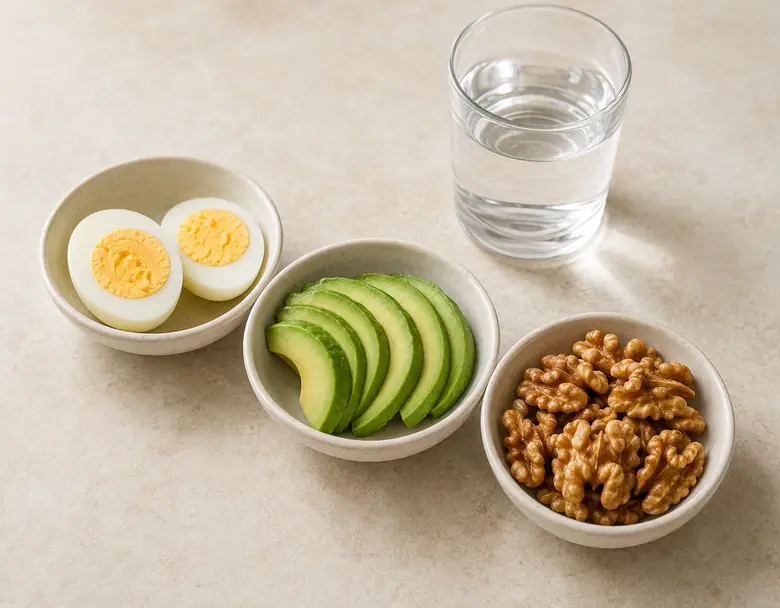
An intermittent fasting ketosis chart can help you understand the general idea: ketosis may occur during fasting or very low carbohydrate intake, but timing varies widely.[1] Ketosis is a metabolic state, not proof that a fasting plan is better, more appropriate, or certain to produce weight loss. These safety and evidence boundaries are supported by the sources listed below.[2]
If you have diabetes, take medications, are pregnant or breastfeeding, have kidney disease, liver disease, underweight status, eating-disorder risk, or feel unwell, do not use fasting or ketosis goals as a self-guided experiment.[1][2]
Key takeaways
- Ketosis can occur during fasting or very low carbohydrate intake.[1]
- Timing varies by prior meals, carbohydrate intake, activity, body size, and fasting length.
- Ketosis does not automatically mean better results.
- Combining keto with intermittent fasting stacks two restrictive patterns and needs extra caution.[1]
- Ketoacidosis is a dangerous excess ketone state and is most often a concern for people with type 1 diabetes.[1]
Table of Contents
Intermittent fasting ketosis chart
This chart is a general education tool, not a personal prediction.
| Fasting context | What may happen | Important caution |
|---|---|---|
| After a normal mixed meal | Your body is using recently eaten energy | Ketosis timing varies |
| Early fasting window | Stored carbohydrate may still be available | Do not chase a number |
| Longer fasting window | Ketone production may increase for some people | Longer fasts are not automatically better |
| Very low-carb eating plus fasting | Ketosis may occur more readily | This stacks restrictive patterns |
| Diabetes or medication context | Ketones can be medically important | Get clinician guidance |
Do not use this chart to decide how long you should fast. Longer fasts are not necessarily better and may be dangerous for some people.[3]
What affects ketosis timing
Ketosis timing is not fixed. It can change based on:
- How many carbohydrates you ate before the fast
- How long the fasting window is
- Activity level
- Body size and metabolism
- Sleep and stress
- Whether you are also following a ketogenic diet
- Medical conditions or medications
A ketogenic diet is a very low-carbohydrate, high-fat eating pattern. Keto diets can be restrictive and may cause symptoms such as hunger, fatigue, low mood, irritability, constipation, headaches, and brain fog.[1]
Ketosis is not the same as better results
Ketosis should not be treated as a synonym for better fat loss or better health. Intermittent fasting may help some people reduce eating opportunities, but research does not support framing fasting as a clearly superior weight-loss method for everyone.[4]
If your goal is weight management, review the full pattern:
| Factor | Why it matters |
|---|---|
| Eating-window quality | Large meals and snacks can work against goals |
| Drinks | Sugary drinks and alcohol can add calories quickly |
| Protein and fiber | Meals need to feel satisfying |
| Sleep and stress | Weight management is bigger than the fasting window |
| Consistency | A repeatable plan matters more than chasing ketosis |
Ketosis timing matters less than what you can repeat; the intermittent fasting diet guide explains eating-window nutrition.
When ketosis goals may be risky
Do not pursue ketosis through fasting without qualified guidance if you have:
- Diabetes, especially type 1 diabetes
- Pregnancy or breastfeeding
- Kidney disease or liver disease
- Eating-disorder history or risk
- Underweight status
- Medications that affect blood sugar, fluid balance, or appetite
- Severe symptoms during fasting
For diabetes, high ketones can be a medical emergency, and blood sugar targets should be discussed with a health care team.[5]
What to eat if you are not doing keto
You do not need a ketogenic diet to practice intermittent fasting. During the eating window, a balanced plate can include vegetables and fruits, whole grains, healthy protein, healthy plant oils, and water, coffee, or tea with little or no sugar.[6]
If constipation shows up during fasting or low-carb eating, check fluid, fiber, plant foods, activity, medications, supplements, and whether symptoms need medical advice.[7]
For meal examples that fit an eating window, see what to eat during intermittent fasting.
FAQ
When does ketosis start during intermittent fasting?
There is no fixed time. Ketosis may occur during fasting or very low carbohydrate intake, but timing varies based on prior meals, carbohydrate intake, activity, and individual factors.[1]
Does ketosis mean intermittent fasting is working?
Not necessarily. Ketosis is a metabolic state, not proof that your fasting plan is better or that weight loss will happen.
Is intermittent fasting the same as keto?
No. Intermittent fasting changes when you eat. Keto changes what you eat by sharply lowering carbohydrates and raising fat intake.[1]
Is combining keto and intermittent fasting better?
Not automatically. Combining keto with intermittent fasting stacks two restrictive patterns, so it needs more caution than a basic fasting schedule.[1]
What should I eat if I do not want keto?
Use balanced eating-window meals with vegetables or fruit, whole grains or starchy plants, protein foods, healthy fats, and mostly unsweetened drinks.[6]
Bottom line
An intermittent fasting ketosis chart can explain general patterns, but it should not become a rule for how long to fast. Ketosis can happen during fasting or very low-carb intake, but it is not an automatic results marker. Prioritize a repeatable routine, balanced eating, symptom awareness, and medical guidance when risk factors are present.
Medical disclaimer
This article is for general educational purposes only and is not medical advice. Do not pursue fasting or ketosis goals without qualified guidance if you have diabetes, take medications, are pregnant or breastfeeding, have kidney disease or liver disease, are underweight, have eating-disorder history or risk, or develop symptoms that concern you.
References
- Harvard T.H. Chan School of Public Health, The Nutrition Source. Diet Review: Ketogenic Diet for Weight Loss
- Cleveland Clinic. 6 Tips for Fasting Safely
- Johns Hopkins Medicine. Intermittent Fasting: What Is It, And How Does It Work?
- Cochrane. Intermittent fasting for adults with overweight or obesity
- CDC. Manage Blood Sugar
- Harvard T.H. Chan School of Public Health, The Nutrition Source. Healthy Eating Plate
- NIDDK. Eating, Diet, & Nutrition for Constipation