


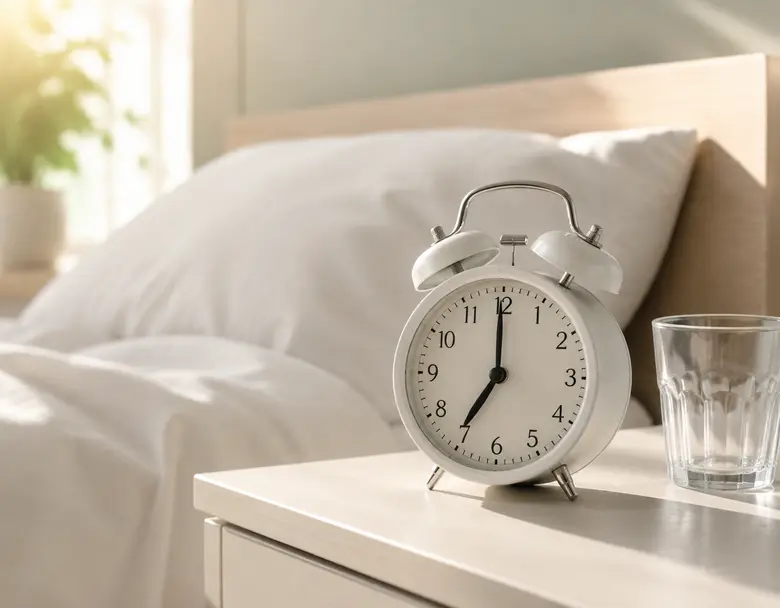
Yes. Sleeping counts as fasting as long as you are not eating or drinking calories during that time. That is why many intermittent fasting schedules are built around an overnight fast, such as finishing dinner earlier and eating breakfast later.
Key takeaways
- Sleeping hours count toward your fasting window if no calories are consumed.
- Overnight fasting is often the easiest way to reach 12, 14, or 16 fasting hours.
- The fast usually starts after your last calorie-containing food or drink.
- The fast usually ends when you have your first calorie-containing food or drink.
- A schedule should fit sleep, meals, and daily life rather than making rest harder.
Table of Contents
How to count fasting time while sleeping
The simplest way to count fasting time is to start the clock after your last calorie-containing food or drink. The clock continues while you sleep. It stops when you eat or drink calories again.
For example:
- Finish dinner at 7 p.m.
- Drink only water or plain unsweetened drinks overnight.
- Eat breakfast at 7 a.m.
That is a 12-hour fast.
Intermittent fasting is an eating pattern that switches between fasting and eating periods, and time-restricted eating limits food intake to a daily window [1]. Sleeping can be part of the fasting period because you are not eating during those hours.
For a broader timing overview, how long intermittent fasting lasts can help compare common fasting windows.
Examples of overnight fasting windows
Overnight fasting works because it uses hours when you are already not eating.
| Last calories | First calories next day | Fasting time |
|---|---|---|
| 8 p.m. | 8 a.m. | 12 hours |
| 7 p.m. | 9 a.m. | 14 hours |
| 6 p.m. | 10 a.m. | 16 hours |
The longer window is not automatically better. Johns Hopkins notes that longer fasting periods are not necessarily better and may be dangerous for some people [1].
If you are new to fasting, a beginner fasting schedule may be more useful than jumping straight to a strict window.
What can stop the fasting clock?
The fasting clock generally stops when you consume calories. That can include:
- breakfast
- snacks
- milk or cream in coffee
- juice
- sweetened drinks
- alcohol
- broth or other calorie-containing drinks
Water is the simplest fasting-window drink because it has no calories. Johns Hopkins also lists water, black coffee, and tea as fasting-window options [1].
For drink-specific questions, what you can drink during a fast can help you keep the window simple.
Do naps count as fasting?
Yes, a nap counts as fasting if it occurs during a period when you are not consuming calories. But naps are usually too short to matter much by themselves. Overnight sleep is what makes fasting schedules easier to maintain.
If fasting makes you nap because you feel unusually drained, that is different. Persistent fatigue, dizziness, headaches, mood changes, constipation, and other symptoms can happen with intermittent fasting [2]. Those symptoms are a reason to adjust the routine.
Do not sacrifice sleep to extend a fast
Sleep should not be treated as a tool for forcing longer fasting hours. If an early dinner or late breakfast disrupts your sleep, social routine, medication timing, or morning functioning, the schedule may need to be wider.
Johns Hopkins notes that meal timing and circadian rhythm are connected, and eating very late can affect how the body processes nutrients [3]. But that does not mean every person needs the same cutoff time.
If fasting seems to be making sleep worse, intermittent fasting and sleep is a better next read than simply extending the fast.
FAQ
Does fasting start when I stop eating or when I go to sleep?
It starts after your last calorie-containing food or drink, not when you fall asleep.
Does brushing your teeth stop a fast?
Brushing your teeth does not usually matter for a normal fasting routine if you do not swallow toothpaste. If your fasting rules are strict for a medical or religious reason, follow the guidance for that situation.
Is overnight fasting enough?
It can be. A 12-hour overnight fast may be a reasonable starting point for many people, especially if longer windows cause symptoms or make meals harder to manage.
Bottom line
Sleeping does count as fasting when you are not consuming calories. The easiest way to count your fasting window is from your last calorie-containing food or drink to your next one. Keep the schedule simple, protect sleep, and avoid making the fast longer just because the math looks neat.
Medical disclaimer
This article is for general educational purposes only and is not medical advice. Talk with a qualified healthcare professional before fasting if you have a medical condition, take medication, are pregnant or breastfeeding, have diabetes or blood sugar concerns, or have a history of eating disorders.
References
- Johns Hopkins Medicine. "Intermittent Fasting: What Is It, And How Does It Work?" https://www.hopkinsmedicine.org/health/wellness-and-prevention/intermittent-fasting-what-is-it-and-how-does-it-work
- Mayo Clinic. "Intermittent fasting: What are the benefits?" https://www.mayoclinic.org/healthy-lifestyle/nutrition-and-healthy-eating/expert-answers/intermittent-fasting/faq-20441303
- Johns Hopkins Medicine. "Does the Time of Day You Eat Matter?" https://www.hopkinsmedicine.org/health/wellness-and-prevention/does-the-time-of-day-you-eat-matter