


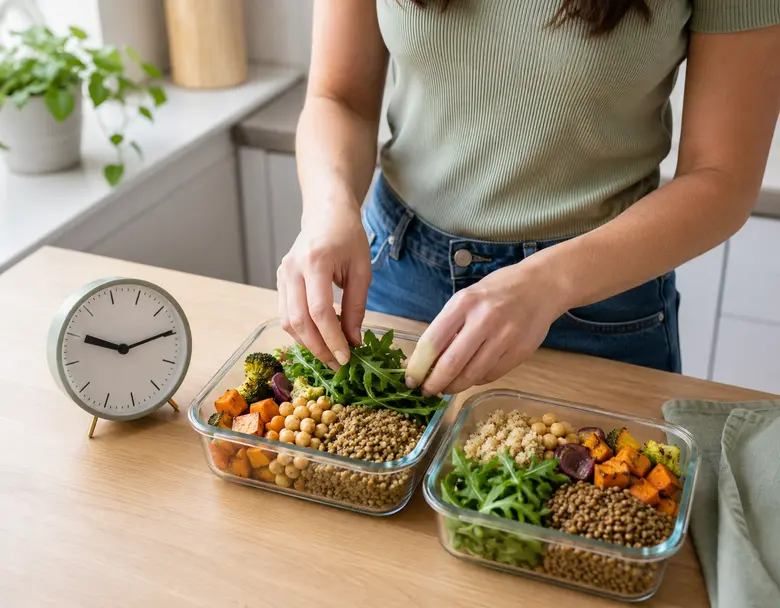
You can combine intermittent fasting with a plant-based diet, but the eating window has to do real nutrition work. The goal is not just to avoid animal foods or shorten eating hours. The goal is to get enough protein, fiber, energy, fluids, and key nutrients inside the meals you do eat.
Plant-based intermittent fasting usually works better when the fasting schedule stays moderate and the eating window includes beans, lentils, tofu or tempeh if you eat soy, whole grains, vegetables, fruit, nuts, seeds, and fortified foods when needed.
Key takeaways
- Plant-based intermittent fasting combines an eating schedule with a plant-forward food pattern.
- Plant-based and vegan are not identical. A plant-based diet may still include some animal foods, while a vegan diet excludes animal-derived foods.
- Soy-free plant-based eating is possible, but it requires more planning because tofu, tempeh, edamame, and soy milk are common plant protein options.
- Protein, vitamin B12, calcium, iron, iodine, vitamin D, and omega-3 fats need more attention when the eating window is short.
- Intermittent fasting controls timing; a plant-based diet controls food composition. They solve different problems.
- Avoid using a shorter eating window to make up for low meal quality or overly restrictive food rules.
Table of Contents
- Key takeaways
- Can You Combine Intermittent Fasting with a Plant-Based Diet?
- What to Eat in a Plant-Based Eating Window
- How to Get Enough Protein and Key Nutrients
- Plant-Based vs. Vegan vs. Soy-Free Eating
- Intermittent Fasting vs. Plant-Based Diet: What Is Each Designed to Do?
- Sample Meal Frameworks
- Common Mistakes
- FAQ
- Bottom line
- Medical disclaimer
- References
Can You Combine Intermittent Fasting with a Plant-Based Diet?
Yes. Intermittent fasting and plant-based eating can fit together because they answer different questions.
Intermittent fasting asks:
- When do I eat?
- How long is my fasting window?
- Does this schedule fit my day?
Plant-based eating asks:
- What foods make up most of my meals?
- Am I getting enough protein, fiber, and key nutrients?
- Are my meals mostly whole or minimally processed foods?
Harvard Health describes plant-based eating as focusing on what you do eat, especially whole plant foods such as vegetables, fruits, whole grains, nuts, and other minimally processed plant foods [1]. That matters because a plant-based diet can be nutrient-rich, but it can also become mostly refined grains, sweets, snack foods, or low-protein meals if it is not planned well.
For a broader overview of how different eating styles fit fasting, see special diets and intermittent fasting.
What to Eat in a Plant-Based Eating Window
Build most plant-based fasting meals with four parts:
| Meal part | Examples | Why it matters |
|---|---|---|
| Protein | lentils, beans, tofu, tempeh, edamame, seitan, pea protein, nuts, seeds | Helps the meal feel more complete |
| Fiber-rich carbohydrates | oats, quinoa, brown rice, potatoes, whole-grain bread, beans, fruit | Supports fullness and meal structure |
| Vegetables and fruit | leafy greens, broccoli, peppers, tomatoes, berries, citrus, apples | Adds fiber, fluid, vitamins, and minerals |
| Fats | avocado, olive oil, nuts, seeds, tahini, nut butter | Adds flavor and energy density |
If your eating window is short, do not rely on salad alone. Many plant foods are high in volume, so it can be easy to feel full before you have eaten enough protein or energy.
For general eating-window structure, what to eat during intermittent fasting can help you plan meals that fit both timing and nutrition.
How to Get Enough Protein and Key Nutrients
Protein is the first thing many people worry about with plant-based intermittent fasting. The answer is not to eat one perfect food. It is to include a good protein source at most meals and vary your sources across the day.
Harvard's Nutrition Source notes that plant-based foods can provide protein, and people who avoid animal foods can get needed amino acids by eating a variety of protein-containing plant foods each day [2]. MyPlate lists beans, peas, lentils, nuts, seeds, and soy products as vegetarian protein choices [3].
Good plant-based protein options include:
- lentils, chickpeas, black beans, kidney beans, and split peas
- tofu, tempeh, edamame, and soy milk if soy fits your diet
- seitan if wheat gluten fits your diet
- quinoa, buckwheat, oats, and higher-protein whole grains
- nuts, seeds, peanut butter, tahini, hemp seeds, chia seeds, and pumpkin seeds
- plant protein powder if whole-food meals are not enough or convenience matters
If you use protein supplements, keep them as support, not the whole eating plan. Protein supplements and intermittent fasting can help you decide when they make sense.
Key nutrients to watch:
| Nutrient | Why it matters | Plant-based notes |
|---|---|---|
| Vitamin B12 | Needed for blood and nerve health | Plant foods do not naturally contain B12 unless fortified; vegans may need fortified foods or supplements [4] |
| Iron | Supports oxygen transport | Beans, lentils, leafy greens, fortified grains, nuts, and dried fruit can help; vitamin C can improve nonheme iron absorption [5] |
| Calcium | Supports bones and other body functions | Fortified plant milks, calcium-set tofu, leafy greens, and fortified foods can help |
| Vitamin D | Supports bone and immune health | Food sources can be limited; some people use fortified foods or supplements |
| Iodine | Supports thyroid hormone production | Sources vary; iodized salt or supplements may matter for some people |
| Omega-3 fats | Support general nutrition balance | Flaxseed, chia seeds, hemp seeds, walnuts, and some algae-based supplements are common plant-based options |
This does not mean every person needs the same supplement plan. It means a shorter eating window leaves less room for accidental coverage. If you are vegan, pregnant or breastfeeding, have a medical condition, or have a history of deficiency, ask a qualified healthcare professional or registered dietitian for individualized guidance.
Plant-Based vs. Vegan vs. Soy-Free Eating
These terms overlap, but they are not the same.
| Eating style | What it means | Fasting-window implication |
|---|---|---|
| Plant-based | Emphasizes plant foods; may or may not include small amounts of animal foods | Flexible, but meal quality still matters |
| Vegan | Excludes animal-derived foods such as meat, fish, dairy, eggs, and honey | Needs more attention to B12 and fortified foods |
| Soy-free plant-based | Avoids soy foods such as tofu, tempeh, soy milk, and edamame | Protein planning may need more beans, lentils, seitan, nuts, seeds, and protein supplements |
The NHS notes that a vegan diet can provide needed nutrients with good planning, fortified foods, and supplements, but poor planning can lead to missing nutrients such as calcium, iron, vitamin B12, iodine, and selenium [6].
If you are comparing intermittent fasting with vegan keto, keep the scope separate. Vegan keto is much more restrictive because it limits both animal foods and many carbohydrate sources. This page is about plant-based intermittent fasting, not a low-carb vegan plan. For that topic, use vegan keto foods, macros, and safety tips.
Intermittent Fasting vs. Plant-Based Diet: What Is Each Designed to Do?
Intermittent fasting and plant-based eating are not competing tools. They work on different parts of your routine.
| Approach | Main focus | What it does not solve by itself |
|---|---|---|
| Intermittent fasting | Meal timing and eating-window structure | Does not automatically create balanced meals or enough nutrients |
| Plant-based diet | Food choices and meal composition | Does not automatically control timing, portions, or late-night grazing |
| Vegan diet | Avoiding animal-derived foods | Does not automatically mean high protein, low sugar, or nutrient complete |
| Soy-free diet | Avoiding soy foods | Does not automatically improve fasting or nutrition quality |
If your problem is grazing late at night, intermittent fasting may help create a clearer boundary. If your problem is low vegetable, fiber, or plant protein intake, plant-based eating may help shift food quality. If both are true, combining them can be useful, but the plan should stay realistic.
Sample Meal Frameworks
Use these as flexible frameworks, not fixed meal plans.
| Eating-window meal | Plant-based example |
|---|---|
| First meal | oatmeal with soy or pea milk, berries, chia seeds, walnuts, and peanut butter |
| Savory bowl | lentils or tofu, quinoa, roasted vegetables, greens, tahini sauce, and citrus |
| Quick meal | whole-grain toast, hummus, avocado, tomatoes, pumpkin seeds, and fruit |
| Soy-free option | chickpea salad, brown rice, mixed vegetables, olive oil dressing, and hemp seeds |
| Higher-protein snack | Greek-style plant yogurt with nuts and berries, or a plant protein smoothie |
| Dinner | bean chili with vegetables, avocado, and a side of whole-grain bread |
If you use a short eating window, two very small meals may not be enough. A 14:10 schedule with better meals may be more useful than 16:8 if 16:8 makes protein and nutrients hard to fit in.
Common Mistakes
Avoid these patterns:
- eating mostly refined grains, sweets, and snack foods because they are technically plant-based
- making the eating window too short before meals are balanced
- skipping protein at the first meal
- relying on salads without beans, grains, tofu, tempeh, nuts, seeds, or another protein source
- assuming vegan automatically means nutrient complete
- removing soy without replacing the protein it used to provide
- ignoring B12, calcium, iron, iodine, vitamin D, and omega-3 sources
- using fasting to compensate for eating more than planned
If you track routines, GoFasting can help you log fasting windows, water intake, calorie intake, weight, and steps while you review whether your plant-based meals and fasting schedule are repeatable. Keep nutrition decisions separate from app tracking, and bring medical or deficiency concerns to a clinician.
FAQ
Can you do intermittent fasting on a plant-based diet?
Yes. A plant-based diet can fit intermittent fasting if your eating window includes enough protein, fiber, energy, fluids, and key nutrients.
Is intermittent fasting better than a plant-based diet?
They are designed for different jobs. Intermittent fasting structures when you eat. A plant-based diet shapes what you eat. One is not automatically better than the other.
Is intermittent fasting the same as a vegan diet?
No. Intermittent fasting is an eating schedule. Vegan eating is a food-choice pattern that excludes animal-derived foods. You can do one, both, or neither.
Can I do intermittent fasting if I am soy-free?
Yes, but protein planning may take more attention. Use beans, lentils, chickpeas, seitan if tolerated, nuts, seeds, quinoa, buckwheat, pea protein, or other soy-free options.
What should vegans watch during intermittent fasting?
Vitamin B12 is especially important because plant foods do not naturally contain B12 unless fortified [4]. Vegans should also pay attention to calcium, iron, iodine, vitamin D, omega-3 fats, protein, and total energy intake.
Bottom line
Plant-based intermittent fasting can work when the fasting window stays realistic and the eating window is built with enough food quality. Focus on protein, fiber-rich carbohydrates, vegetables, fruit, healthy fats, fluids, and key nutrients. Do not treat plant-based, vegan, and soy-free as the same plan, and do not make the eating window so short that nutrition becomes hard to maintain.
Medical disclaimer
This article is for general education only and is not medical advice. Speak with a qualified healthcare professional or registered dietitian before changing your diet or fasting routine if you have a medical condition, take medication, are pregnant or breastfeeding, have a history of eating disorders, have nutrient deficiencies, are underweight, or follow a medically prescribed diet.
References
- Harvard Health Publishing. Plant-Based Eating. Harvard Medical School Guides. 2025. URL: https://www.health.harvard.edu/diet-and-nutrition/plant-based-eating
- Harvard T.H. Chan School of Public Health. Protein. The Nutrition Source. URL: https://nutritionsource.hsph.harvard.edu/what-should-you-eat/protein/
- MyPlate.gov. Protein Foods. URL: https://www.myplate.gov/web/web/eat-healthy/protein-foods
- NIH Office of Dietary Supplements. Vitamin B12: Fact Sheet for Consumers. URL: https://ods.od.nih.gov/factsheets/VitaminB12-Consumer/
- NIH Office of Dietary Supplements. Vitamin C: Fact Sheet for Health Professionals. URL: https://ods.od.nih.gov/factsheets/VitaminC-HealthProfessional/
- NHS. The vegan diet. Page last reviewed June 5, 2026. URL: https://www.nhs.uk/live-well/eat-well/how-to-eat-a-balanced-diet/the-vegan-diet/