

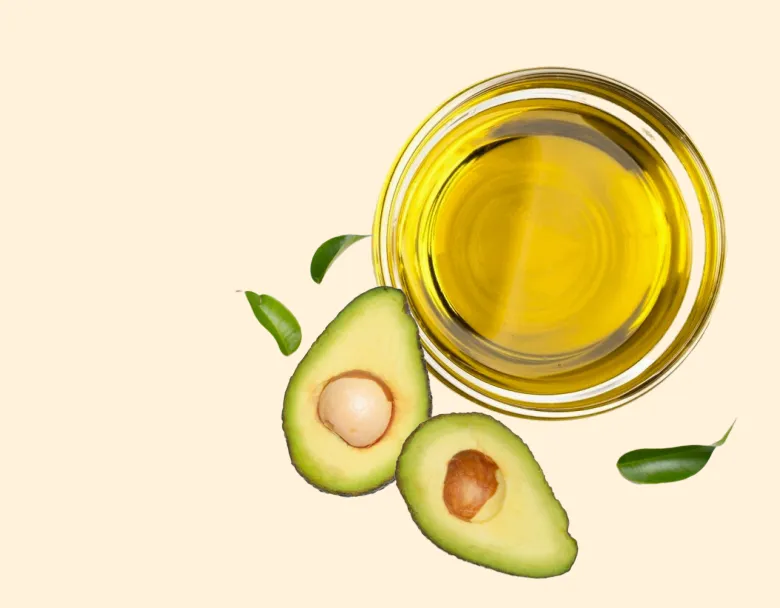
Fat is not something you have to avoid to eat well. The more useful question is not "how do I cut fat out?" but "which fats should most of my fat come from, and what foods are a good source of them?" For most people the answer is straightforward: build the majority of your fat around unsaturated fats, the kind found in olive oil, avocados, nuts, seeds, and fish.
Health authorities agree on the core idea. Both the American Heart Association and Harvard's Nutrition Source recommend getting most of your fat from monounsaturated and polyunsaturated fats, and note that replacing some saturated fat with these unsaturated fats can support heart health [1][2]. This article covers what makes a fat "healthy," which fats those are, and the everyday foods that supply them.
Key takeaways
- "Healthy fats" usually means unsaturated fats: monounsaturated and polyunsaturated, including omega-3s.
- The strongest, best-supported benefit is for the heart, mainly when unsaturated fats replace some saturated fat rather than being added on top [1][2].
- Good everyday sources include olive and canola oil, avocados, nuts and seeds, and fatty fish such as salmon, mackerel, and sardines.
- You do not need to hit an exact gram target per meal. Aim for fat that is mostly unsaturated, within an overall balanced eating pattern [4].
- Fat is calorie-dense, so "healthy" still means sensible portions.
- If you have a medical condition, take medication, or follow a prescribed diet, treat this as general information and confirm specifics with a qualified health professional.
What makes a fat "healthy"?
Dietary fats are grouped by their chemical structure, and that structure is what shapes their effect on the body. The two broad categories worth knowing are unsaturated fats and saturated fats.
Unsaturated fats are usually liquid at room temperature and come mostly from plants and fish. They are the fats generally described as "healthy" because, in place of saturated fat, they can improve blood cholesterol and are linked with lower heart disease risk [1][2]. Unsaturated fats split into two types:
- Monounsaturated fats, found in olive, canola, and peanut oils, avocados, and many nuts.
- Polyunsaturated fats, found in sunflower, corn, soybean, and flaxseed oils, walnuts, seeds, and fish. This group includes the omega-3 and omega-6 fats your body cannot make on its own [2].
One point is worth stating plainly. Fat is sometimes credited with dramatic effects, such as reversing aging or directly fighting inflammation. Those broad claims run ahead of what the everyday evidence shows. What is well supported is narrower and more practical: choosing unsaturated fats over saturated fat tends to help your cholesterol profile and heart health [1][2]. That is a solid reason to prioritize them, without needing the bigger promises.
The healthy fats, and where to find them
The table below groups the unsaturated fats by type, what the evidence reasonably supports, and the foods that are a good source of each.
| Type of healthy fat | What it may help with | Good food sources |
|---|---|---|
| Monounsaturated | Can lower LDL ("bad") cholesterol without lowering HDL when it replaces saturated fat [1][2] | Extra-virgin olive oil, canola oil, avocado, almonds, pecans, peanuts, pumpkin and sesame seeds |
| Polyunsaturated | Replacing saturated fat with these, especially, is linked with improved cholesterol and lower heart disease risk [2] | Sunflower, corn, soybean, and flaxseed oils; walnuts; sunflower and flax seeds; fish |
| Omega-3 (a polyunsaturated fat) | Being studied for heart health; the main dietary advice is to eat fish regularly [2][3] | Salmon, mackerel, sardines, herring; plus flaxseed, walnuts, and canola or soybean oil for plant-based ALA |
A practical way to read this table: you do not need every item. Using olive oil as your main cooking and dressing oil, eating nuts or seeds most days, and having fatty fish a couple of times a week already covers all three groups.
Good sources of fat to build into meals
Beyond bottled oils, whole foods are often the easiest way to get healthy fat, because they bring fiber, protein, or other nutrients along with the fat.
- Avocado — mostly monounsaturated; works in salads, on toast, or blended into sauces.
- Nuts — almonds, walnuts, pecans, and peanuts; a small handful is an easy source. Walnuts also add plant omega-3s.
- Seeds — flax, chia, hemp, sunflower, and sesame; sprinkle onto yogurt, oats, or salads. Ground flax is easier to absorb than whole.
- Fatty fish — salmon, mackerel, sardines, and herring; the leading food source of the long-chain omega-3s EPA and DHA [3]. Both Harvard and the American Heart Association point to eating fish about two to three times a week [2].
- Olives and olive oil — a staple source of monounsaturated fat, and a natural swap for butter or other saturated fats.
If you do not eat fish, plant sources of omega-3 (the ALA form) such as flaxseed, walnuts, and canola or soybean oil are a reasonable alternative to include regularly [2][3].
A quick guide to cooking oils and smoke point
How you use an oil matters as much as which oil you buy. Every oil has a "smoke point," the temperature at which it starts to smoke and break down. Matching the oil to the heat helps it perform well and taste better.
- For higher-heat cooking (searing, roasting, stir-frying): oils with a higher smoke point work best. Avocado oil is a good option because it tolerates high heat and is mostly monounsaturated. Refined olive oil and canola oil also handle everyday cooking heat well.
- For low heat, dressings, and finishing (drizzling, salads, dips): extra-virgin olive oil, flaxseed oil, walnut oil, and toasted sesame oil shine here. Extra-virgin olive oil and flaxseed oil in particular are better kept off high heat so their flavor and delicate fats are preserved.
One accuracy note while choosing oils: some high-smoke-point options such as coconut and palm oil are high in saturated fat, so they are not in the same "use freely" group as the unsaturated oils above. They are fine in small amounts, but the unsaturated oils are the better default for everyday cooking [1][2].
Fitting healthy fats into your eating window
If you fast on a schedule, fat is worth paying attention to inside your eating window. Because fat is digested slowly and adds flavor and texture, meals that include a source of healthy fat, such as olive oil on vegetables, avocado with eggs, or nuts alongside fruit, often feel more satisfying. That satiety can make the hours until your next window easier to manage, which matters more than any single "fat-burning" claim.
Two simple guidelines keep this balanced. First, let most of that fat come from the unsaturated sources above rather than from heavily processed snack foods. Second, remember that fat is calorie-dense, so a satisfying amount is usually a drizzle, a small handful, or a few slices, not an unlimited pour.
How much fat, and does an exact number matter?
You may have seen very specific targets, such as a set number of grams of fat per meal. For most people, that level of precision is not necessary and is hard to apply meal to meal. The more useful framing from national dietary guidance is about pattern and quality: keep fat as part of an overall balanced diet, and make most of it unsaturated while limiting saturated fat [1][4].
In practice that means the type of fat matters more than counting grams at every meal. If your fat is coming mostly from olive oil, avocados, nuts, seeds, and fish, you are already doing the part that carries the clearest benefit.
Common questions about healthy fats
Which fats are the healthiest?
Unsaturated fats, meaning monounsaturated and polyunsaturated fats, are generally considered the healthiest, especially when they take the place of saturated fat. Good sources include olive oil, avocados, nuts, seeds, and fatty fish [1][2].
Is olive oil or avocado oil better for cooking?
Both are good, mostly monounsaturated oils. Avocado oil has a higher smoke point, so it suits higher-heat cooking, while extra-virgin olive oil is excellent for lower-heat cooking, dressings, and finishing. Many people keep both.
Do I need to eat fish to get omega-3s?
Fatty fish is the richest dietary source of the long-chain omega-3s EPA and DHA [3]. If you do not eat fish, plant foods such as flaxseed, walnuts, and canola or soybean oil provide the ALA form of omega-3, so include them regularly [2].
Can I eat as much healthy fat as I want?
Not quite. Healthy fats are a good choice, but all fats are calorie-dense. Favor unsaturated sources and keep portions reasonable rather than adding large amounts on top of everything.
Are coconut oil and butter healthy fats?
They are high in saturated fat, so they are not in the same category as unsaturated oils. Using them occasionally in small amounts is fine, but the general recommendation is to make most of your fat unsaturated [1][2].
References
- American Heart Association. Dietary Fats https://www.heart.org/en/healthy-living/healthy-eating/eat-smart/fats/dietary-fats
- Harvard T.H. Chan School of Public Health, The Nutrition Source. Types of Fat https://nutritionsource.hsph.harvard.edu/what-should-you-eat/fats-and-cholesterol/types-of-fat/
- National Institutes of Health, Office of Dietary Supplements. Omega-3 Fatty Acids: Fact Sheet for Health Professionals https://ods.od.nih.gov/factsheets/Omega3FattyAcids-HealthProfessional/
- U.S. Department of Agriculture and U.S. Department of Health and Human Services. Dietary Guidelines for Americans, 2020–2025 https://www.dietaryguidelines.gov/