

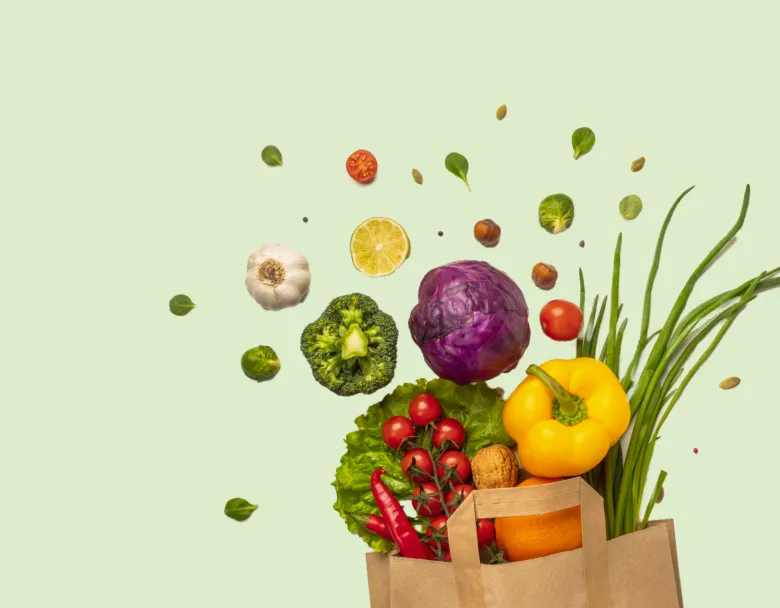
Choosing healthy food gets easier when you stop grading every item as "good" or "bad" and start with a simpler goal: build most meals from foods close to their natural form, add enough protein and fiber to feel satisfied, and go easy on the things that are easy to overeat.
That approach matters even more if you practice intermittent fasting. When you eat within a shorter window, you have fewer meals to cover your nutrition and fewer chances to feel full. Skipping planning often backfires: people break a fast on quick, sugary, or heavily processed food, feel hungry again soon after, and find the next fast harder. What you eat in the window is what makes the window count.
Key takeaways
- A healthy eating pattern is built mostly from minimally processed foods: vegetables, fruit, whole grains, legumes, quality proteins, nuts, and healthy fats [1][2].
- Protein and fiber are the two levers that help meals feel filling, which is useful when your eating window is short [3].
- Go easy on added sugars, refined grains, and ultra-processed products, rather than trying to ban them completely [1][4].
- A balanced plate is a faster tool than counting anything: roughly half vegetables and fruit, a quarter whole grains, a quarter protein, plus water and healthy oils [2].
- No single food is a fix for sleep, energy, or weight. Aim for a pattern you can repeat, not a perfect day.
- If you have a medical condition, take medication, are pregnant or breastfeeding, follow a prescribed diet, or have a history of disordered eating, treat this as general information and get individual advice from a dietitian or clinician.
What does "healthy food" actually mean?
There is no official list of "healthy foods," but nutrition authorities largely agree on the shape of a healthy eating pattern. It leans on vegetables, fruits, whole grains, legumes, nuts, seeds, seafood, lean or plant proteins, and unsaturated oils, and it keeps added sugars, saturated fat, sodium, and refined grains to smaller amounts [1].
Two ideas make this practical:
- Judge the pattern, not the single bite. One cookie does not undo a week of vegetables, and one salad does not cancel a week of soda. Your usual choices matter far more than any single meal.
- Closeness to the original food is a useful signal. Whole and minimally processed foods, like oats, beans, eggs, plain yogurt, fish, or frozen vegetables, tend to carry more fiber, protein, and nutrients and are harder to overeat than ultra-processed products built from refined starches, sugars, oils, and additives [4].
What to prioritize
Most healthy meals come together from a small number of building blocks. You do not need all of them at once, but the more your week draws from this list, the more forgiving your diet becomes.
| Group | Why it helps | Everyday examples | How to use it |
|---|---|---|---|
| Vegetables | Fiber, vitamins, and volume for few calories; help fill the plate | Leafy greens, peppers, broccoli, carrots, tomatoes, frozen mixed veg | Aim to make these the largest part of most meals |
| Fruit | Fiber, vitamins, and natural sweetness in a filling package | Berries, apples, oranges, bananas, pears | Whole fruit over juice; keep it simple |
| Whole grains | Steadier energy and more fiber than refined grains | Oats, brown rice, quinoa, whole-grain bread, barley | Swap in for at least half of your grains |
| Quality protein | Supports fullness and helps you cover protein in fewer meals | Beans, lentils, tofu, eggs, fish, poultry, plain dairy | Include a protein source at each meal |
| Healthy fats | Flavor, satisfaction, and unsaturated fats | Olive oil, nuts, seeds, avocado, oily fish | Use in moderation; favor unsaturated over saturated |
| Legumes | Protein plus fiber in one affordable food | Chickpeas, black beans, lentils, split peas | A cheap way to make a meal more filling |
The World Health Organization describes a healthy diet as one built around this kind of variety of minimally processed foods, while keeping free sugars, unhealthy fats, and salt low [1].
Fiber and protein: the two levers for feeling full
If you only remember two things when choosing food, make them protein and fiber. Both slow how quickly a meal leaves your stomach and blood sugar, which helps you feel satisfied for longer. Harvard's Nutrition Source notes that soluble fiber attracts water in the gut and can slow digestion, which may reduce hunger; good sources include whole grains, vegetables, fruit, legumes, nuts, and seeds [3].
This is especially useful on an intermittent fasting plan. A meal of white bread and a sugary drink can leave you hungry again within an hour or two, right when you may still be hours from your next meal. A meal built around a protein source, vegetables, and a whole grain tends to hold you longer. A simple habit: when you plan a meal, check that it has both a protein and a fiber source before you add anything else.
What to go easy on
You do not have to ban anything to eat well. The goal is to reduce the foods that add little beyond calories and are easy to overconsume [1][4]:
- Added sugars, especially in drinks. Sugary beverages are quick to consume and rarely filling. Dietary guidance recommends keeping added sugars to a small share of daily calories.
- Refined grains, such as white bread, white rice, and many packaged baked goods, which offer less fiber than whole-grain versions.
- Ultra-processed products built mostly from refined starches, sugars, oils, and additives, such as soft drinks, packaged sweets, chips, and many ready-to-eat items. Occasional use is fine; the issue is when they crowd out more filling meals [4].
- Excess saturated fat and sodium, common in processed and fast foods.
A more sustainable framing than "never eat X" is "eat more of the filling whole foods, and these tend to take up less room on their own."
Build a balanced plate instead of counting
You do not need to track grams to eat a balanced meal. A plate model does the work for you. The Harvard Healthy Eating Plate suggests a simple layout [2]:
- About half the plate: vegetables and fruit. Variety and color; potatoes and fries do not count as vegetables here.
- About a quarter: whole grains. Oats, brown rice, quinoa, whole-grain bread, over refined grains.
- About a quarter: healthy protein. Fish, poultry, beans, nuts; limit red and processed meat.
- Healthy oils in moderation, such as olive oil, and water as the default drink (tea or coffee with little or no sugar also work).
If a meal roughly follows that pattern, you are choosing well without measuring anything.
Read a label in 30 seconds
For packaged foods, the ingredient list tells you more than the front of the box:
- Read the first few ingredients. If they are recognizable whole foods, that is a good sign.
- Check for added sugars under many names, such as syrups, cane sugar, dextrose, and concentrates, especially near the top of the list.
- Compare similar products. Between two options that do the same job, pick the one with more fiber and protein and less added sugar and sodium.
- Do not fear every package. Frozen vegetables, plain canned beans, and whole-grain bread are processed but genuinely useful.
Make the eating window count on a fasting plan
Intermittent fasting changes when you eat, not what counts as healthy food. If anything, a shorter window raises the stakes for each meal. A few habits help:
- Plan the first meal before you are hungry. Deciding in advance makes it less likely you break the fast on whatever is fastest.
- Anchor each meal with protein and fiber, then build vegetables and a whole grain around it, so meals hold you across the window.
- Keep water going. Hydration is easy to forget while fasting; water, plain tea, or coffee are simple defaults.
- Do not use the window as a reason to overeat ultra-processed foods. A short window filled with sugary, low-fiber food can leave you both hungry and short on nutrients.
On the nutrients-and-sleep question that often comes up: some nutrients, such as magnesium, are involved in normal sleep and muscle function, and foods like bananas, nuts, and leafy greens contain them. But no single food is a sleep cure, and eating one "magnesium food" will not fix sleep on its own. Focus on the overall pattern rather than chasing one ingredient.
If you use GoFasting, keep its role simple: log your fasting windows, calorie or water intake, steps, and weight, water intake, steps, and weight if those are part of your routine, then review the pattern at the end of the week. The useful question is not whether any single day was perfect; it is whether your usual choices in the eating window are ones you can repeat.
When to get individual advice
General food guidance fits most healthy adults, but it is not a substitute for personal medical or dietary advice. Talk with a dietitian or clinician before making big changes if you:
- have a medical condition such as diabetes, kidney disease, or a heart condition, or take medication that interacts with food or meal timing;
- are pregnant or breastfeeding;
- follow a prescribed or therapeutic diet;
- have food allergies or intolerances.
One more caution: if strict "good food versus bad food" thinking makes you anxious, leads you to skip meals, or pushes you to cut out whole food groups without a clear reason, that is a sign to loosen the rules and, if you have a history of disordered eating, to seek support. The goal of choosing healthy food is a better, repeatable pattern, not a perfect or rigid one.
Common questions about choosing healthy food
What is the single easiest change to make?
Add one more minimally processed food to a meal you already eat, such as fruit at breakfast, beans at lunch, or vegetables at dinner. Adding is often easier to sustain than starting with restriction.
Do I have to give up all processed food?
No. Processing covers many ordinary steps like freezing, canning, and fermenting, and many processed foods are useful. The bigger goal is to reduce ultra-processed products that are easy to overeat and that replace more filling meals [4].
Does healthy eating cost more?
It does not have to. Some of the most filling healthy foods, such as beans, lentils, oats, eggs, and frozen vegetables, are among the cheapest. Frozen and canned options count.
What should I eat first when I break a fast?
There is no single required food, but a balanced meal with protein, fiber, and vegetables tends to sit better and keep you full longer than sugary or heavily refined food. Planning it in advance helps you avoid grabbing whatever is fastest.
References
- World Health Organization. Healthy diet https://www.who.int/news-room/fact-sheets/detail/healthy-diet
- Harvard T.H. Chan School of Public Health, The Nutrition Source. Healthy Eating Plate https://nutritionsource.hsph.harvard.edu/healthy-eating-plate/
- Harvard T.H. Chan School of Public Health, The Nutrition Source. Fiber https://nutritionsource.hsph.harvard.edu/carbohydrates/fiber/
- U.S. Department of Agriculture and U.S. Department of Health and Human Services. Dietary Guidelines for Americans, 2020–2025. 9th Edition. December 2020 https://www.dietaryguidelines.gov/