

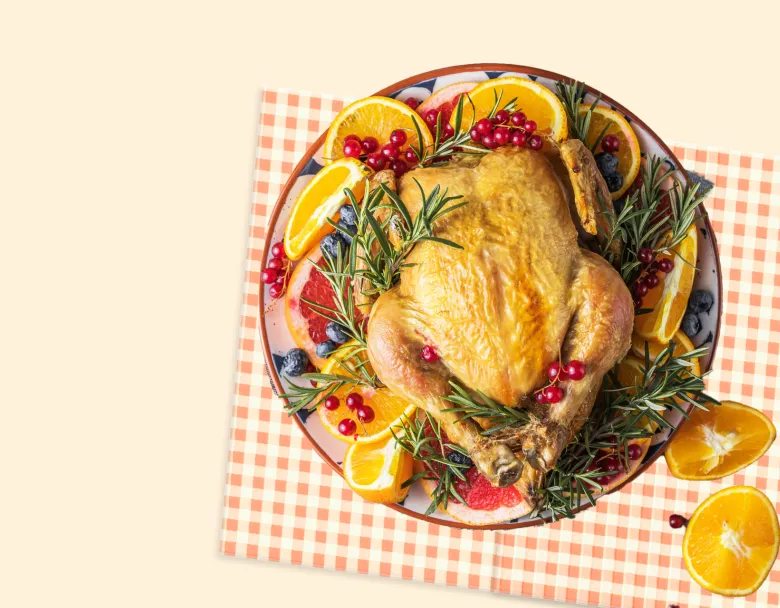
Christmas does not need a perfect fasting plan. A realistic plate with protein, vegetables, satisfying carbohydrates, and a dessert you actually enjoy is easier to repeat than trying to turn the holiday into a restriction test [1].
Key takeaways
- Use a flexible fasting window for the holiday.
- Build the meal around protein, vegetables, and foods you truly want.
- Dessert can fit better when it is chosen intentionally, not eaten out of guilt.
- Hydrate and avoid arriving extremely hungry.
- Return to your normal routine at the next window.
A balanced Christmas plate
Start with a protein such as turkey, fish, eggs, tofu, beans, or lean meat. Add vegetables, then include the holiday sides that matter to you.
Healthier eating patterns emphasize fruits, vegetables, whole grains, protein foods, healthy fats, and limited added sugars [1]. That still leaves room for celebration.
Fasting-friendly timing
If Christmas dinner is late, shift the eating window later or use a 12:12 day. If brunch is the main meal, open the window earlier.
Do not skip all day just to earn dinner. That often makes the meal feel more chaotic.
Desserts and drinks
Pick one or two favorites, eat them slowly, and count sugary drinks or alcohol as part of the eating window. Added sugars are worth noticing, but the holiday does not require perfection [2].
FAQ
Should I fast on Christmas Day?
Only if it feels easy. A flexible or shorter window is usually more realistic.
What is a good Christmas fasting meal?
Protein, vegetables, a satisfying starch or side, and a dessert you choose intentionally.
Bottom line
Return to your normal routine at the next window.
References
- CDC. Tips for Healthy Eating for a Healthy Weight https://www.cdc.gov/healthy-weight-growth/healthy-eating/index.html
- FDA. Added Sugars on the Nutrition Facts Label https://www.fda.gov/food/nutrition-facts-label/added-sugars-nutrition-facts-label