

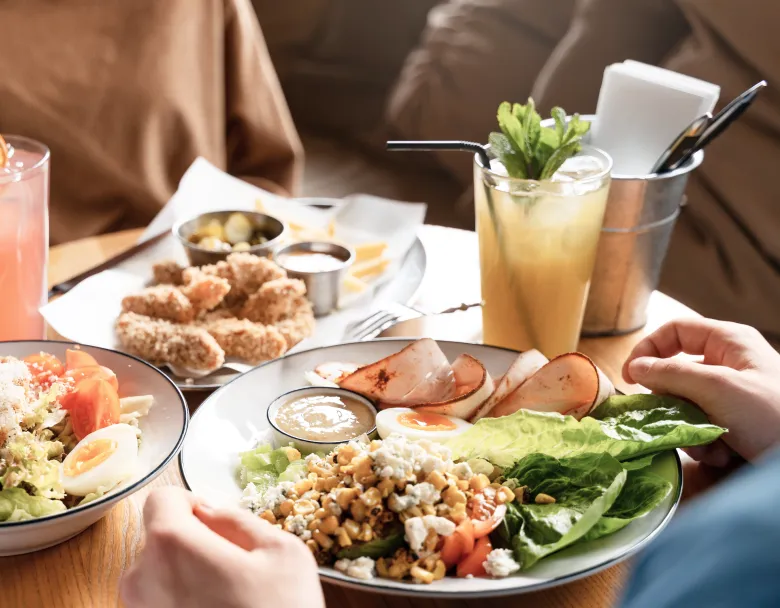
You can eat out while intermittent fasting without treating the meal as a failure. The key is to plan the timing, choose a meal that fits your eating window, and avoid turning one restaurant meal into an all-or-nothing moment [3].
Restaurant portions, drinks, sauces, and sides can make meals larger than expected. A few simple choices can help you enjoy the meal and still return to your fasting routine.
Key takeaways
- Check the menu before you go so you have a few realistic options.
- Choose meals with protein, vegetables, fiber-rich carbohydrates if they fit your plan, and healthy fats.
- Watch drinks, sauces, fried sides, and large portions.
- You can shift the fasting window for a restaurant meal and return to your normal routine afterward.
- GoFasting can help track fasting windows, water intake, calorie intake, steps, and weight trends, but it should not make dining out feel like a test.
On this page
Plan the timing before you go Choose a balanced restaurant meal Manage portions without feeling restricted Watch drinks and hidden calories What to do if the meal runs late What to track after eating out FAQ
Plan the timing before you go
Before eating out, decide whether the meal fits your usual eating window or whether you will shift the window that day. Either can work.
For example, if dinner is later than usual, you might start fasting later and open your eating window later the next day. Or you might shorten the fast slightly and return to your normal schedule tomorrow.
The goal is to avoid panic decisions. A restaurant meal is easier to manage when you know the plan before you sit down.
Choose a balanced restaurant meal
A balanced meal is usually easier to fast after than a meal built mostly from fried foods, refined carbs, and sugary drinks.
Look for:
- grilled, baked, steamed, or roasted protein
- vegetables or salad
- beans, lentils, brown rice, potatoes, or whole grains if they fit your plan
- olive oil, avocado, nuts, or other healthy fats in reasonable portions
- water or unsweetened drinks
The Dietary Guidelines for Americans emphasize nutrient-dense foods across food groups and limiting added sugars, saturated fat, sodium, and alcoholic beverages [1]. You do not need to eat perfectly at a restaurant, but those principles help you choose.
Manage portions without feeling restricted
Restaurant portions can be large. You do not have to finish the plate just because it is served.
Helpful options include:
- share an entree
- ask for a smaller portion if available
- pack part of the meal before you feel overly full
- start with vegetables or protein
- slow down and check fullness before ordering more
Portion control is not about punishment. It is about leaving the meal comfortable enough to continue your routine.
Watch drinks and hidden calories
Drinks can change the meal quickly. Sugary drinks, cocktails, sweet tea, specialty coffee drinks, and alcohol can add calories without much fullness.
Water, sparkling water, unsweetened tea, or black coffee are simpler choices. If you drink alcohol, keep it moderate. U.S. dietary guidance recommends limiting alcohol intake when consumed, and alcohol can also affect sleep for some people [1][4].
Sauces, dressings, and sides can also add more than expected. Ask for sauces or dressings on the side. Choose grilled or steamed sides more often than fried sides.
What to do if the meal runs late
If dinner runs later than planned, you do not need to make the next day extreme. Choose one of these:
- keep the same fasting length and eat later tomorrow
- shorten the next fast slightly
- return to your normal window at the next meal
Avoid using a missed schedule as a reason to overcorrect. More restrictive fasting can cause side effects such as low energy, headaches, irritability, hunger, nausea, weakness, and difficulty concentrating [2].
What to track after eating out
GoFasting can help you track fasting windows, water intake, calorie intake, steps, and weight trends. After a restaurant meal, tracking can help you see whether eating out is disrupting the routine or fitting into it.
Keep personal observations separate. Notice hunger, digestion, sleep, mood, and cravings. If eating out often leads to discomfort or all-or-nothing thinking, plan a simpler restaurant strategy.
FAQ
Can I eat at restaurants while intermittent fasting?
Yes. Intermittent fasting is a meal-timing pattern, not a ban on restaurant food. The meal still needs to fit your eating window and overall routine.
Should I skip meals before eating out?
Not necessarily. Skipping too much beforehand can make overeating more likely. A normal routine with a planned restaurant meal is often easier.
What should I drink at a restaurant?
Water, sparkling water, unsweetened tea, or black coffee are simple choices. Sugary drinks and alcohol can add calories and may affect sleep [1][4].
What if I overeat at dinner?
Return to your routine at the next meal. Do not punish yourself with a very long fast. Review what happened and adjust next time.
Can I move my fasting window for social meals?
Yes. Occasional shifts are part of making fasting realistic. Try to return to a consistent pattern afterward.
Bottom line
Eating out does not have to break your fasting routine. Plan the timing, choose a meal that leaves you comfortable, watch drinks and sauces, and return to your normal pattern afterward.
The routine that survives real life is usually better than the one that only works at home.
Medical disclaimer
Fasting and meal timing can affect blood sugar, medication timing, hydration, and eating behavior. Speak with a qualified healthcare professional before fasting if you have diabetes, take glucose-lowering medication, are pregnant or breastfeeding, are under 18, are underweight, or have a history of disordered eating.
References
- Dietary Guidelines for Americans, 2020-2025. U.S. Department of Agriculture and U.S. Department of Health and Human Services https://www.dietaryguidelines.gov/
- Cleveland Clinic. Intermittent Fasting: What is it and how does it work? https://health.clevelandclinic.org/intermittent-fasting-4-different-types-explained
- Johns Hopkins Medicine. Intermittent Fasting: What is it, and how does it work? https://www.hopkinsmedicine.org/health/wellness-and-prevention/intermittent-fasting-what-is-it-and-how-does-it-work
- Sleep Foundation. Alcohol and Sleep https://www.sleepfoundation.org/nutrition/alcohol-and-sleep