

"Ultra-processed food" gets used as a catch-all insult for anything that comes in a package, but it has a fairly specific meaning. It does not describe a single nutrient or a calorie count. It describes how far a product has been taken from whole food, and how many industrial ingredients were added to make it cheap, shelf-stable, and easy to keep eating.
That distinction is worth understanding, because most everyday diet advice ("eat less sugar," "watch your fat") misses the pattern that ties a lot of these products together. The clearest way to see the pattern is a classification system called NOVA, which sorts foods by how much they have been processed rather than by their nutrition label [1].
Key takeaways
- "Ultra-processed" is about the degree and purpose of processing, not about calories or a single ingredient. Frozen vegetables and canned beans are processed, but they are not ultra-processed.
- Ultra-processed foods are industrial formulations built mostly from extracted substances (starches, sugars, oils, protein isolates) plus additives like flavors, colors, emulsifiers, and sweeteners [1].
- They tend to be energy-dense, soft, and engineered to taste good, which makes them easy to eat quickly and easy to overeat [2].
- Diets high in ultra-processed foods are associated with higher risk of obesity, type 2 diabetes, and heart disease in large studies. These are links, not proof that the food alone causes disease [3][4].
- You do not need to eliminate them. Reducing the ones you eat most often, and building meals around less-processed foods, is a more realistic goal.
- If you have a medical condition, take medication affected by diet, are pregnant, or have a history of disordered eating, treat this as general information and get personal advice from a qualified health professional.
What counts as an ultra-processed food?
Under the NOVA system, foods fall into four groups by how much they have been processed [1]:
| NOVA group | Plain-language meaning | Everyday examples |
|---|---|---|
| Group 1: Unprocessed or minimally processed | Whole foods, or foods changed only by cleaning, drying, freezing, or pasteurizing | Fresh or frozen vegetables and fruit, beans, oats, rice, eggs, plain milk and yogurt, fish, nuts |
| Group 2: Processed culinary ingredients | Ingredients pressed or refined from foods, mostly used for cooking | Olive oil, butter, sugar, honey, salt |
| Group 3: Processed foods | Group 1 foods with salt, sugar, or oil added, usually to preserve or flavor | Canned beans, cheese, simple bread, canned fish, salted nuts |
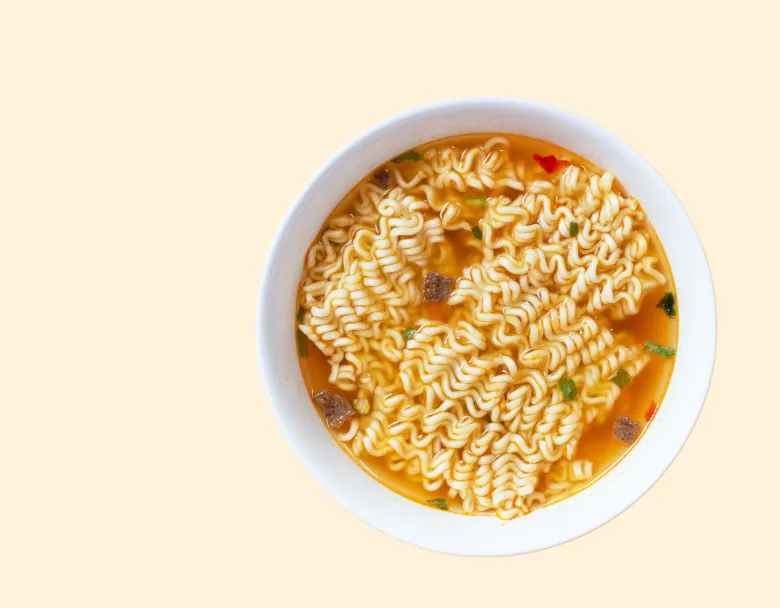
| Group 4: Ultra-processed foods | Industrial formulations made mostly from extracted substances and additives, with little intact whole food | Soft drinks, packaged sweets and cakes, chips, sweetened cereals, instant noodles, many ready-to-heat meals, reconstituted meat products |
The tell-tale sign of Group 4 is the ingredient list. Ultra-processed products are typically built from five or more ingredients you would not find in a home kitchen: protein isolates, modified starches, glucose or corn syrup, maltodextrin, hydrogenated oils, artificial sweeteners, colors, emulsifiers, and flavor systems [1]. If most of the list reads like a chemistry set rather than food, it is probably Group 4.
The point is not that processing is bad. Freezing, canning, and pasteurizing all make food safer or more usable. The useful line to draw is between foods that are close to their original form and formulations engineered for shelf life and "moreishness."
Why ultra-processed foods are so easy to overeat
This is the part that gets lost when people frame these foods purely as "junk." The problem is not just what is in them; it is how they are built to be eaten.
Ultra-processed foods tend to be:
- Energy-dense. They pack more calories into each bite, often because they are dry, oily, or low in water and fiber.
- Hyper-palatable. Combinations of sugar, fat, salt, and engineered flavors are designed to be hard to stop eating.
- Soft and fast to eat. Processing removes much of the structure that slows you down, so you eat faster, and fullness signals arrive after you have already eaten more [5].
There is unusually strong evidence for this last point. In a tightly controlled inpatient study, people ate about 500 more calories per day and gained weight when offered an ultra-processed diet, compared with a minimally processed diet that was matched for calories, sugar, fat, sodium, and fiber. When the only real difference was the level of processing, people still overate the ultra-processed food [2].
That is a randomized, controlled experiment about eating behavior, so it can speak to cause and effect for overeating. It is a big reason "just use willpower" is unfair advice: these products are engineered to win.
What high intake is linked to, and what that does not mean
Large observational studies have followed people for years and consistently found that those with the highest ultra-processed intake tend to have higher rates of several conditions. In one prospective cohort of more than 100,000 adults, each 10-percentage-point increase in the share of ultra-processed food in the diet was associated with roughly a 12% higher rate of cardiovascular disease [3]. A 2024 umbrella review that pooled dozens of meta-analyses covering nearly 10 million people found high intake linked to a range of outcomes, most consistently cardiometabolic conditions, some mental-health outcomes, and higher mortality [4].
Here is the important caveat, and it is easy to lose in headlines: these are associations, not proof of cause. People who eat a lot of ultra-processed food often differ in other ways (overall diet, income, activity, smoking) that also affect health, and observational studies cannot fully separate those. The honest summary is that high intake is linked to higher risk, and that limiting it is a sensible bet, not that a bag of chips directly causes a specific disease.
You may also see dramatic claims float around, such as a finding tying high intake to "faster aging" at the cellular level. Some of these come from preliminary work presented at conferences that has not been peer-reviewed or published in full. Treat that kind of early, unreviewed finding as a hint worth watching, not as an established fact, and do not let it drive big decisions on its own.
What this means for you is simple: you do not need to wait for the science to be airtight to make a low-risk, high-upside change. Shifting your usual meals toward less-processed foods is reasonable now.
Simple swaps that lower ultra-processed intake
You do not have to overhaul your diet. Aim to upgrade the foods you eat most often, because those set the pattern.
| If you usually reach for... | Try instead... |
|---|---|
| Sweetened breakfast cereal or a pastry | Plain oats with fruit, yogurt, or eggs with vegetables |
| Soft drinks or sweetened coffee drinks | Water, sparkling water, unsweetened tea, or plain coffee |
| Chips or packaged sweets as a snack | Nuts, fruit, plain popcorn, or yogurt |
| Instant noodles or a ready-to-heat meal | The same meal built from a simple protein, a grain, and vegetables |
| Flavored, sweetened yogurt | Plain yogurt with fruit you add yourself |
A few principles make this stick:
- Add before you subtract. Adding one whole food to a meal (fruit, beans, vegetables, eggs) is easier to keep up than cutting things out.
- Compare within a category. When two products do the same job, pick the one with a shorter, more recognizable ingredient list.
- Keep it flexible. An occasional ultra-processed food is not the same as a diet built around them. You are changing the average, not chasing a perfect day.
If you use intermittent fasting, quality still matters
Intermittent fasting focuses on when you eat, but what you eat during your eating window still shapes how you feel and how filling your meals are. A window packed with ultra-processed snacks can be easy to overeat and leave you hungry sooner, which works against the point of a shorter eating window. Building meals around less-processed foods tends to make an eating window more satisfying.
If you track with GoFasting, keep its role practical: log your fasting windows, calorie or meal intake, water, steps, and weight, then review the pattern at the end of the week. The useful question is not whether you ate perfectly, but whether your usual choices are drifting toward meals you can actually repeat. Any changes in hunger, energy, or how a meal sits with you are your own observations to notice over time, not something the app measures for you.
When to get personal advice
For most people, cutting back on ultra-processed foods is a low-risk change. There are a few situations where general advice is not enough, and where turning this into a strict rulebook can backfire.
- A history of disordered eating. If rules about "good" and "bad" foods trigger anxiety, restriction, or bingeing, be careful with rigid food labeling. Working with a professional is safer than tightening rules on your own.
- A medical condition or a prescribed diet. Conditions like diabetes or kidney disease, or medications affected by diet, may need specific guidance rather than general swaps. Talk to your clinician or a registered dietitian before making big changes.
- Pregnancy, breastfeeding, or feeding children. Nutrition needs shift in these stages, so get advice tailored to your situation.
- Tight budget, time, or food access. If the realistic choice is between no vegetables and frozen or canned ones, choose the vegetables. A less-processed pattern should fit your life, not shame it.
In all of these cases, use this article as a starting point for a conversation with a qualified health professional, not as a set of strict rules.
Common questions about ultra-processed foods
Are all processed foods bad for you?
No. Processing covers ordinary steps like freezing, drying, fermenting, canning, and pasteurizing, which can make food safer or more usable. The concern is specifically with ultra-processed products (NOVA Group 4), which are built mostly from extracted substances and additives. Foods like frozen vegetables, canned beans, or plain yogurt are processed but not ultra-processed.
Do ultra-processed foods cause disease?
Large studies link high intake to higher risk of conditions like obesity, type 2 diabetes, and heart disease, but these are associations, not proof that the food alone is the cause [3][4]. It is reasonable to limit ultra-processed foods as part of a better overall pattern, without treating any single product as directly dangerous.
How do I know if something is ultra-processed?
Read the ingredient list. If it is long and includes items you would not cook with at home, such as protein isolates, modified starches, glucose syrup, artificial sweeteners, colors, emulsifiers, and flavor systems, it is likely ultra-processed [1].
Do I have to give them up completely?
No. Occasional ultra-processed foods are not the problem; a diet built around them is. Start by reducing the ones you eat or drink most often, especially sweet drinks, packaged sweets, and salty snacks that replace more filling meals.
What is the single easiest first step?
Add one minimally processed food to a meal you already eat, such as fruit at breakfast, beans at lunch, or vegetables at dinner. Adding is usually easier to sustain than starting with restriction.
References
- Monteiro CA, Cannon G, Levy RB, et al. Ultra-processed foods: what they are and how to identify them. Public Health Nutrition. 2019;22(5):936-941. DOI: 10.1017/S1368980018003762. PMID: 30744710 https://doi.org/10.1017/S1368980018003762
- Hall KD, Ayuketah A, Brychta R, et al. Ultra-Processed Diets Cause Excess Calorie Intake and Weight Gain: An Inpatient Randomized Controlled Trial of Ad Libitum Food Intake. Cell Metabolism. 2019;30(1):67-77.e3. DOI: 10.1016/j.cmet.2019.05.008. PMID: 31105044 https://doi.org/10.1016/j.cmet.2019.05.008
- Srour B, Fezeu LK, Kesse-Guyot E, et al. Ultra-processed food intake and risk of cardiovascular disease: prospective cohort study (NutriNet-Santé). BMJ. 2019;365:l1451. DOI: 10.1136/bmj.l1451 https://doi.org/10.1136/bmj.l1451
- Lane MM, Gamage E, Du S, et al. Ultra-processed food exposure and adverse health outcomes: umbrella review of epidemiological meta-analyses. BMJ. 2024;384:e077310. DOI: 10.1136/bmj-2023-077310. PMID: 38418082 https://doi.org/10.1136/bmj-2023-077310
- Harvard T.H. Chan School of Public Health, The Nutrition Source. Processed Foods and Health. https://nutritionsource.hsph.harvard.edu/processed-foods/