

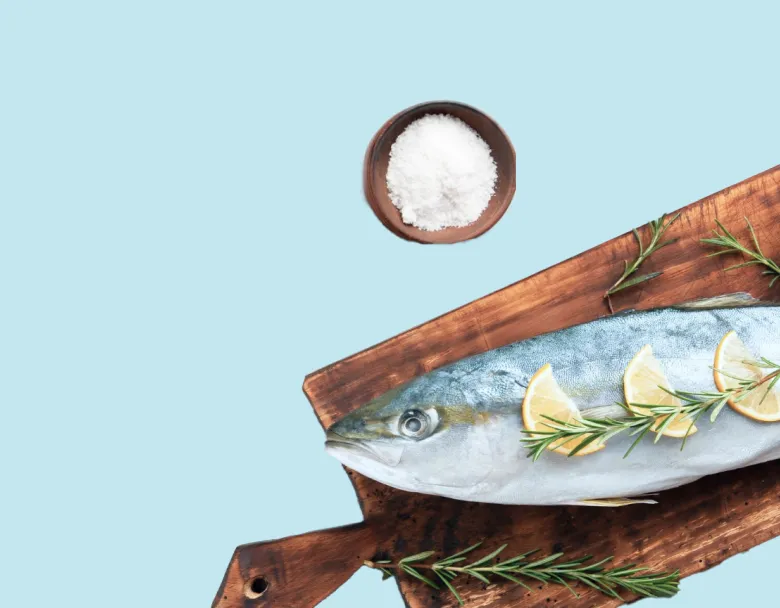
Yes — fish and shellfish are among the best protein foods you can eat. A typical 3-ounce cooked serving delivers roughly 20-25 grams of high-quality, complete protein while staying low in saturated fat, and many fish add omega-3 fats on top of that. The main things worth knowing are how much protein a serving actually gives you, which fish are lower in mercury, and who needs to be more careful about the mercury question.
Key takeaways
- Seafood is a complete protein, meaning it supplies all the essential amino acids your body can't make on its own. A 3-ounce cooked serving of most fish provides about 20-25 grams of protein.
- Fatty fish like salmon, sardines, and trout also provide omega-3 fats, which are linked to heart and brain benefits — a supported association, not a cure or guarantee.
- Lower-mercury choices (salmon, sardines, trout, anchovies, herring, pollock, shrimp) let you get the protein and omega-3s while keeping mercury exposure low.
- If you're pregnant, breastfeeding, or feeding young children, mercury matters more: choose from the lower-mercury list and avoid the highest-mercury fish. A clinician can give advice for your situation. People with a shellfish allergy should avoid shellfish entirely.
How much protein does seafood actually give you?
Seafood is a complete, high-quality protein: it contains all nine essential amino acids in usable amounts, the same as meat, poultry, eggs, and dairy. According to the Harvard T.H. Chan School of Public Health's Nutrition Source, fish is high in protein and low in saturated fat, which is part of why it's a nutritious way to hit a protein target.
In practical terms, a 3-ounce cooked serving — about the size of your palm or a deck of cards — lands in the neighborhood of 20-25 grams of protein for most fish. Cooked salmon, for example, comes in around 22-25 grams for that portion. Leaner white fish and shellfish fall in a similar range. Exact numbers vary by species and how it's prepared, and you can look up any specific fish in the USDA FoodData Central database if you want precise figures.
To put that in context, one modest serving of fish covers a large share of the protein many adults aim for at a single meal. Two seafood-anchored meals in a week go a long way on their own.
The omega-3 bonus in fatty fish
Protein isn't the only reason to eat seafood. Fatty fish — salmon, sardines, herring, anchovies, Atlantic mackerel, and trout — are among the best food sources of long-chain omega-3 fats (EPA and DHA).
The Harvard Nutrition Source notes that eating one to two 3-ounce servings of fatty fish a week is associated with a meaningfully lower risk of dying from heart disease, and that omega-3s play a role in a baby's brain and nervous-system development during pregnancy and early life. It's worth being precise about what that means: these are associations supported by a large body of research, not a promise that fish will treat or prevent any disease on its own. Seafood is one helpful piece of an overall eating pattern, not a cure.
If you mainly care about protein, any fish works. If you also want the omega-3s, leaning toward the higher-fat fish above is the simple move.
Which fish are lower in mercury?
Nearly all fish contain trace mercury, and a handful of large, long-lived predator fish carry enough to be worth limiting. The good news is that the fish highest in protein and omega-3s are mostly on the lower-mercury side. The EPA and FDA joint advice on eating fish sorts common seafood into best choices, good choices, and a small group to avoid.
| Lower in mercury (eat freely) | Higher in mercury (limit or avoid) |
|---|---|
| Salmon, sardines, anchovies, herring | Shark, swordfish |
| Trout, Atlantic mackerel, pollock | King mackerel, Gulf tilefish |
| Shrimp, crab, scallops, clams, oysters | Bigeye tuna, marlin, orange roughy |
| Catfish, tilapia, cod, flounder, canned light tuna | Albacore (white) tuna — limit rather than avoid |
For most adults, building your seafood around the left column keeps mercury exposure low without any fuss. Variety helps too: rotating among several lower-mercury fish rather than eating the same one daily is the easiest way to keep exposure down.
When mercury matters more, and what to do
Mercury is a bigger consideration for some people, and this is where general reassurance isn't enough.
If you are pregnant, trying to become pregnant, breastfeeding, or feeding young children, follow the EPA/FDA advice specifically: eat 8 to 12 ounces per week of a variety of fish from the lower-mercury "best choices" list, and avoid the highest-mercury fish (shark, swordfish, king mackerel, Gulf tilefish, bigeye tuna, marlin, and orange roughy). Fish is actively encouraged during pregnancy and early childhood because the omega-3s support a developing brain — the point isn't to eat less seafood, it's to choose lower-mercury fish. If you're unsure how to apply this to your own diet or a specific medical situation, that's a good reason to ask your clinician or a registered dietitian rather than guess.
Two more practical notes:
- Shellfish allergy. Shrimp, crab, lobster, and other shellfish are common allergens and can cause serious reactions. If you have a shellfish allergy, avoid them entirely and talk to your clinician about which seafood, if any, is safe for you.
- Everyone else. For healthy adults without these concerns, mercury from normal fish consumption isn't a reason to avoid seafood. Sticking mostly to the lower-mercury list and limiting the highest-mercury fish is enough.
Fitting seafood into a shorter eating window
If you eat within a compressed window — an intermittent fasting schedule, for instance — you have fewer meals to reach your protein target, so it helps to make each one count. Seafood is well suited to this because a single serving delivers so much protein.
A couple of habits make it easy:
- Anchor a meal with a clear seafood serving — a salmon fillet, a can of sardines on toast, shrimp in a stir-fry — rather than leaving protein to chance.
- Aim for the general guidance of at least 8 ounces of seafood a week (the Dietary Guidelines for Americans figure for adults), spread across two or so meals rather than all at once.
If you already track your eating windows or calorie intake in an app like GoFasting, jotting down which meals included a protein source can make it easier to see whether your protein is actually landing where you think it is over a typical week. That's just for your own awareness — it isn't medical or dietitian advice.
FAQ
Is fish a complete protein?
Yes. Fish and shellfish supply all nine essential amino acids in usable amounts, the same as meat, eggs, and dairy.
How much protein is in a serving of fish? Most fish provide roughly 20-25 grams of protein per 3-ounce cooked serving (about a palm-sized portion). Exact amounts vary by species; you can look up specifics in USDA FoodData Central.
Is canned tuna or canned salmon a good protein source? Yes. Canned light tuna and canned salmon are convenient, affordable, high-protein options and are lower in mercury than albacore (white) tuna, which is worth limiting.
Can I eat fish if I'm pregnant?
Generally yes, and it's encouraged — but choose lower-mercury fish. The EPA/FDA advise 8 to 12 ounces per week from the "best choices" list and avoiding the highest-mercury fish. Check with your clinician about your specific situation.
Is shellfish a good source of protein?
Yes — shrimp, crab, scallops, and similar shellfish are lean, high-protein, and mostly low in mercury. The exception is if you have a shellfish allergy, in which case you should avoid them entirely.
This article is general information, not medical advice. If you have a health condition, take medication, are pregnant or breastfeeding, or are unsure whether fasting is right for you, talk with a qualified clinician who knows your situation.
References
- Harvard T.H. Chan School of Public Health, The Nutrition Source. "Fish: Friend or Foe?" https://nutritionsource.hsph.harvard.edu/fish/
- U.S. Environmental Protection Agency and U.S. Food and Drug Administration. "EPA-FDA Advice about Eating Fish and Shellfish." https://www.epa.gov/choose-fish-and-shellfish-wisely/epa-fda-advice-about-eating-fish-and-shellfish
- U.S. Department of Agriculture, FoodData Central https://fdc.nal.usda.gov/
- U.S. Departments of Agriculture and Health and Human Services. "Dietary Guidelines for Americans, 2020-2025." https://www.dietaryguidelines.gov/