

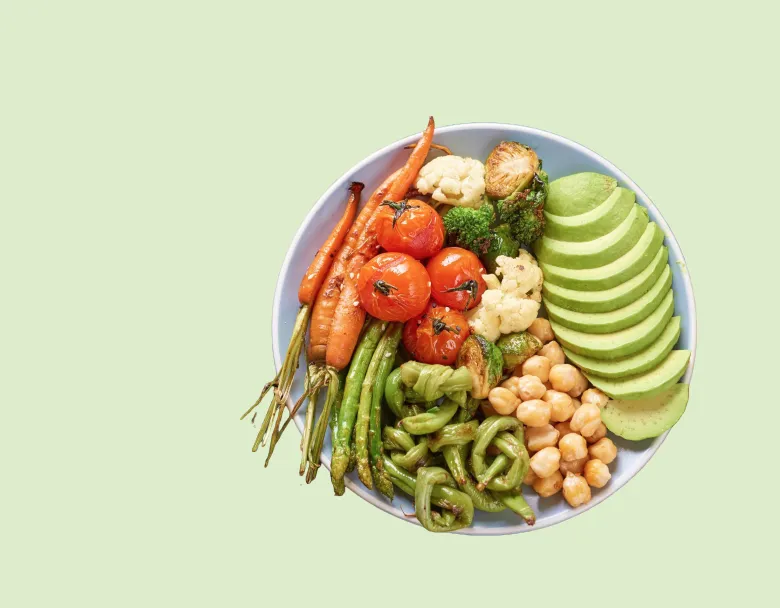
You can meet your protein needs on a vegetarian diet without much fuss — the key is eating a variety of protein-rich plant foods across the day, plus dairy and eggs if you include them. Below are the main groups worth building meals around, roughly how much protein each delivers, and a few things to watch if you eat on a restricted schedule.
Key takeaways
- Legumes, soy foods, nuts and seeds, whole grains, and (if you eat them) dairy and eggs together cover your protein needs easily.
- You don't need to carefully pair "complementary" proteins at every meal. Eating a mix of plant proteins over the course of a day gets you all the amino acids you need.
- If you eat within a shorter window, the main challenge is spacing protein out so you're not cramming it into one meal — a couple of protein-anchored meals usually does it.
- Two nutrients deserve attention on a plant-heavy diet: vitamin B12 and iron. A clinician or registered dietitian can tell you whether you need to change your diet or supplement.
Legumes: beans, lentils, and peas
Legumes are the workhorse of vegetarian eating. Lentils, chickpeas, black beans, kidney beans, pinto beans, and split peas all deliver a high amount of protein per serving, along with fiber and iron. They're also cheap, shelf-stable, and easy to batch-cook.
A cooked cup of lentils or beans is one of the most protein-dense plant options you can put on a plate. If you want exact figures for a specific bean or lentil, the USDA FoodData Central database lists per-serving numbers you can look up directly.
Practical move: keep a couple of cans of beans and a bag of dried lentils on hand. A bean-based bowl or lentil soup is often the fastest way to anchor a meal with protein.
Soy foods: tofu, tempeh, and edamame
Soy foods stand out because they're among the few plant proteins that provide all the essential amino acids on their own. Tofu is versatile and takes on whatever flavor you cook it with; firmer tofu carries more protein than the softer, water-heavy kind. Tempeh is denser and even higher in protein per serving. Edamame (young soybeans) works as a snack or a side and adds a solid protein boost.
If you're trying to raise your protein without adding much bulk to a meal, tempeh and firm tofu are efficient choices.
Nuts and seeds
Nuts and seeds — almonds, walnuts, cashews, pumpkin seeds, hemp seeds, chia, and flax — offer a moderate amount of protein along with healthy fats. Because they're calorie-dense, they work best as a supporting player rather than your main protein source: a handful of nuts, a spoonful of nut butter, or a sprinkle of seeds on top of a meal.
Hemp seeds and pumpkin seeds are on the higher-protein end of this group and are easy to stir into oatmeal, yogurt, or a smoothie.
Whole grains, including quinoa
Most whole grains — oats, brown rice, whole wheat, farro — contribute a modest amount of protein that adds up over the day. Quinoa is worth calling out because, like soy, it supplies all the essential amino acids, which makes it a convenient base for a vegetarian meal.
Grains rarely carry a meal on protein alone, but pairing them with legumes (think rice and beans, or hummus and whole-grain pita) makes a satisfying, protein-solid plate.
Dairy and eggs (if you're lacto-ovo)
If you eat dairy and eggs, they widen your options considerably. Greek yogurt, cottage cheese, milk, and hard cheeses are high-quality, high-protein foods, and eggs are a compact, complete protein. For many lacto-ovo vegetarians, a serving of Greek yogurt or a couple of eggs is the simplest way to top up a meal that's otherwise light on protein.
Seitan
Seitan (wheat gluten) is one of the most protein-dense vegetarian foods by weight and has a chewy, meat-like texture that works well in stir-fries and sandwiches. The catch: it's made from gluten, so it's off the table if you have celiac disease or a gluten sensitivity. It's also lower in some amino acids than soy, so it's best eaten as part of a varied diet rather than your only protein.
Plant protein powders
A protein powder — pea, soy, rice, hemp, or a blend — is an optional convenience, not a requirement. It can help on busy days or if you're aiming for a higher protein target and struggling to get there from food alone. Blends that combine, say, pea and rice protein are formulated to round out each other's amino acid profiles. Whole foods should still do most of the work; treat powder as a top-up.
Do you need to combine plant proteins?
You've probably heard that plant proteins are "incomplete" and must be carefully paired at every meal. That guidance is more relaxed than it used to be. Most plant foods are lower in one or more essential amino acids, but according to the Harvard T.H. Chan School of Public Health's Nutrition Source, eating a variety of protein-containing plant foods across the day supplies all the amino acids you need — you don't have to engineer each plate. And a few plant foods, including soy, quinoa, and chia, are complete on their own.
So the practical rule is simpler than the old one: eat a range of protein sources over the day, and the "combining" takes care of itself.
Fitting plant protein into a shorter eating window
If you eat within a compressed window — for example, an intermittent fasting schedule — you have fewer meals to work with, so protein can bunch up or fall short. Two habits help:
- Anchor each meal with a clear protein source (a legume, soy food, egg, or dairy serving) rather than leaving it to chance.
- Spread protein across the meals you do eat instead of loading it all into one, which is easier on digestion and appetite.
Some people find it useful to log their meals for a week or two just to see whether their protein is actually landing where they think it is. If you already track your eating windows or calorie intake in an app like GoFasting, adding a rough note of your protein sources can make patterns easier to spot. This is just for your own awareness — it doesn't replace advice from a dietitian.
A note on B12 and iron
Two nutrients are worth keeping an eye on when you cut back on animal foods.
Vitamin B12 occurs reliably only in animal products and fortified foods. The NIH Office of Dietary Supplements notes that people who avoid animal foods should get B12 from fortified foods (some plant milks and cereals) or a supplement, since a shortfall can develop quietly over time.
Iron from plants (non-heme iron) is absorbed less readily than the iron in meat, and the NIH Office of Dietary Supplements puts the iron requirement for vegetarians at roughly 1.8 times that of people who eat meat. Pairing iron-rich plant foods (beans, lentils, tofu, fortified grains) with a source of vitamin C can help absorption.
If you're unsure whether you're getting enough of either, that's a good reason to talk to a clinician or registered dietitian. They can check your status with a simple test and tell you whether a change in diet or a supplement makes sense for you — better than guessing at doses on your own.
FAQ
Can you get enough protein as a vegetarian?
Yes. A mix of legumes, soy foods, nuts and seeds, whole grains, and — if you eat them — dairy and eggs covers typical protein needs comfortably.
Which vegetarian foods have the most protein?
By serving, legumes (lentils and beans), soy foods (tofu, tempeh, edamame), seitan, and dairy or eggs tend to be the most protein-dense. Nuts, seeds, and grains contribute smaller amounts that add up.
Do I have to combine rice and beans in the same meal? No. Eating varied plant proteins over the whole day gives you the full range of amino acids; same-meal pairing isn't required.
Is a protein powder necessary?
No. It's a convenience for hitting higher targets or busy days, not a dietary requirement. Whole foods can meet your needs on their own.
This article is general information, not medical advice. If you have a health condition, take medication, are pregnant or breastfeeding, or are unsure whether fasting is right for you, talk with a qualified clinician who knows your situation.
References
- Harvard T.H. Chan School of Public Health, The Nutrition Source. "Protein." https://nutritionsource.hsph.harvard.edu/what-should-you-eat/protein/
- U.S. Department of Agriculture, FoodData Central https://fdc.nal.usda.gov/
- National Institutes of Health, Office of Dietary Supplements. "Vitamin B12 — Health Professional Fact Sheet." https://ods.od.nih.gov/factsheets/VitaminB12-HealthProfessional/
- National Institutes of Health, Office of Dietary Supplements. "Iron — Health Professional Fact Sheet." https://ods.od.nih.gov/factsheets/Iron-HealthProfessional/